Reviews

National Park Service Centennial by Todd Henson

The U.S. National Park Service (NPS) turned 100 on Thursday, August 25, 2016. The National Parks, and other lands managed by the NPS, truly are some of the jewels of the United States. The NPS works to preserve some of the most beautiful locations in the country, while still keeping them open and accessible to the public. I have benefited greatly from this system of parks and monuments, and I hope they continue to be preserved far into the future.

I have not visited nearly as many of the parks or monuments as I would like, but included in this post are photographs from a number of the locations I have had the privilege of visiting, sometimes multiple times. The National Park Foundation can help you find a park near you.

National Park lands are known for their iconic scenic views, beautiful mountain ranges, flowing streams and waterfalls, and fields of flowers. But they are also home to wildlife of all sorts: mammals, reptiles, birds, spiders, etc. And the Park lands also include many monuments and memorials showcasing fantastic statues and amazing architecture. If you haven't been to a National Park, Monument, or Memorial lately, get out there! Go visit one today. And take along your camera, create a few images. It's worth the trip.


Locations Around the National Mall, Washington, D.C.

Lincoln Memorial at night

Washington Monument and the Reflecting Pool at dawn

Washington Monument & Cherry Blossoms Reflected in the Tidal Basin

National World War II Memorial Water Fountains

Storm over the Washington Monument and Tidal Basin in Black & White

Martin Luther King, Jr Memorial in Infrared

Franklin Delano Roosevelt Memorial

Martin Luther King, Jr Memorial and Washington Monument in Black & White

Closeup of Jefferson Memorial in Black & White


Kenilworth Park & Aquatic Gardens, Washington, D.C.

Lotus Flower and Bumble Bee against green background

White Water Lily in dark pond

Kenilworth Aquatic Gardens Bridge in Infrared

Dragonfly on unopened Lotus Flower


Rocky Mountain National Park, Colorado

Rocky Mountain National Park in Black & White

Pika in Rocky Mountain National Park

Uinta Chipmunk in Rocky Mountain National Park

Elk in Rocky Mountain National Park

Clark's Nutcracker in Rocky Mountain National Park

Yellow-bellied Marmot in Rocky Mountain National Park

Facing the Storm in Rocky Mountain National Park (Black & White)


Acadia National Park, Maine

Long exposure of a rocky shoreline in Acadia National Park, Maine (warmer tones)

Long exposure of a rocky shoreline in Acadia National Park, Maine (cooler tones)

Panorama of inlet and rocky beach in Acadia National Park, Maine


Chesapeake & Ohio Canal National Historical Park, Maryland

Falls Along Canal in Chesapeake & Ohio Canal National Historical Park

Great Blue Heron Above Falls in Chesapeake & Ohio Canal National Historical Park

Double-crested Cormorant in Potomac River at Chesapeake & Ohio Canal National Historical Park


Great Falls Park, Virginia

Prelude to Rafting at Great Falls Park in Virginia

Kayakers in Potomac River at Great Falls Park

To the Falls, Great Falls Park

Facing The Fingers on the Potomac River at Great Falls Park


Turkey Run Park, George Washington Memorial Parkway, Virginia

Blue Phlox at Turkey Run Park

Yellow Trout Lily at Turkey Run Park


Prince William Forest Park, Virginia

Stream in Prince William Forest Park

Quaker Ladies Flowers in Prince William Forest Park

Daisy Fleabane Flower in Prince William Forest Park

Arrowhead Orbweaver Spider in Prince William Forest Park


Shenandoah National Park, Virginia

Skyline Drive Sunset in Shenandoah National Park

Flowers along Skyline Drive in Shenandoah National Park


The resource list below contains affiliate links and I will be compensated if you make a purchase after clicking on my links. This is at no extra cost to you.


Resources from my library


Ian Shive, recipient of the Ansel Adams Award for Conservation Photography, is well known for photographing America's National Parks. His work is showcased in a book titled, The National Parks: Our American Landscape. I own a paperback edition of this book, and it contains some fantastic imagery, along with a number of essays by different writers. The book is in landscape format, approximately 8" x 10.5" and is 228 pages in length.

Ian's photos in this book present a far better sampling of our National Parks than I've done above. He has visited and photographed a great many of the parks over the years, capturing all aspects of them, from the iconic to the smaller, more subtle details. I believe Ian is a true master of his craft.

 

Book Review - Braving It: A Father, A Daughter, and an Unforgettable Journey into the Alaskan Wild by James Campbell by Todd Henson

This post contains affiliate links and I will be compensated if you make a purchase after clicking on my links. This is at no extra cost to you.


I received my copy of Braving It, an uncorrected proof, through a giveaway at goodreads.

Braving It: A Father, A Daughter, and an Unforgettable Journey into the Alaskan Wild by James Campbell was an absolute pleasure to read. The book is non-fiction, and is the story of James Campbell taking his daughter, Aidan, to the wilds of Alaska multiple times. Campbell had always been a traveler, visiting many far off places around the world, and many times returning to Alaska. When Aidan was younger she’d told her father she wanted to go to Alaska with him, so when he felt she was old enough they began making plans.

About this time Campbell was contacted by his cousin in Alaska, Heimo Korth. Heimo and his wife Edna are some of the only permanent residents of the Arctic National Wildlife Refuge. The river near his cabin was changing course and his cabin was at risk, so he needed to build a new cabin in a safer location. Campbell talked to Aidan and they decided to go to Alaska to help Heimo build his new cabin. I thought this was an interesting choice for a first trip to Alaska, given the grueling nature of the work building a cabin in the backwoods of Alaska. And as expected, it wasn’t easy and tested the relationship of father and daughter. But once Aidan became used to the work and the environment she came to appreciate the closeness with nature and the raw quality of the lifestyle.

Returning home was a mix of emotions after acclimating to such a lifestyle. They both obviously missed the rest of their family and friends. But they also both had that wanderlust feeling, the desire to return to Alaska. So they planned a second trip. This time they would spend the winter with Heimo and Edna in their new cabin. They would get to experience the lifestyle of a homesteading family living mostly off the land through the deep winter. They would hunt, trap and fish. They would learn about tight living conditions and getting along with one another. They would learn to depend on one another and learn both the joys and sorrows of living so close to nature.

Prior to the first trip they had hoped to go to Alaska for a paddling trip along one of the many rivers in Alaska. They had put that plan aside to help out Heimo. But after returning home from the second trip they almost immediately began planning a return trip to Alaska, this time for hiking and paddling. They contacted some friends in Alaska who were happy to come along. Such a trip would be safer with more people, given they were rafting through wild areas. There weren’t populated pit stops along the way or companies to help them out. People do sometimes die on such trips because help can’t arrive in time. So once again they were in Alaska, this time with friends, and long time Alaskans, Chris Jones and Dave Musgrave, ready to raft and hike along the Hulahula River. This gave them an entirely new set of challenges and once again tested their relationship. The Hulahula was a rough river in places. And the terrain around it was home to all manner of wildlife, from musk oxen, to wolves, to grizzly bears and polar bears.

Braving It is a beautiful book. It shows the beauty of Alaska, of living or traveling through the wild, through areas barely touched by humans when compared to much of the lower 48. I came to a better appreciation of Alaska, the amazing terrain, and the varied wildlife through reading about Campbell’s already healthy appreciation, and Aidan’s growing appreciation. It’s also a book about the relationship between a father and daughter, about the tensions trying to learn to let go, about the desire to share an experience, the hope for the future, and the amazing bond that forms when people are put into frightening and invigorating experiences together.

This was my first exposure to James Campbell’s work. I had not realized that Heimo was brought to the worlds attention through one of Campbell’s previous books, The Final Frontiersman: Heimo Korth and His Family, Alone in Alaska’s Arctic Wilderness, or that Heimo has since starred on the TV show, The Last Alaskans. For whatever reason, I don’t often find myself as drawn to the TV shows, but I do thoroughly enjoy books about the wild and finding ones place within it.

I have since listened to an audio version of The Final Frontiersman, and can highly recommend that book, as well. It tells the story of how Heimo first came to Alaska, how he met his future wife, and the experiences he had starting a family in Alaska.

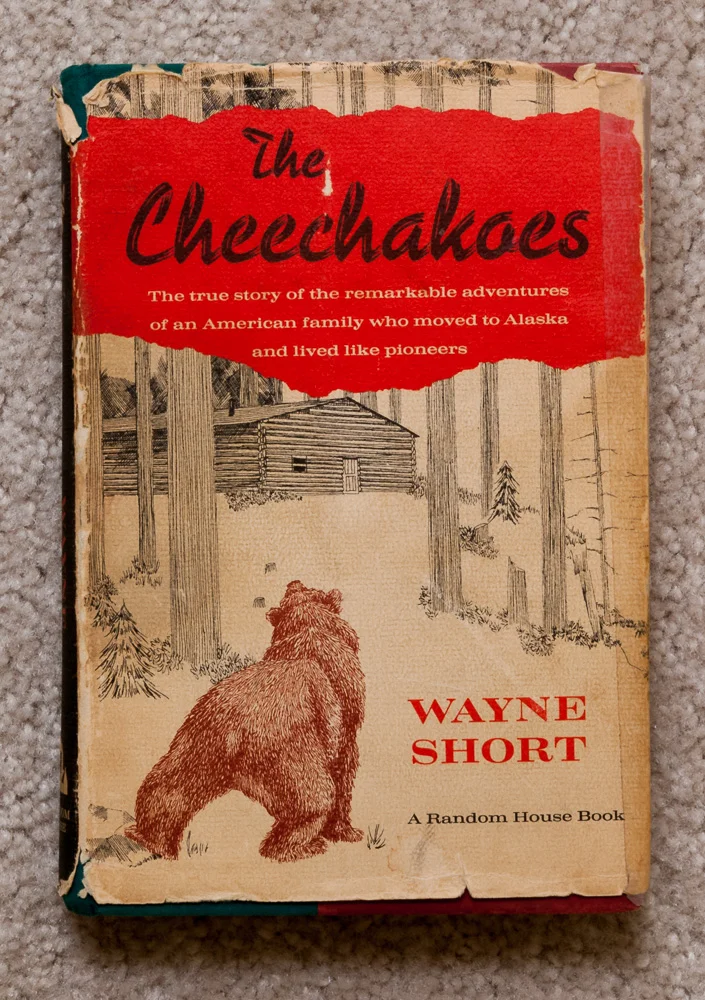
These books brought back memories of reading The Cheechakoes by Wayne Short when I was younger. It is another non-fiction story of a family who moved to Alaska and lived off the land. It’s been decades since I read that book, but reading Braving It has ignited a desire to reread The Cheechakoes.


Do you enjoy these posts?

Sign up to receive periodic emails with updates and thoughts. Don’t worry, I won’t spam you. And please consider purchasing artwork or products from my online store, and using my affiliate links in the sidebar to the right when shopping online.

I appreciate your support!


Book Review - Edward Steichen: Lives in Photography by Todd Henson

This post contains affiliate links and I will be compensated if you make a purchase after clicking on my links. This is at no extra cost to you.

Edward Steichen: Lives in Photography, by Todd Brandow and William A. Ewing, is an absolutely beautiful book. Physically it’s a little over 10x12 inches and about an inch and a half thick. It contains a very nice selection of Steichen’s work printed on thick, quality paper that brings the photos to life. It contains over 200 photographs, most printed full page (one per side, not spanning two pages). The majority of the photographs are black & white or sepia, but also include several examples of color work, both early alternative processing and later full color photographs.

Steichen as Symbolist

The book is largely organized chronologically. After the preface and introduction is the first major section, titled Steichen as Symbolist. This section contains 4 essays and 2 groups of photographic plates, one covering photos made between 1895-1914 and the second between 1915-1922.

Some of his earliest work resembles paintings, which is appropriate given his early exposure to great painters of the time, such as Vincent Van Gogh. Steichen helped photography become recognized as a fine art such as painting and sculpture. During this time he met Alfred Stieglitz, the editor of the photography journal, Camera Notes. Later Stieglitz and Steichen would work together on a new journal, Camera Work, which would publish many works by both artists, as well as many others.

Steichen joined the military during World War I. He trained others on developing and printing aerial negatives and contributed greatly to advancements in aerial reconnaissance photography, establishing photography as a valuable tool for the military. After the war he began exploring the spiral form and the Golden Section. He studied the history of the Golden Section, how it was used in ancient architecture and various art forms. He also explored alternative photographic processes, and began experimenting with early forms of color photography.

Steichen as Modernist

The next section is titled Steichen as Modernist, and also contains 4 essays and 2 groups of photographic plates, one covering photos made between 1922-1936 and the second between 1940-1955.

These later periods display more portraits and fashion photography, as well as more modern portrayals of architecture and products from his work as a commercial and advertising photographer. The photographs exhibit his increasing skills using light and composition as he continued to turn whatever he photographed into artwork. It was during this time he worked for Conde Nast Publications and was published in many of the most well-known publications then and now, such as Vogue and Vanity Fair. He became an industry leader who inspired the work of many others. This was also the time period when Steichen put together the exhibition he may be most known for, The Family of Man.

Lives in Photography

The final section, titled Lives in Photography, consists of a chronology, bibliography, various other lists, and an index.

I couldn’t be happier with this book. It’s a beautiful way to study and learn about Edward Steichen, one of the great names in the history of photography. The essays are excellent. The photographs are remarkable. And the book, itself, is a quality product, both paper and layout. I highly recommend this book if you have any interest in Edward Steichen and his photography.


Do you enjoy these posts?

Sign up to receive periodic emails with updates and thoughts. Don’t worry, I won’t spam you. And please consider purchasing artwork or products from my online store, and using my affiliate links in the sidebar to the right when shopping online.

I appreciate your support!