Trip Report

Aldie Mill Historic Park - Loudoun County, Virginia by Todd Henson

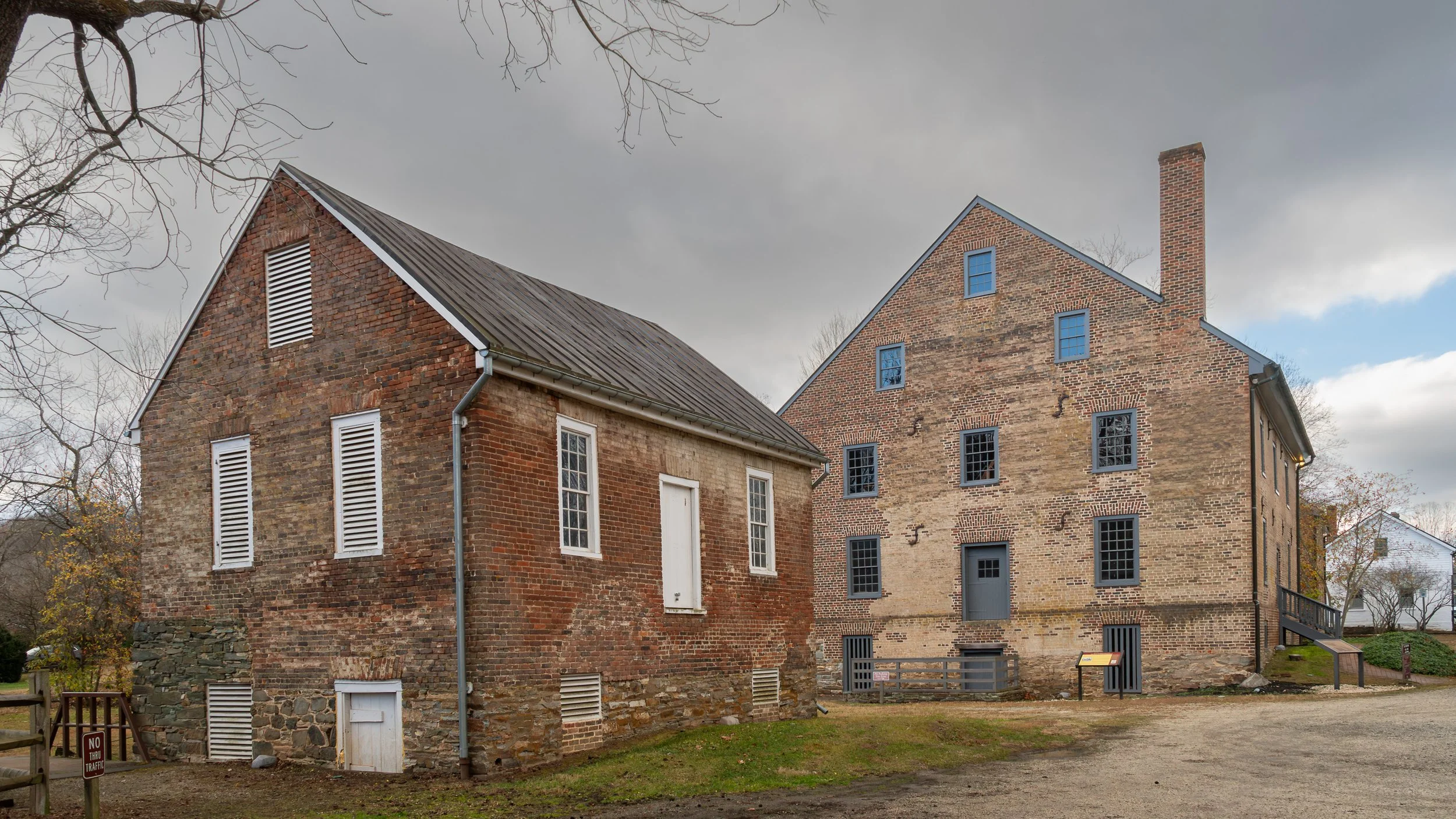
From left to right: country mill, merchant mill, granary (almost hidden behind merchant mill), and storehouse (white building)

Part of the Northern Virginia Regional Park Authority, Aldie Mill Historic Park preserves a small piece of local Loudoun County history. It was in operation from 1808 to 1971 and in the 1800s and early 1900s was a busy operation, both grinding local farmer’s corn and wheat into flour, meal and feed for family use, but mostly creating products that were transported to the ports of Alexandria and from there to markets in the east and overseas.

The merchant mill and the granary at Aldie Mill Historic Park in Loudoun County, Virginia

The front of the merchant mill at Aldie Mill Historic Park

Charles Fenton Mercer found this ideal location just along the almost complete Little River Turnpike (U.S. 50) which would connect Aldie with Alexandria. Just a bit to the west it would hook up with turnpikes through Ashby’s Gap and Snicker’s Gap in the Blue Ridge. There were the waters of Little River to power the water wheels, and Loudoun County’s farms were a great source of the needed grains.

The back of the merchant mill shows the two water wheels and the granary in the background to the left

A closer look at the water wheels of the merchant mill at Aldie Mill

The site includes several buildings:

Aldie Mill 39401

  • A storehouse, the white building all the way to the right in one of the photos, was originally used as both a store and storehouse, and was later converted to a residence for mill workers and their families.

  • Grain waiting to be ground was stored in the granary, between the storehouse and the merchant mill. There were conveyors moving grain both ways between granary and merchant mill.

  • The merchant mill had a mechanical system of chutes and belts that moved grain between the various stages of processing. You can see the two water wheels at the back of the merchant mill in a couple of the photos. Some of the products of the merchant mill were sold in the store but the majority were transported to Alexandria.

  • Farmer’s brought their grain to the smaller country mill, where it was ground into flour, meal and feed for their family’s uses. It ceased operation in the late 19th century and was then used to store feed and other items.

A door at the mill

We visited this park in late November of 2025, which is during their off-season. It was a cold, somewhat overcast, and quiet day, though there were several other people who stopped by and walked the grounds while we were there. If you visit earlier in the year you might be able to enter some of the buildings and perhaps see demonstrations of what went on at the mill when it was actively in use. This is one of those almost hidden little gems that we may have driven by several times without realizing what it was. It does appear to be a less visited park and because of that some of the signage is rather old, faded, darkened, and difficult to read. But I’m glad we visited and I might enjoy visiting during their open season to see what else we might learn of the history of this region.


Do you enjoy these posts?

Sign up to receive periodic emails with updates and thoughts. Don’t worry, I won’t spam you. And please consider purchasing artwork or products from my online store, and using my affiliate links in the sidebar to the right when shopping online.

I appreciate your support!

Waynesboro Model Railroad Club Open House - 12/20/2025 by Todd Henson

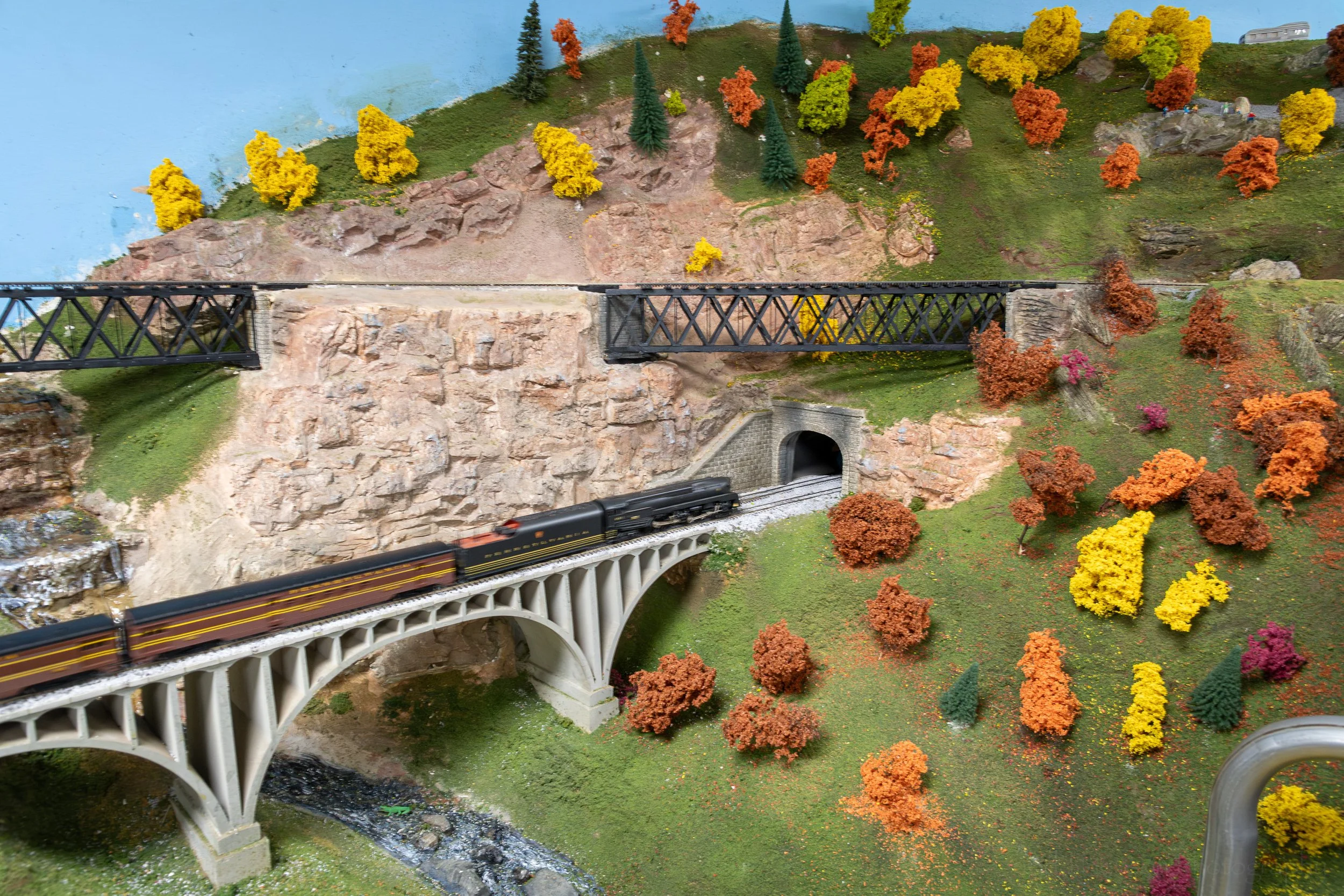
On December 20, 2025, my father and I were fortune to visit the open house put on by the Waynesboro Model Railroad Club located on Waynecastle Road in Greencastle, Pennsylvania. I was extremely impressed by the scope and detail of their layouts. In fact, we felt a bit overwhelmed and I often didn’t know what to look at or what to photograph. Looking back I wish I’d tried more perspectives and different angles, different shutter speeds and apertures, but that’s always the way of things.

The home of the Waynesboro Model Railroad Club

The club building has two floors, with the HO-scale layout filling a large room on the main floor. On the second floor was the N-scale layout in one room and two O-scale layouts in the second room, one 2-rail O-scale and one 3-rail O-scale. If you’re not familiar with model railroading then some of that description may not mean much. The different scales represent the sizes of the model trains and layouts as compared to reality. N-scale, the smallest of these layouts, is 160 times smaller than the real thing, so 1:160. HO-scale is 87 times smaller than the real thing, so 1:87. And O-scale, the largest of these layouts, is 48 times smaller than the real thing, so 1:48. Power is provided to the model trains over the rails they run on, ie, the railroad tracks. A 3-rail system means there are 3 rails, the 2 the train sits on and a third in the middle. This is how model railroading started. But these days most systems use 2 rails.

HO-Scale Layout

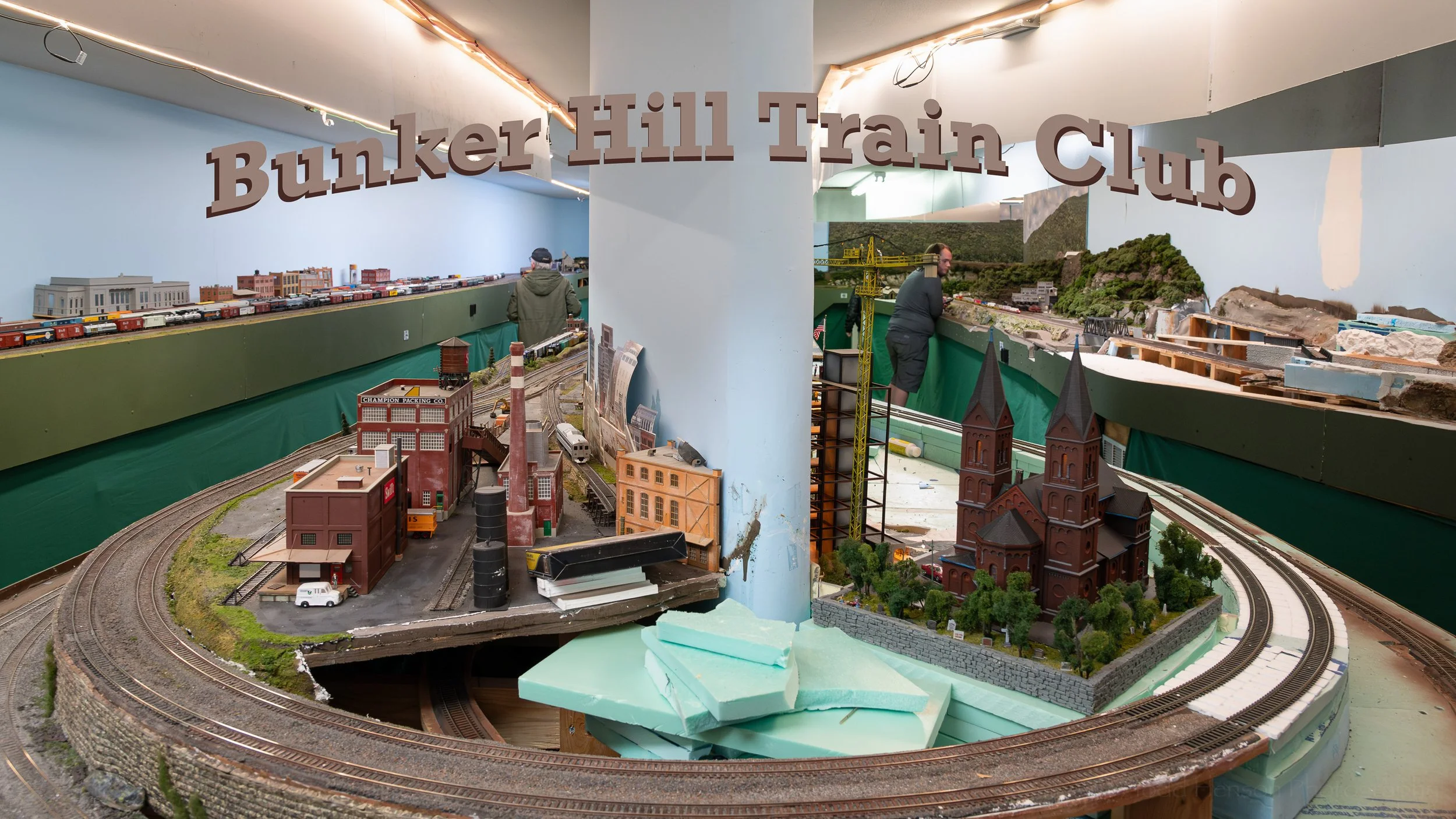
Their HO-scale layout is spread out over a large room with several sections all connected and weaving along the walls and around beams. There are some raised platforms you can step onto to see the layout from a higher perspective. I love how the seasons change as you move along the layout with scenery reflecting the season.

N-Scale Layout

The N-scale is the smallest of the scales in these layouts, which means you can fit more in a smaller space. The layout fills one room of the second floor. It was actively being worked by club members when we visited.

O-Scale Layouts

The 2-rail and 3-rail O-scale layouts fill the second upstairs room. These are the largest of the scales in the layouts so they take up more space. The 3-rail layout was on an island in the center of the room and the 2-rail layout wrapped around the walls.

O-Scale 2-Rail Layout

O-Scale 3-Rail Layout

All of these layouts were impressive with incredible amounts of detail. I saw a group of mountain climbers on a rock face, Bigfoot walking across the top of a mountain, tunnels and bridges, skiers on slopes, a cemetery, emergency personnel responding to a crash, a house being built… the details just went on and on. But these sorts of layouts are almost always being worked so if you visit during one of their future open houses it’s possible you may see something different from what we saw. And I do encourage you to visit them if you’re ever in the area when they are holding an open house. Or if you live in another area then search for any model railroad clubs in your area and see if they have open houses when they invite the public to view their displays and see what their hobby is all about. And please consider leaving them a donation on your way out so they can continue to fund these incredible model railroad layouts.

Click here to learn more about the Waynesboro Model Railroad Club. You can find their current open house schedule and information about the club and how to become a member.

Thanks very much to the members of the Waynesboro Model Railroad Club for opening their doors to the public during these open houses and sharing a little of their hobby with us. We were very impressed with the obvious passion they put into creating each of these layouts.


Do you enjoy these posts?

Sign up to receive periodic emails with updates and thoughts. Don’t worry, I won’t spam you. And please consider purchasing artwork or products from my online store, and using my affiliate links in the sidebar to the right when shopping online.

I appreciate your support!

First Trip to Seneca Rocks, West Virginia by Todd Henson

Seneca Rocks Discovery Center during autumn

A well-known and popular destination in West Virginia is Seneca Rocks, a large rocky crag in the Appalachian Mountains. It’s popular both for tourists coming to view these incredible mountains and hike the trails, and for rock climbers who crave a challenge. In fact, the 10th Mountain Division of the U.S. Army trained here in 1943 - 1944 before deploying to Europe during World War II.

A 10-image panoramic view of the famous Seneca Rocks in autumn

Some of the fall foliage at Seneca Rocks, West Virginia

The rock formations, the creek, and the local community were named after the Native American Seneca nations, thought to have travelled through this area, along with other nations, for trade and war, though they actually resided further north in the New York region.

Bell Wall just left of center, Gunsight, the gap in the center, and South Summit on the right (a very technical formation) at Seneca Rocks

South Summit at Seneca Rocks, West Virginia, is a very technical climb

We were fortunate to visit during autumn when there was some nice color to the leaves. The lighting was a challenge, photographically, as we arrived very near high noon on a cloudless day. This time of year it appears the run rises somewhat behind the rock formations so they were in some degree of shadow during our visit. I’m guessing arriving later in the afternoon might allow you see the rock faces lit up. I’d love to return on a day with a few more clouds, maybe a bit of a stormy look, though I’ve no desire to drive some of the roads we did during a storm.

The Seneca Rocks Discovery Center, in West Virginia, was closed during the government shutdown

Another unique aspect to our visit is that the Discovery Center was closed due to the government shutdown. Thankfully, the Forest Service kept the area open to visitors and just closed the facilities. And the area was very busy with almost full parking lots. Many people were hiking the trails or walking along the paved paths. And there were many people on the faces of the cliffs and rock formations.

Turn around and face away from the rock formations and you’ll see some stores, a motel and a restaurant, all of which were packed

Rock Climbers and/or Hikers

If you click on the photos to get a larger view you may be able to spot some of the many rock climbers all over the formations. Below I’ve created some photos where I circle the groups of climbers and/or hikers in red so you can see just how popular this location is for climbing, some of it very technical, especially that of the south summit.

I circled in red all the climbers/hikers I could find at Seneca Rocks. Some of the circles contain multiple people.

South Summit, one of the more technical features, attracts many climbers. I’ve circled all I could find in red.

See how many climbers and hikers were on the rock formations at Seneca Rocks?


Do you enjoy these posts?

Sign up to receive periodic emails with updates and thoughts. Don’t worry, I won’t spam you. And please consider purchasing artwork or products from my online store, and using my affiliate links in the sidebar to the right when shopping online.

I appreciate your support!