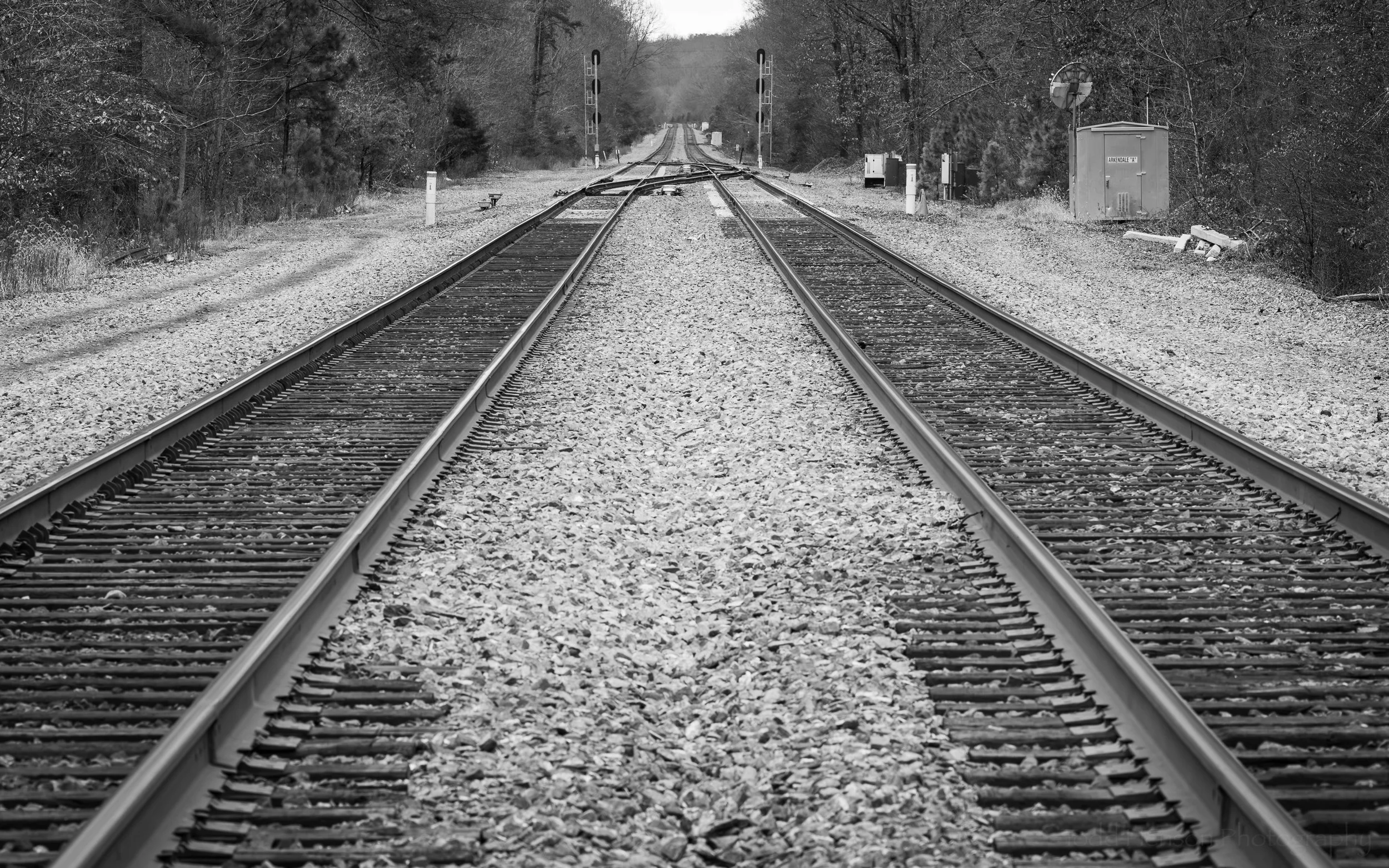
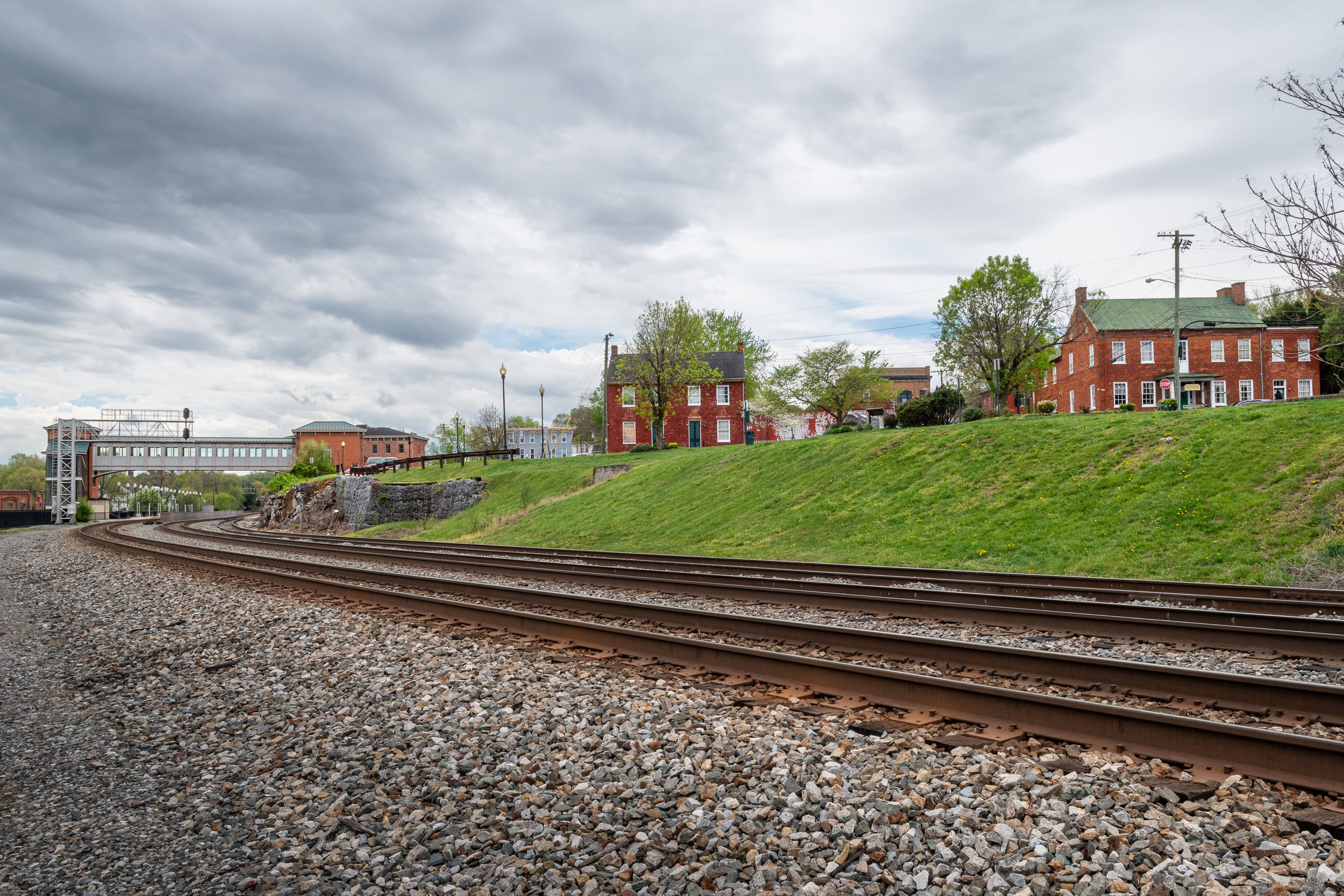
railroad

North Stratford, New Hampshire by Todd Henson

The unincorporated village of North Stratford is part of the town of Stratford in Coos County, New Hampshire. It borders the Connecticut River with Vermont on the western side. The town of Stratford was incorporated in 1773, originally called Woodbury. The village of North Stratford, located on land that was once the farm of the Fuller family and was occupied during the War of 1812, had its beginnings around 1848 when brothers Elisha and William Baldwin settled in the area and built the first saw (for lumber) and grist mills, and shortly after this a bridge across the Connecticut River to Vermont. In 1853 the location was chosen for a northern expansion of the railway, further accelerating the growth of the area into a thriving community.

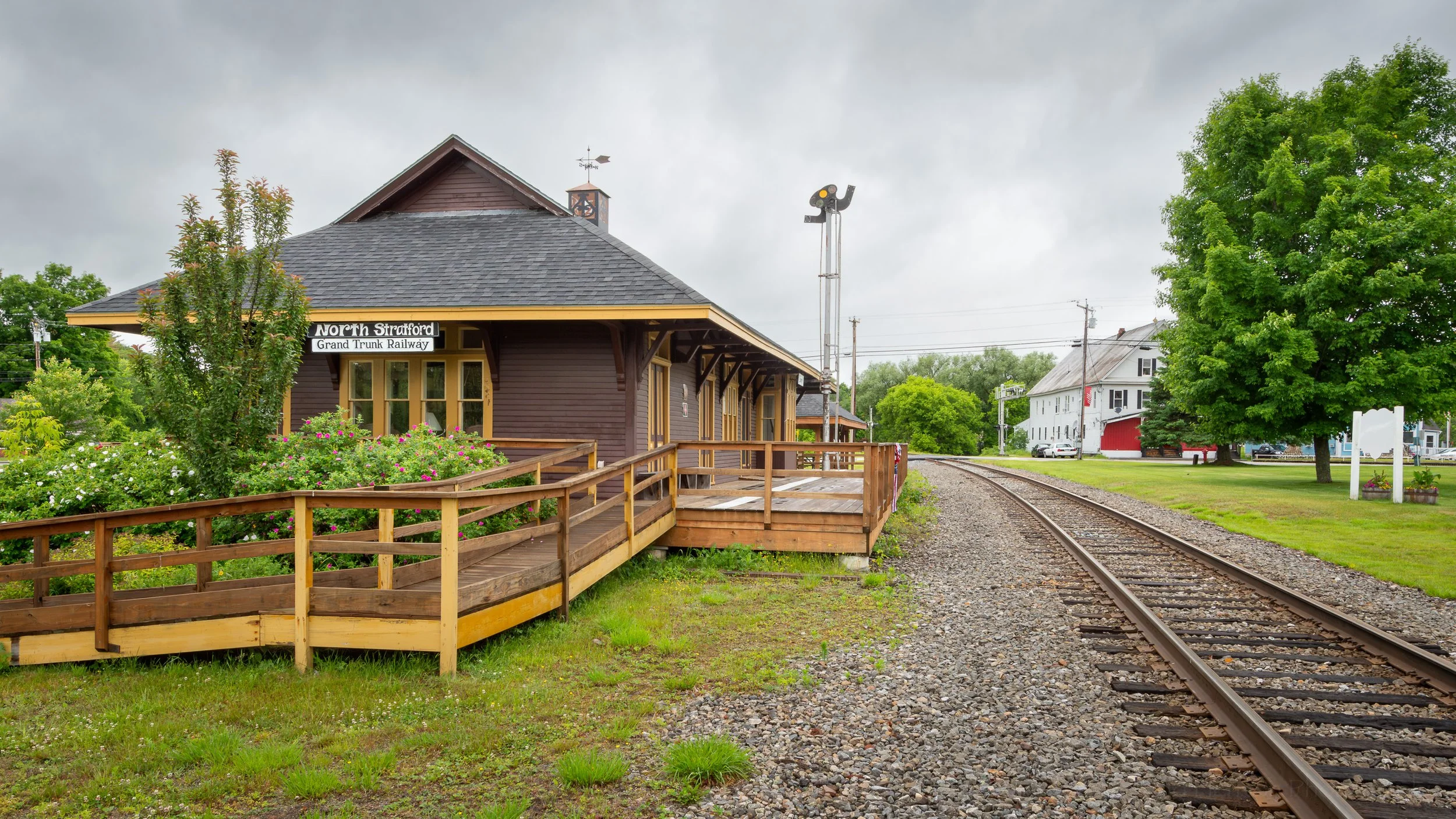
North Stratford Grand Trunk Railroad Station and Stratford Public Library

North Stratford Grand Trunk Railway Station and Stratford Public Library

The railway was originally known as the Upper Coos Railroad and later as the North Stratford Railroad. Before long the Grand Truck Railroad leased the station and connected their Toronto-Montreal line with the existing Montreal-Portland line, making North Stratford part of a major transportation route.

The renovated North Stratford Grand Trunk Railway station is now the Stratford Public Library

Much later the North Stratford Railroad ceased operations as more and more freight was transported in trucks on roadways. The North Stratford Grand Trunk Railroad Station was renovated and converted to the Stratford Public Library, which seems a very fitting way of keeping its history alive.

The Stratford Public Library beside the rails

First Baptist Church of North Stratford

The First Baptist Church of North Stratford

The Baptist denomination in the larger Stratford area dates back to around 1836. As mentioned above, the village of North Stratford began forming around 1848 by the Baldwin brothers, and grew with the construction of mills, the railway and the bridge over the river. Church services were initially held in schoolhouses and homes but with the growing community Elisha Baldwin bought a plot of land and building of the First Baptist Church of North Stratford began in either 1852 (as stated on a plague in front of the church) or 1855 (as stated in the History of the Town of Stratford, New Hampshire, 1773-1925 by Jeannette R. Thompson). The church was destroyed by fire twice, in 1868 and again in 1915, but in both cases it was quickly rebuilt. The current structure was rebuilt in 1915 and dedicated in January of 1916.

A front view of the First Baptist Church of North Stratford

Front details of the First Baptist Church of North Stratford


I hope you’ve enjoyed this bit of history and these views into two elements of the small community of North Stratford, New Hampshire, located in a beautiful part of the state. The area was once largely owned by paper companies, but the forests have been recovering over the years, with a benefit that the logging roads and camps have allowed for forest recreation and this part of the state is now a popular destination for outdoor activities.


Do you enjoy these posts?

Sign up to receive periodic emails with updates and thoughts. Don’t worry, I won’t spam you. And please consider purchasing artwork or products from my online store, and using my affiliate links in the sidebar to the right when shopping online.

I appreciate your support!

Waynesboro Model Railroad Club Open House - 12/20/2025 by Todd Henson

On December 20, 2025, my father and I were fortune to visit the open house put on by the Waynesboro Model Railroad Club located on Waynecastle Road in Greencastle, Pennsylvania. I was extremely impressed by the scope and detail of their layouts. In fact, we felt a bit overwhelmed and I often didn’t know what to look at or what to photograph. Looking back I wish I’d tried more perspectives and different angles, different shutter speeds and apertures, but that’s always the way of things.

The home of the Waynesboro Model Railroad Club

The club building has two floors, with the HO-scale layout filling a large room on the main floor. On the second floor was the N-scale layout in one room and two O-scale layouts in the second room, one 2-rail O-scale and one 3-rail O-scale. If you’re not familiar with model railroading then some of that description may not mean much. The different scales represent the sizes of the model trains and layouts as compared to reality. N-scale, the smallest of these layouts, is 160 times smaller than the real thing, so 1:160. HO-scale is 87 times smaller than the real thing, so 1:87. And O-scale, the largest of these layouts, is 48 times smaller than the real thing, so 1:48. Power is provided to the model trains over the rails they run on, ie, the railroad tracks. A 3-rail system means there are 3 rails, the 2 the train sits on and a third in the middle. This is how model railroading started. But these days most systems use 2 rails.

HO-Scale Layout

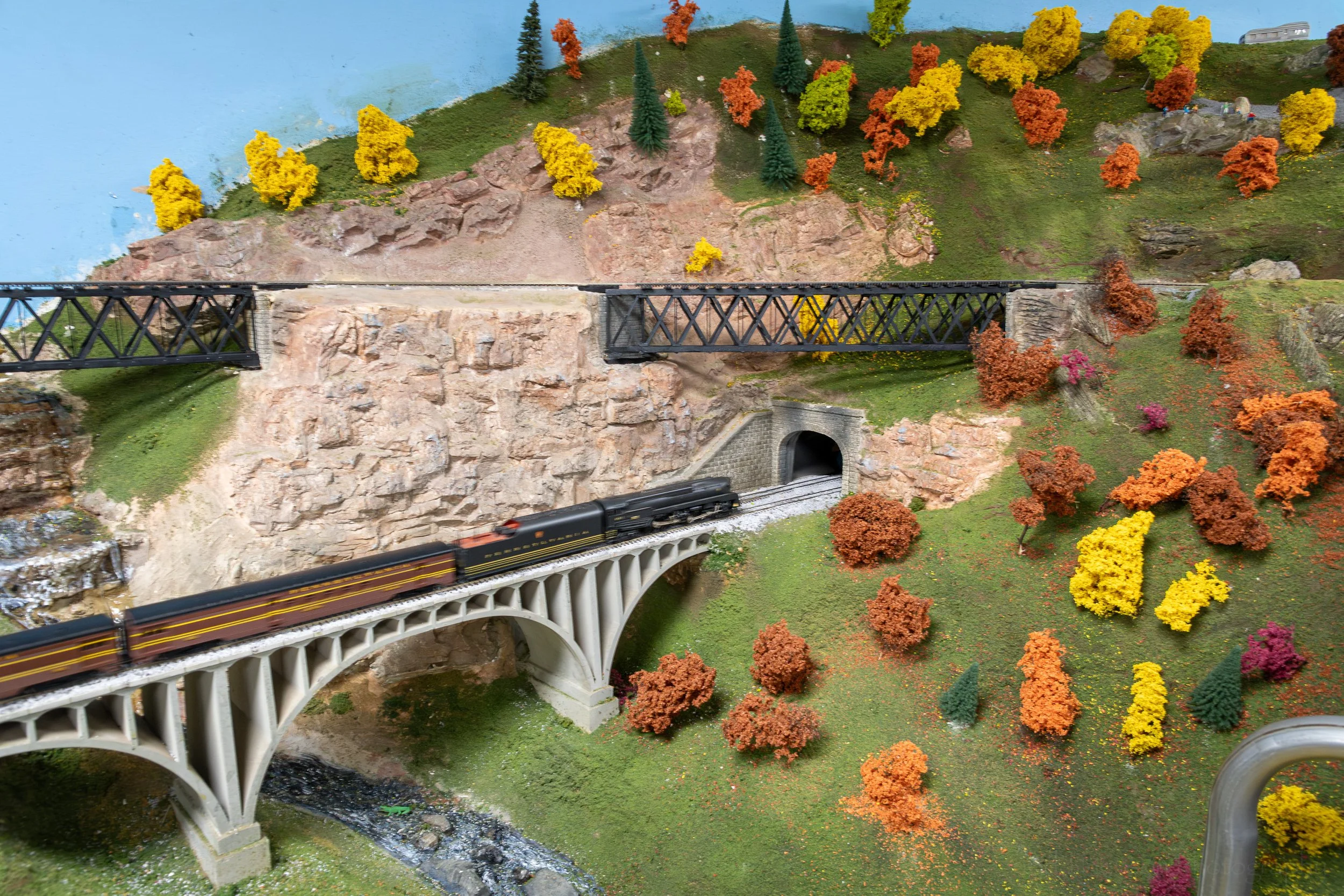
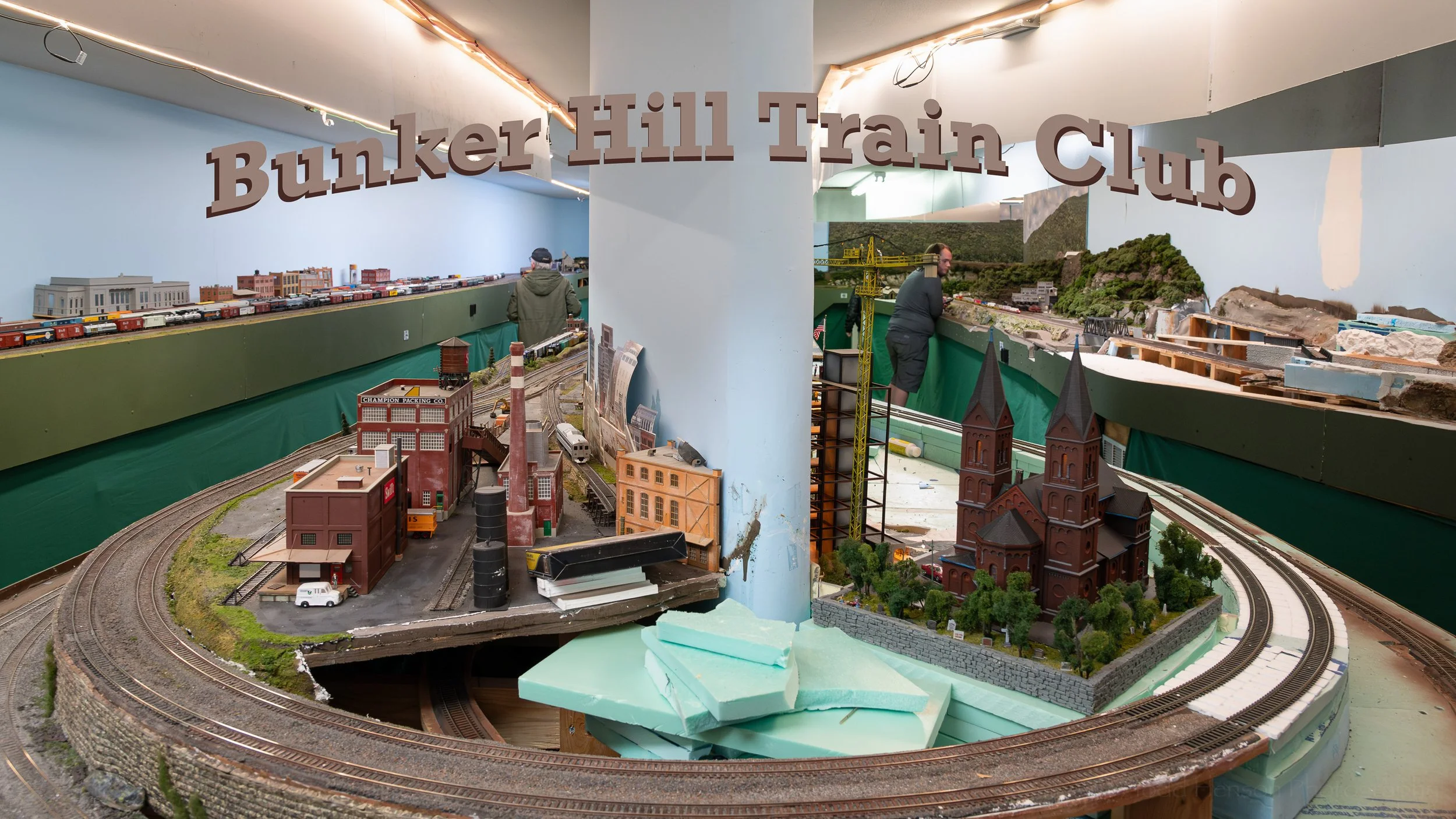
Their HO-scale layout is spread out over a large room with several sections all connected and weaving along the walls and around beams. There are some raised platforms you can step onto to see the layout from a higher perspective. I love how the seasons change as you move along the layout with scenery reflecting the season.

N-Scale Layout

The N-scale is the smallest of the scales in these layouts, which means you can fit more in a smaller space. The layout fills one room of the second floor. It was actively being worked by club members when we visited.

O-Scale Layouts

The 2-rail and 3-rail O-scale layouts fill the second upstairs room. These are the largest of the scales in the layouts so they take up more space. The 3-rail layout was on an island in the center of the room and the 2-rail layout wrapped around the walls.

O-Scale 2-Rail Layout

O-Scale 3-Rail Layout

All of these layouts were impressive with incredible amounts of detail. I saw a group of mountain climbers on a rock face, Bigfoot walking across the top of a mountain, tunnels and bridges, skiers on slopes, a cemetery, emergency personnel responding to a crash, a house being built… the details just went on and on. But these sorts of layouts are almost always being worked so if you visit during one of their future open houses it’s possible you may see something different from what we saw. And I do encourage you to visit them if you’re ever in the area when they are holding an open house. Or if you live in another area then search for any model railroad clubs in your area and see if they have open houses when they invite the public to view their displays and see what their hobby is all about. And please consider leaving them a donation on your way out so they can continue to fund these incredible model railroad layouts.

Click here to learn more about the Waynesboro Model Railroad Club. You can find their current open house schedule and information about the club and how to become a member.

Thanks very much to the members of the Waynesboro Model Railroad Club for opening their doors to the public during these open houses and sharing a little of their hobby with us. We were very impressed with the obvious passion they put into creating each of these layouts.


Do you enjoy these posts?

Sign up to receive periodic emails with updates and thoughts. Don’t worry, I won’t spam you. And please consider purchasing artwork or products from my online store, and using my affiliate links in the sidebar to the right when shopping online.

I appreciate your support!

A Bit of Color Over the Holidays by Todd Henson