church

North Stratford, New Hampshire by Todd Henson

The unincorporated village of North Stratford is part of the town of Stratford in Coos County, New Hampshire. It borders the Connecticut River with Vermont on the western side. The town of Stratford was incorporated in 1773, originally called Woodbury. The village of North Stratford, located on land that was once the farm of the Fuller family and was occupied during the War of 1812, had its beginnings around 1848 when brothers Elisha and William Baldwin settled in the area and built the first saw (for lumber) and grist mills, and shortly after this a bridge across the Connecticut River to Vermont. In 1853 the location was chosen for a northern expansion of the railway, further accelerating the growth of the area into a thriving community.

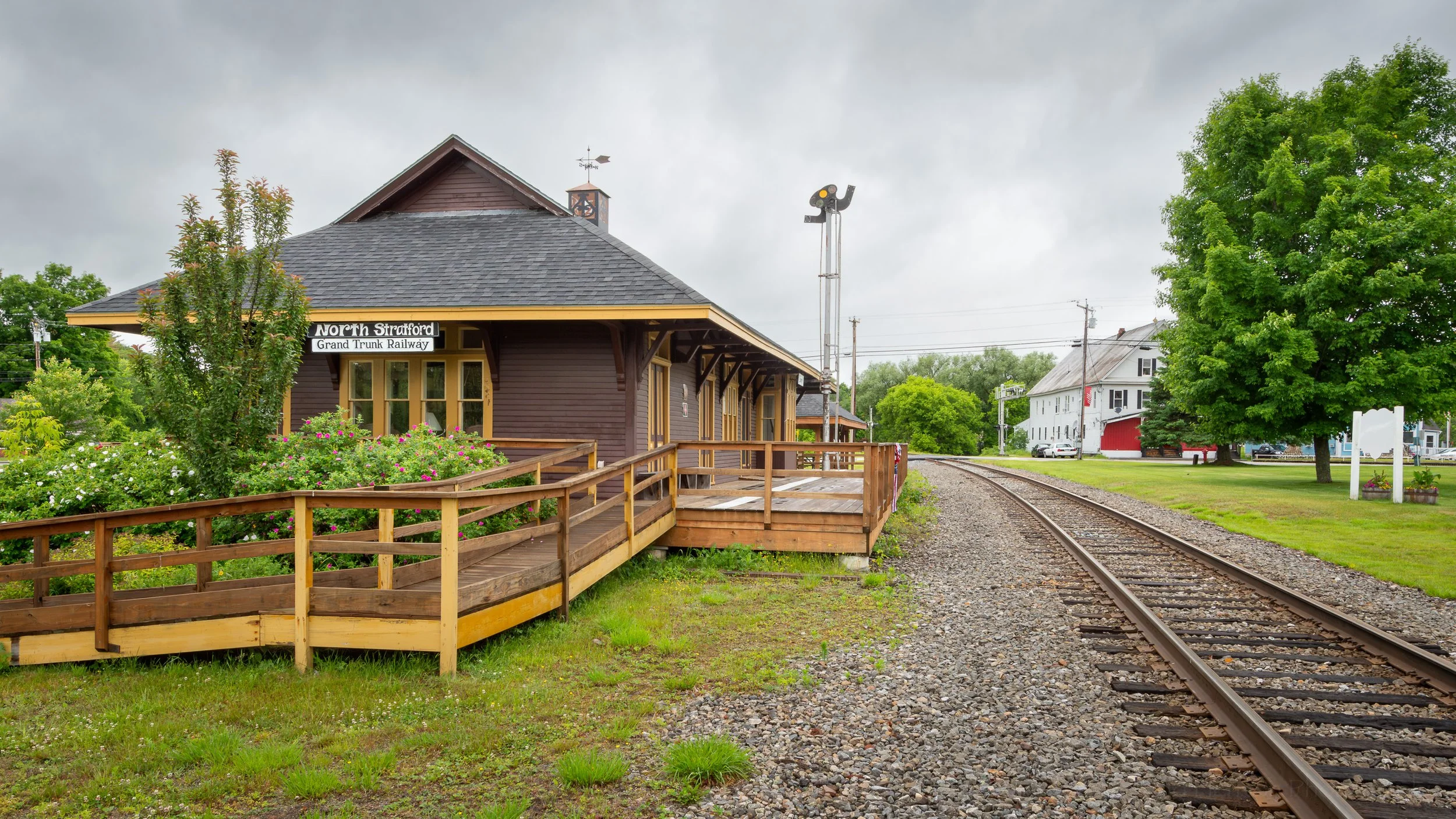
North Stratford Grand Trunk Railroad Station and Stratford Public Library

North Stratford Grand Trunk Railway Station and Stratford Public Library

The railway was originally known as the Upper Coos Railroad and later as the North Stratford Railroad. Before long the Grand Truck Railroad leased the station and connected their Toronto-Montreal line with the existing Montreal-Portland line, making North Stratford part of a major transportation route.

The renovated North Stratford Grand Trunk Railway station is now the Stratford Public Library

Much later the North Stratford Railroad ceased operations as more and more freight was transported in trucks on roadways. The North Stratford Grand Trunk Railroad Station was renovated and converted to the Stratford Public Library, which seems a very fitting way of keeping its history alive.

The Stratford Public Library beside the rails

First Baptist Church of North Stratford

The First Baptist Church of North Stratford

The Baptist denomination in the larger Stratford area dates back to around 1836. As mentioned above, the village of North Stratford began forming around 1848 by the Baldwin brothers, and grew with the construction of mills, the railway and the bridge over the river. Church services were initially held in schoolhouses and homes but with the growing community Elisha Baldwin bought a plot of land and building of the First Baptist Church of North Stratford began in either 1852 (as stated on a plague in front of the church) or 1855 (as stated in the History of the Town of Stratford, New Hampshire, 1773-1925 by Jeannette R. Thompson). The church was destroyed by fire twice, in 1868 and again in 1915, but in both cases it was quickly rebuilt. The current structure was rebuilt in 1915 and dedicated in January of 1916.

A front view of the First Baptist Church of North Stratford

Front details of the First Baptist Church of North Stratford


I hope you’ve enjoyed this bit of history and these views into two elements of the small community of North Stratford, New Hampshire, located in a beautiful part of the state. The area was once largely owned by paper companies, but the forests have been recovering over the years, with a benefit that the logging roads and camps have allowed for forest recreation and this part of the state is now a popular destination for outdoor activities.


Do you enjoy these posts?

Sign up to receive periodic emails with updates and thoughts. Don’t worry, I won’t spam you. And please consider purchasing artwork or products from my online store, and using my affiliate links in the sidebar to the right when shopping online.

I appreciate your support!

Historic Stark Covered Bridge (New Hampshire) by Todd Henson

The Stark Covered Bridge with the beautiful forested mountains in the background, in Stark, New Hampshire.

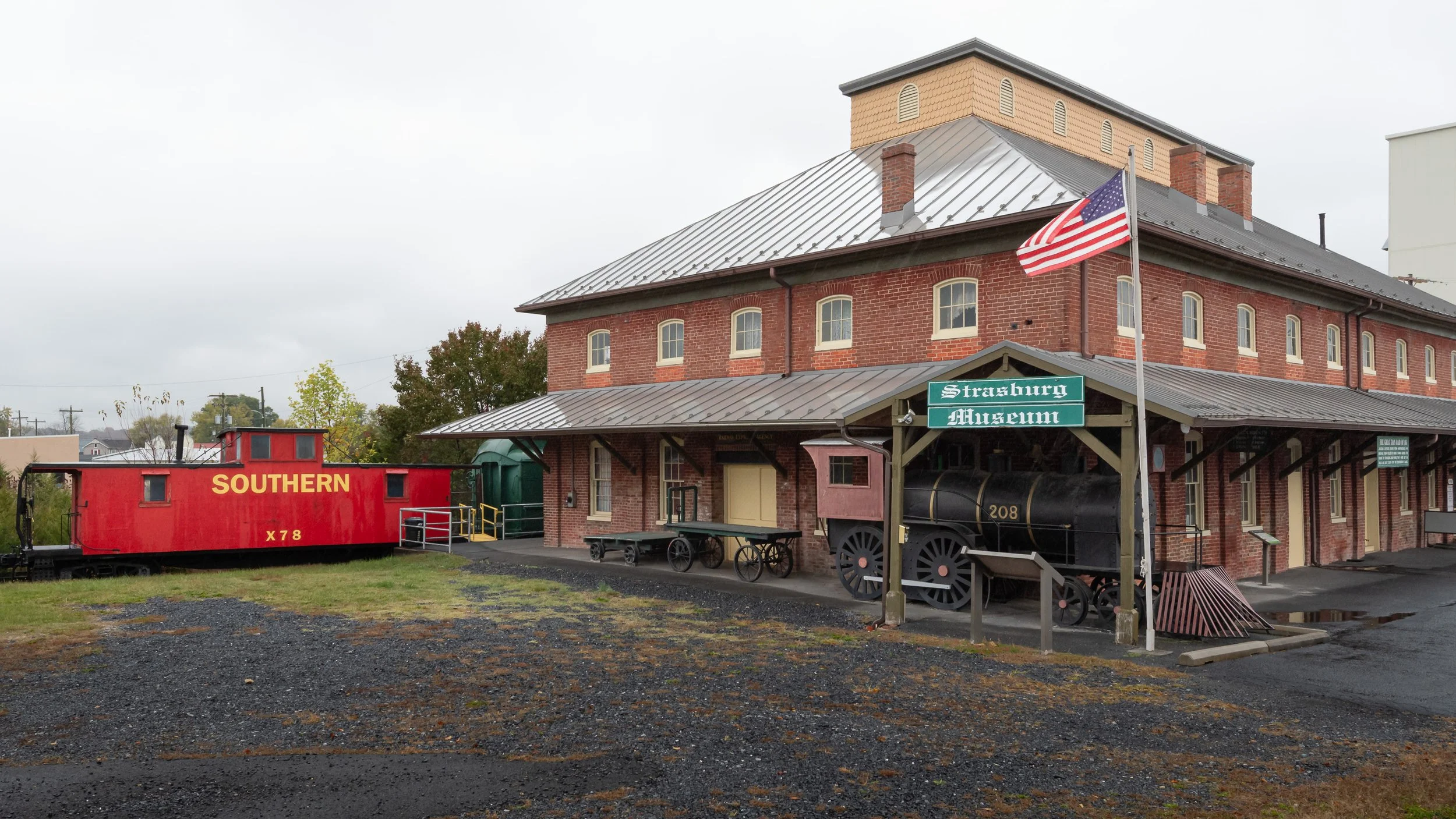
The Stark Covered Bridge may be one of the best known covered bridges in New Hampshire. It’s become an iconic representation of the state, especially when paired with the Stark Union Church right beside the bridge, the Stark Inn Bed & Breakfast on the far side of the river, and the forested mountains and rocky cliffs in the background. This scene can be found on promotional materials all over the world. In fact, almost exactly a month after visiting Stark and photographing the bridge my father and I found a promotional picture showcasing this scene in the Strasburg Museum in Strasburg, Virginia (see further below).

The iconic view of the Stark Covered Bridge and Stark Union Church in New Hampshire.

A view of the full length of the Stark Covered Bridge in New Hampshire.

Facing the Stark Covered Bridge, built using a Paddleford truss design with various modifications over the years.

Walking through one of the two pedestrian walkways within the Stark Covered Bridge in New Hampshire.

There is some uncertainty as to exactly when the bridge was built. Some records claim 1857, others that it was built along with the church in 1853. According to the book, Covered Bridges of New Hampshire (see below), the town of Stark has settled on a date of 1862.

The Stark Covered Bridge was built using a Paddleford truss design and features a pedestrian walkway on both sides of the bridge. Interestingly it was originally built as a two-span bridge, spanning the Upper Ammonoosuc River. But in 1895 a flood tore the bridge from its supports and destroyed the center pier. Thankfully, the bridge remained largely intact and with much work was restored, but this time as a single-span bridge to hopefully avoid a similar occurrence in the future. But removing that center support required strengthening the bridge, so two arches were added inside the bridge to allow it to function as a single span.

The Stark Inn Bed & Breakfast and the Stark Covered Bridge in New Hampshire.

The Stark Union Church as seen from the Stark Covered Bridge in New Hampshire.

As can be seen in the photos, there is currently a center pier. It was determined in 1945 that the bridge was sagging and needed work. In 1948 they installed the new center pier to provide needed extra support. Later, in 1954, they continued work on the bridge, adding some steel beams inside to further strengthen the bridge and raise its load capacity. And as you can see in the photos, more repair work is needed. One of the photos shows what can happen when a vehicle that’s too tall for the bridge tries to pass through it anyway.

Visible damage to the Stark Covered Bridge in New Hampshire.

The Stark Covered Bridge is number 37 in the New Hampshire list of covered bridges. We visited this bridge on June 22nd, 2025. And on a more personal note, my grandfather was actually born in what is now the Stark Inn Bed & Breakfast, that building on the other side of the river from the church. Click here to see the list of covered bridges we visited while traveling through New Hampshire in mid-2025.

The Upper Ammonoosuc River in Stark, New Hampshire.

A view of Stark, New Hampshire, on a promotional piece found in the Strasburg Museum in Virginia.

Resources

Most of the details within this post were learned either from signs at the bridge or from the fantastic book, Covered Bridges of New Hampshire by Kim Varney Chandler, which I purchased from a small local shop in Lincoln while on our trip. It’s well worth it if you plan to visit the area or are just interested in covered bridges and their history and construction. The link takes you to the author’s website for the book with lots of extra information and with links to let you purchase directly from her.


Do you enjoy these posts?

Sign up to receive periodic emails with updates and thoughts. Don’t worry, I won’t spam you. And please consider purchasing artwork or products from my online store, and using my affiliate links in the sidebar to the right when shopping online.

I appreciate your support!

A Visit to Lancaster, New Hampshire by Todd Henson

Main Street, Lancaster, New Hampshire

In June of 2025 my father and I spent some time back in Lancaster, New Hampshire. He grew up there and I recall visiting many times throughout my youth, so it’s always interesting to return to the town and see how much it continues to change over the years. And though it is very different from what it once was, it still retains much of the look and feel I recall from younger days. Originally chartered in 1763, it appears to be thriving today and successfully adapting to the times.

Main Street

Crossing the Israel River in Lancaster, New Hampshire

Both photos above are of Main Street, Lancaster. The first is a wide view facing the bridge over the Israel River. The yellow building on the left is now home to The Yellow Deli, a new location to us and one with fantastic sandwiches (I had the best salmon sandwich I’d ever tried there).

Continuing down the left side beyond the nearest side street is the old bank building (Lancaster National Bank) with the vertical “Lancaster” sign that now houses the Copper Pig Brewery, the W. M. Rugh Gallery and possibly more. Just beyond that, over the Israel River bridge is the Masonic Lodge. The yellow building on the right side used to have a great candy store downstairs, S.N. Evans, though it’s now vacant, and my father’s family lived just upstairs. I have lots of great memories in that building heading down to the candy store.

The second photo is facing the opposite direction from atop the Israel River bridge. You can see the old bank building with the brewery on the right side, and my father’s house the second building on the left. The town has managed to retain the classic “old town” feel even as old businesses close down and new ones move in.

Mechanic Street Covered Bridge

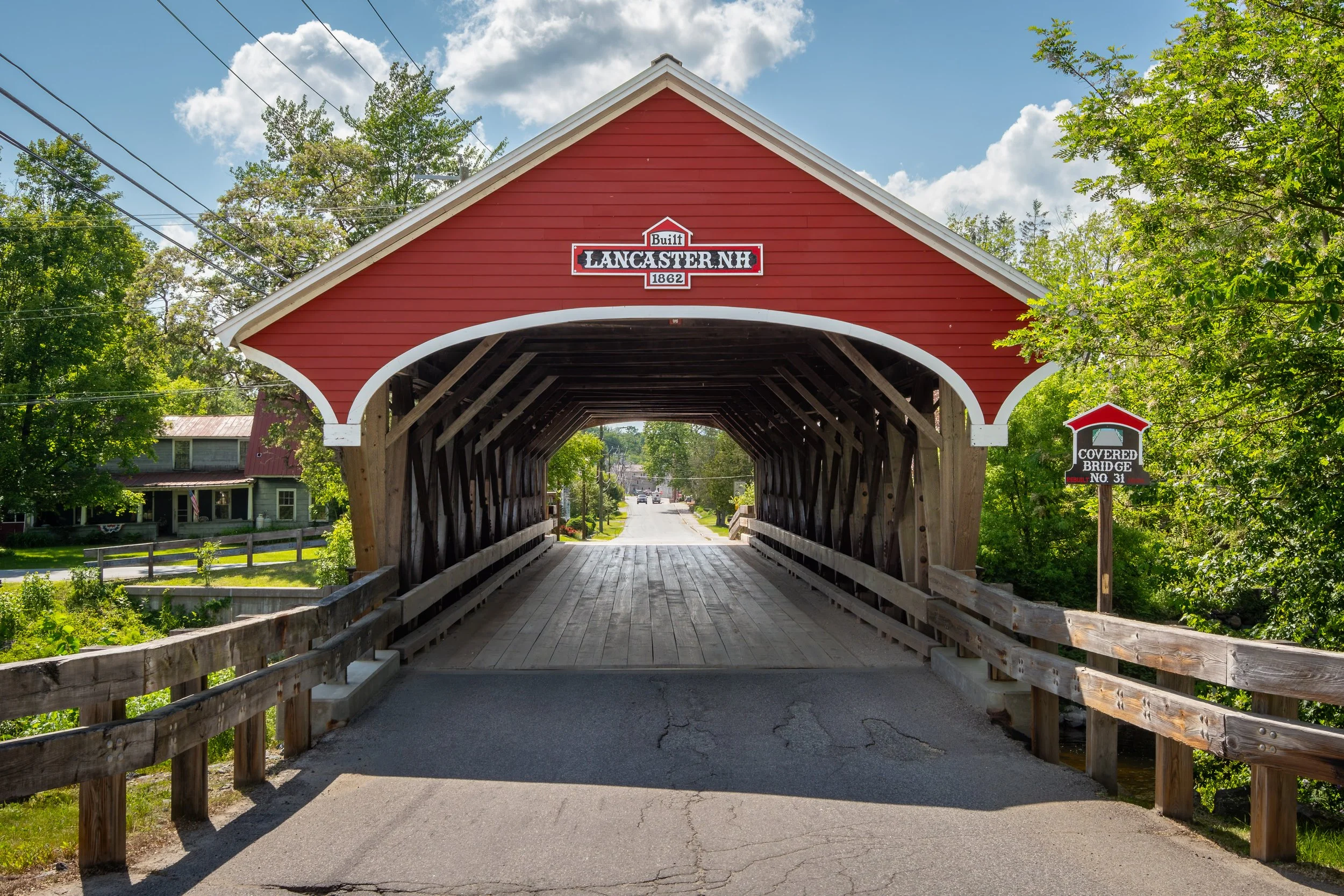
Historic Mechanic Street Covered Bridge

If you drive past the old bank building, over the Israel River bridge, and turn left on Mechanic Street, you can see Lancaster’s beautiful red Historic Mechanic Street Covered Bridge, which also crosses over the Israel River. It originally dates back to 1862 and is the last remaining of three covered bridges that once spanned the Israel. It’s interesting to note that as beautiful and iconic as it is today it was apparently a lesser bridge than the grander Main Street/Double Barrel Bridge also constructed in 1862. But being the last one standing it’s now much more appreciated.

Rialto Theatre

The Rialto Theatre

Returning to Main Street, and heading further into town you’ll find the Rialto Theatre, just visible in the first photo on the far right hand side. For the photo of the theatre I chose to give it that older monochromatic feel to go along with its age. The building it resides in was constructed in 1930 by Homer Graves and the Rialto Theatre opened its doors the next year. It’s fantastic to see it still in business and showing movies on Main Street.

William D. Weeks Memorial Library

The William D. Weeks Memorial Library

The Lancaster Public Library dates back to 1884, but it wasn’t until 1906 when John Wingate Weeks began construction of the beautiful building we see today, in memory of and named after his father, William D. Weeks. It opened to the public in 1908. And as the town grew so did the need for more books, so in 1999 they completed an expansion behind what you see here that tripled the size of the library.

Lancaster Congregational United Church of Christ

Lancaster Congregational United Church of Christ

The Lancaster Congregational United Church of Christ is one of many landmarks along Main Street. This building dates back to around 1911 and was rebuilt after a fire in 1910, from which they salvaged the original stained glass and organ. Looking further back in history, the previous building was constructed in 1840, and the church, itself, the first in Lancaster, dates to 1794.

The Old County Courthouse

The old county courthouse in Lancaster

The old courthouse is a grand building constructed in 1887. It replaced the previous 1869 courthouse that was lost in a fire in 1886. Over time the county outgrew this old building and in 1995 they razed the old Lancaster Academy & High School and in its place began construction on a new county courthouse. The old courthouse still stands though it’s privately owned and home to a credit union and other businesses.   

Lancaster United States Post Office

The Lancaster Post Office

There’s something about post offices that draws my eye, especially when in an interesting building, and I quite like the one in Lancaster. It’s more recent than most of the other buildings mentioned, having been built in 1935. We drove by it on a stormy day and I chose to photograph it from within the car which resulted in the suspended rain droplets scattered across the photo. I like the look that creates.

Fuller’s Sugarhouse

Fuller’s Sugarhouse selling all things maple syrup

And finally, any trip to Lancaster, New Hampshire, wouldn’t be complete without a stop by Fuller’s Sugarhouse. A family-owned and operated business, they eventually grew enough to open a location on Main Street in 1998. They tap maple trees in the area and create several grades of maple syrup. Of course you can also find all kinds of other goodies in their store (maple syrup candy being a great one, loved those as a kid).

I hope you enjoyed this brief look at Lancaster, New Hampshire, both photographs of what it looks like as of June, 2025, as well as a little history of the town.

Have you ever visited Lancaster, New Hampshire, and if so what were your favorite parts of town?


Do you enjoy these posts?

Sign up to receive periodic emails with updates and thoughts. Don’t worry, I won’t spam you. And please consider purchasing artwork or products from my online store, and using my affiliate links in the sidebar to the right when shopping online.

I appreciate your support!