history

Aldie Mill Historic Park - Loudoun County, Virginia by Todd Henson

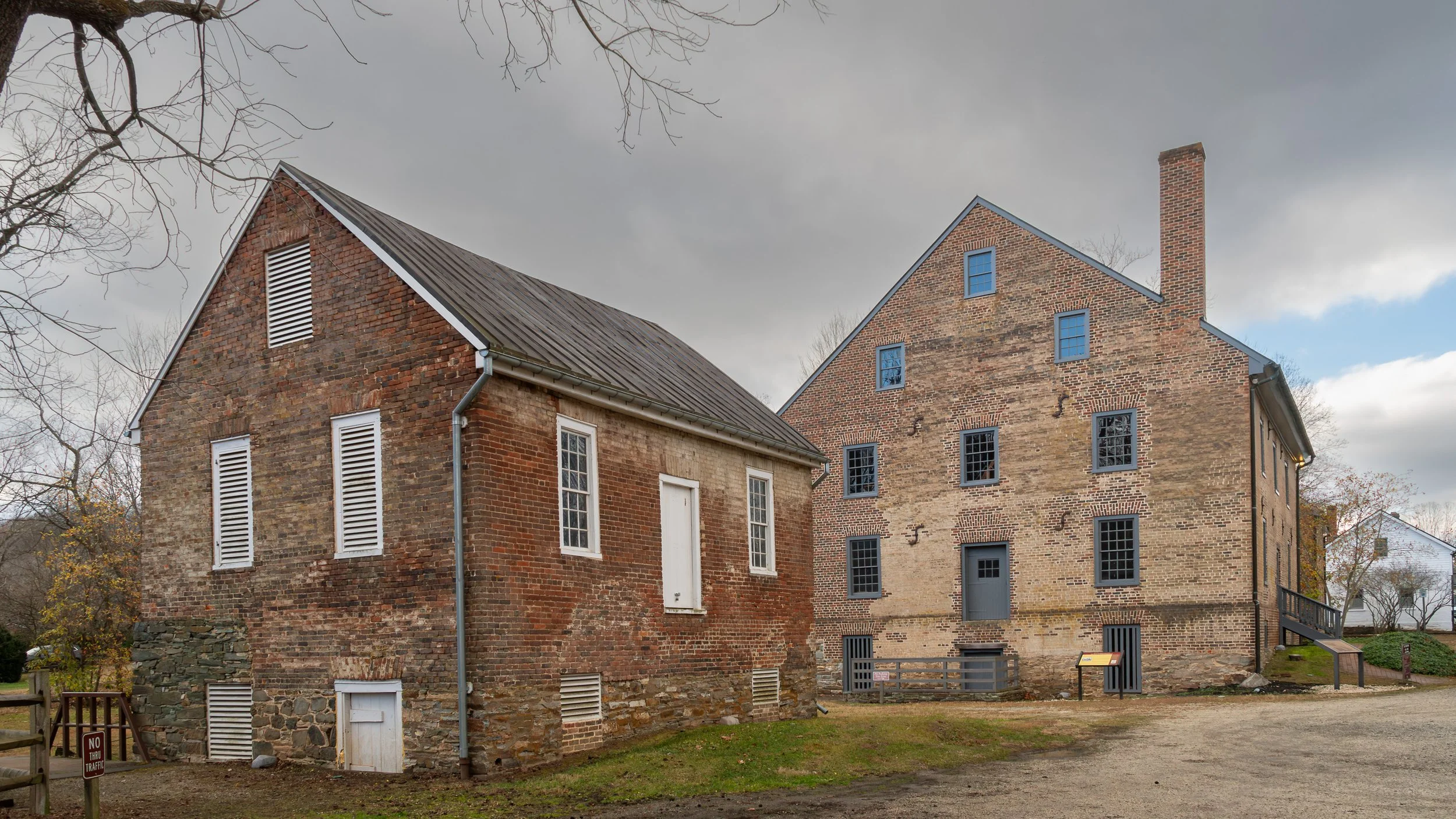
From left to right: country mill, merchant mill, granary (almost hidden behind merchant mill), and storehouse (white building)

Part of the Northern Virginia Regional Park Authority, Aldie Mill Historic Park preserves a small piece of local Loudoun County history. It was in operation from 1808 to 1971 and in the 1800s and early 1900s was a busy operation, both grinding local farmer’s corn and wheat into flour, meal and feed for family use, but mostly creating products that were transported to the ports of Alexandria and from there to markets in the east and overseas.

The merchant mill and the granary at Aldie Mill Historic Park in Loudoun County, Virginia

The front of the merchant mill at Aldie Mill Historic Park

Charles Fenton Mercer found this ideal location just along the almost complete Little River Turnpike (U.S. 50) which would connect Aldie with Alexandria. Just a bit to the west it would hook up with turnpikes through Ashby’s Gap and Snicker’s Gap in the Blue Ridge. There were the waters of Little River to power the water wheels, and Loudoun County’s farms were a great source of the needed grains.

The back of the merchant mill shows the two water wheels and the granary in the background to the left

A closer look at the water wheels of the merchant mill at Aldie Mill

The site includes several buildings:

Aldie Mill 39401

  • A storehouse, the white building all the way to the right in one of the photos, was originally used as both a store and storehouse, and was later converted to a residence for mill workers and their families.

  • Grain waiting to be ground was stored in the granary, between the storehouse and the merchant mill. There were conveyors moving grain both ways between granary and merchant mill.

  • The merchant mill had a mechanical system of chutes and belts that moved grain between the various stages of processing. You can see the two water wheels at the back of the merchant mill in a couple of the photos. Some of the products of the merchant mill were sold in the store but the majority were transported to Alexandria.

  • Farmer’s brought their grain to the smaller country mill, where it was ground into flour, meal and feed for their family’s uses. It ceased operation in the late 19th century and was then used to store feed and other items.

A door at the mill

We visited this park in late November of 2025, which is during their off-season. It was a cold, somewhat overcast, and quiet day, though there were several other people who stopped by and walked the grounds while we were there. If you visit earlier in the year you might be able to enter some of the buildings and perhaps see demonstrations of what went on at the mill when it was actively in use. This is one of those almost hidden little gems that we may have driven by several times without realizing what it was. It does appear to be a less visited park and because of that some of the signage is rather old, faded, darkened, and difficult to read. But I’m glad we visited and I might enjoy visiting during their open season to see what else we might learn of the history of this region.


Do you enjoy these posts?

Sign up to receive periodic emails with updates and thoughts. Don’t worry, I won’t spam you. And please consider purchasing artwork or products from my online store, and using my affiliate links in the sidebar to the right when shopping online.

I appreciate your support!

An Early Spring Drive Through Fort Valley, Virginia by Todd Henson

Dogwoods along Fort Valley Road

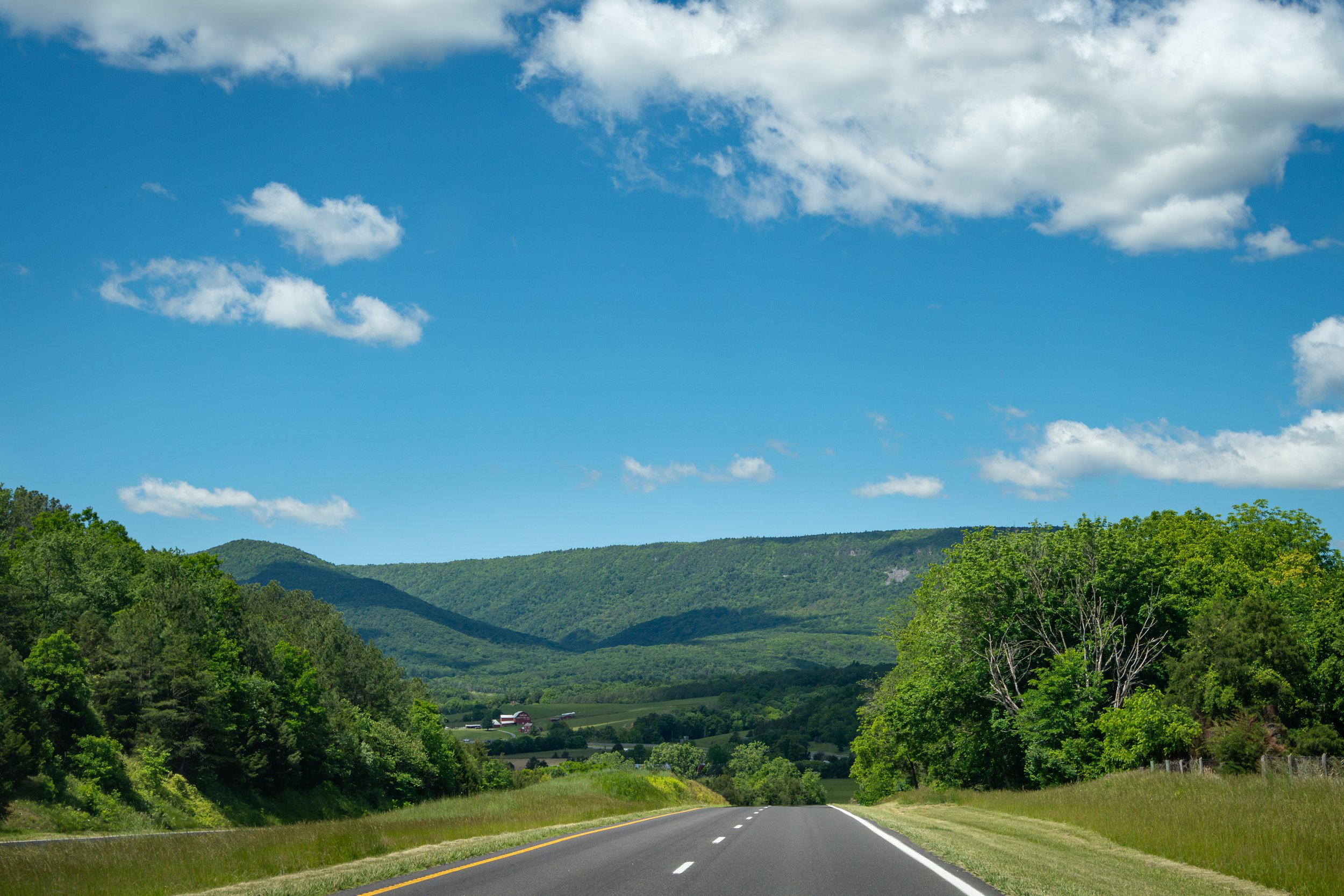
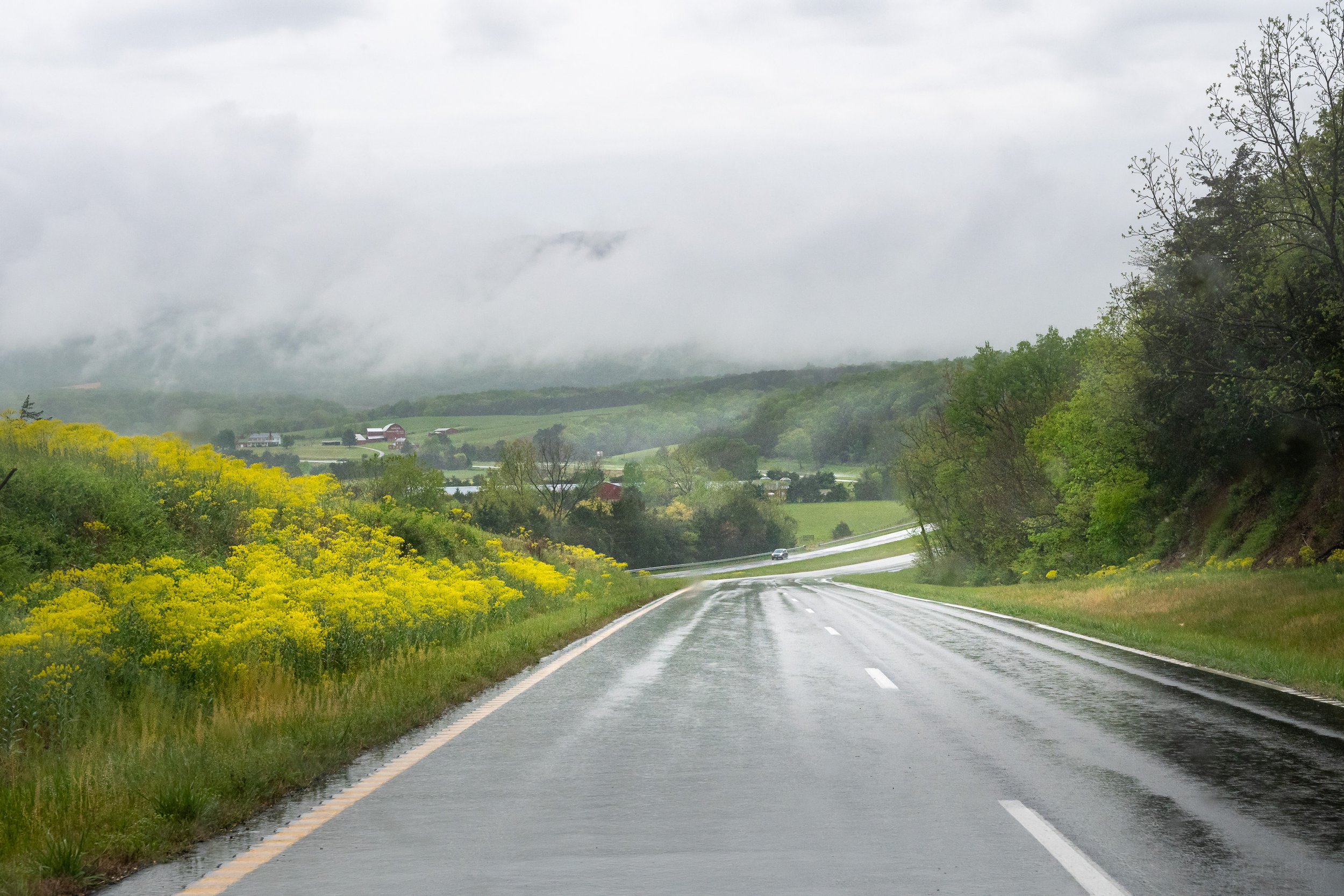
Fort Valley is a fascinating place. It is a valley formed when a continental plate crumpled, pushing mountain ranges upward and this valley downward. The eastern side is Massanutten Mountain, which runs the entire length of the valley. The western side is composed of three mountains almost forming a solid wall but with a couple gaps. To the north is a small gap where Passage Creek leaves the valley somewhere between Strasburg and Front Royal, and where Fort Valley Road enters the valley. From the south requires driving up and down a windy mountain road to get over the mountain. On the western front the two gaps between the mountains have roads heading over to Woodstock and Edinburg. It appears at least one of these roads may also travel up and down over a mountain before completely leaving the valley, though we’ve yet to drive them. For this trip we entered from the north and existed over the mountain to the south.

A first spring view of Passage Creek in Fort Valley

Redbud, dogwood and Fort Valley Road

The valley is almost a sealed system and because of that and how difficult it was to access at the time, George Washington had reportedly thought to use the valley as a natural fort to retreat to had the Continental Army been defeated by the British during the Revolutionary War. Seeing as that didn’t happen the valley was never used in that way, though it did become home to a couple blast furnaces used to create pig iron which were shipped to foundries and forged into other products. During the Civil War the Confederacy made use of the furnaces until Union troops destroyed them. One of the furnaces was rebuilt after the war but it closed shortly after as it was no longer competitive enough to stay in business.

Rustic views along Fort Valley Road

Redbud and the road

These days the valley is lightly populated with private homes and farms and is home to several recreational areas. We saw a number of folks fishing along the length of Passage Creek, and saw a number of areas for camping. And it’s also great for an early spring drive.

Bends in Fort Valley Road

Rolling valley hills


Do you enjoy these posts?

Sign up to receive periodic emails with updates and thoughts. Don’t worry, I won’t spam you. And please consider purchasing artwork or products from my online store, and using my affiliate links in the sidebar to the right when shopping online.

I appreciate your support!

Fisher’s Hill Battlefield - Ramseur’s Hill by Todd Henson

The entrance sign at Fisher’s Hill Battlefield

Virginia is a great location to live or visit if you are interested in Civil War history, and though I’ve never thought of myself as a Civil War buff, I do find it interesting and humbling to visit some of the battlefield locations and imagine what it might have been like at that time. My father and I recently visited Fisher’s Hill Battlefield, one of many locations within the Shenandoah Valley Battlefields National Historic District.

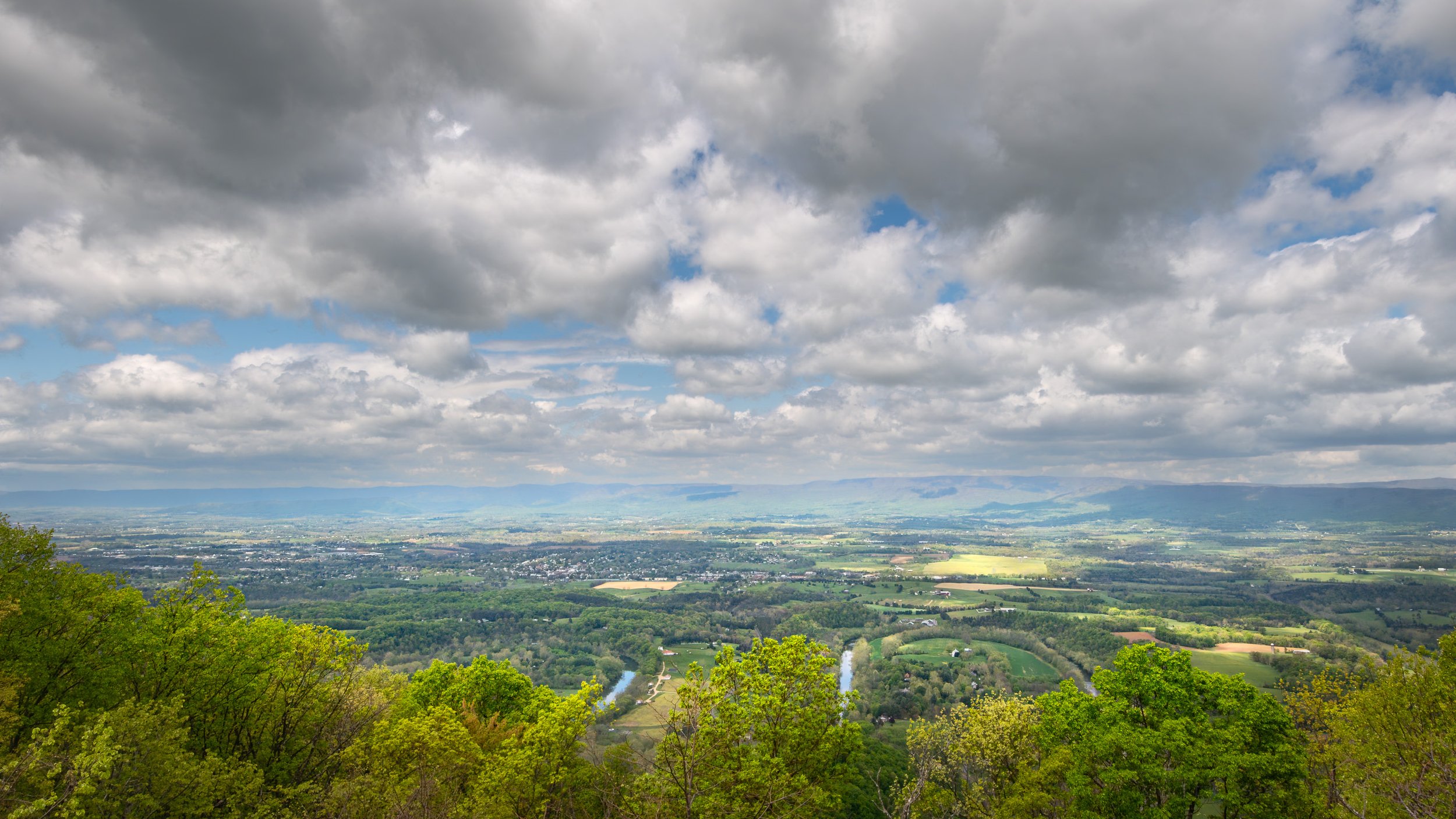
A panoramic view of Fisher’s Hill Battlefield (8-image stitched pano)

As with so many of the battlefields, you may not see any evidence of the war, no buildings or canons or dug trenches, but you will see sweeping landscapes, large fields, and hilly terrain. The maps on the signs do a great job describing where the various troops were positioned and how they maneuvered. This location, Fisher’s Hill, is referred to as Shenandoah Valley’s “Gibraltar”. The signage describes it as: “a natural fortification, apparently an impregnable one,” that sits at the narrowest part of the Shenandoah Valley, stretching just four miles from Little North Mountain to your front to Massanutten Mountain behind you.

The main signage at the parking lot of Fisher’s Hill Battlefield

The first trail sign at Fisher’s Hill Battlefield

This is where Union General Philip H. Sheridan’s forces pursued and engaged for the second time with Confederate General Jubal A. Early’s army. Early’s forces were significantly outnumbered and outmaneuvered, with 9,500 Confederate forces battling against 29,444 Union forces. By the end of the battle which was a Union victory the Confederates had lost 1,235 soldiers and the Union lost 528.

A view from a hill hear the entrance to the battlefield

As for location names, Fisher’s Hill isn’t a single hill but a series of hills between Back Road and the Shenandoah River. Ramseur’s Hill is one of these hills, named after Confederate General S. Dodson Ramseur whose troops manned this hill during the battle.

From atop a hill on the battlefield you can see the traffic of Interstate 81

The trail starts at the parking lot and weaves around some of the hilly terrain. We walked the initial section which is fairly accessible and level, but it appears, and the signs indicate, that beyond this point the trail becomes steeper and less accessible. If you’re ever in the area consider a visit. It’s located just off Interstate 81 in the Shenandoah Valley of Virginia.

Looking down at the bridge and walkway to the parking lot


Do you enjoy these posts?

Sign up to receive periodic emails with updates and thoughts. Don’t worry, I won’t spam you. And please consider purchasing artwork or products from my online store, and using my affiliate links in the sidebar to the right when shopping online.

I appreciate your support!