Martinsburg Train Station, West Virginia - April 2023 by Todd Henson

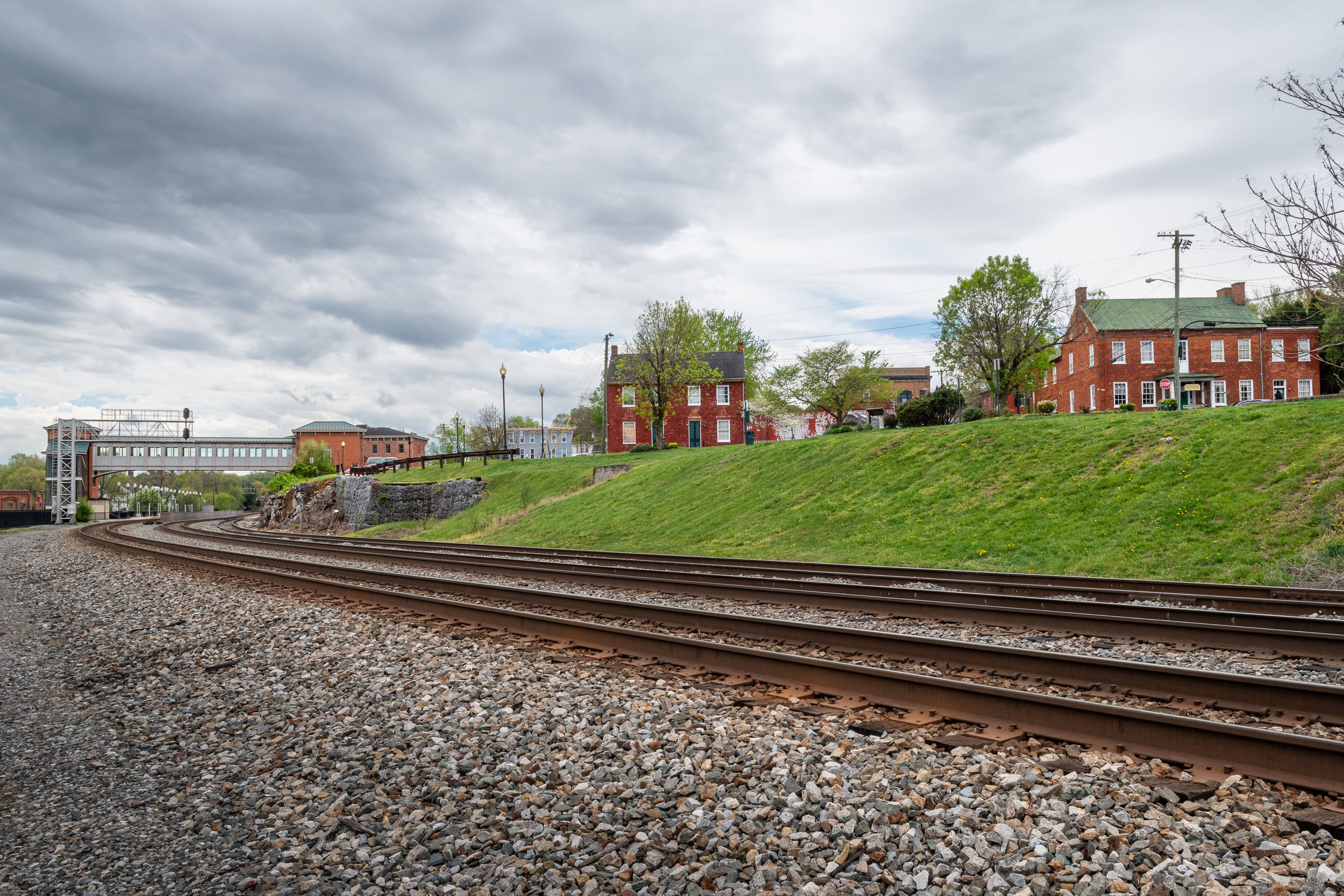
Martinsburg train station in West Virginia

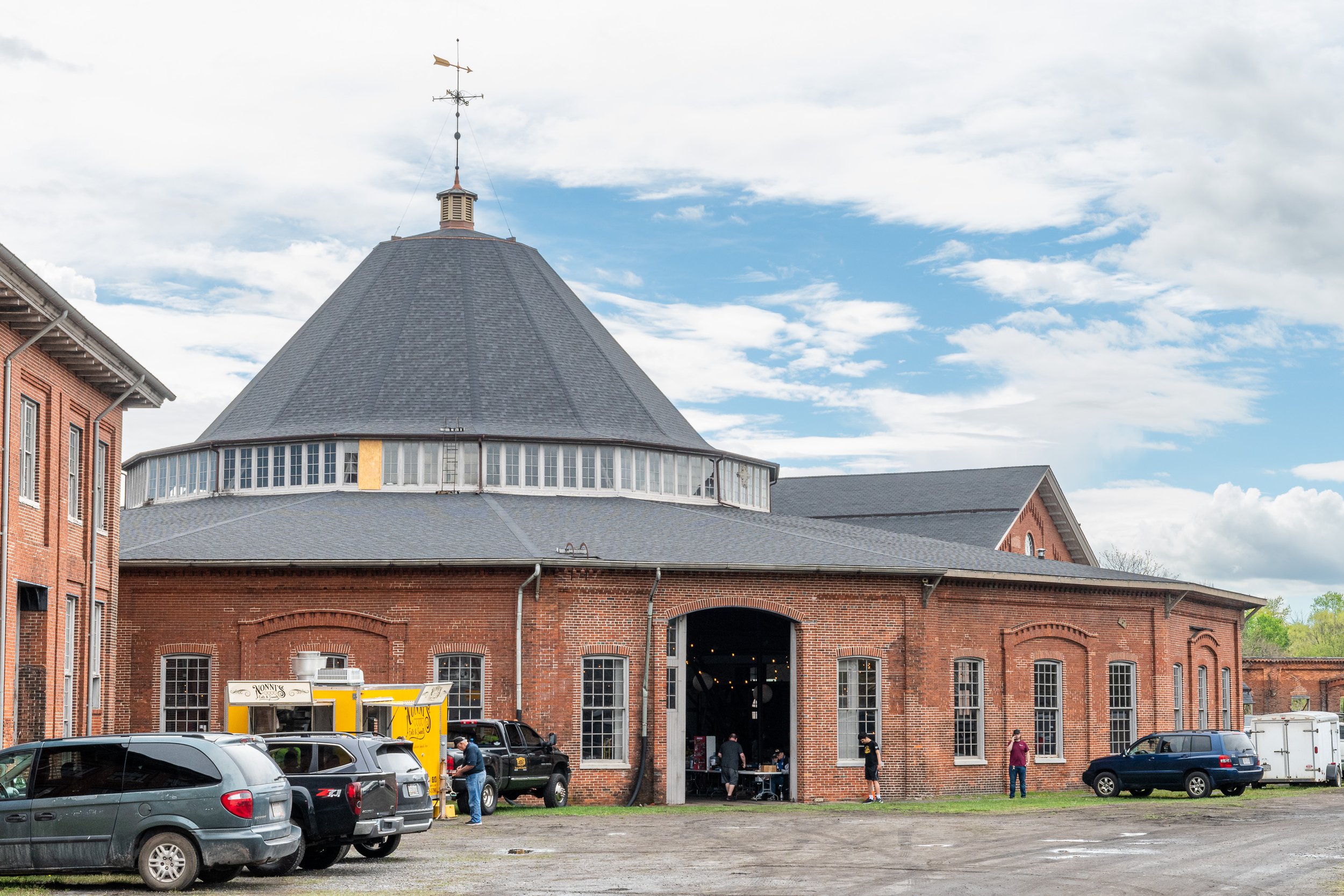
Back on April 15th of 2023 my father and I went to a model railroad show held at the old Roundhouse in Martinsburg, West Virginia. While there I photographed the still active station and a couple passing trains. I’d hoped to show these photos closer to when I’d created them but time got away from me. Speaking of time, if I had more I’d likely have researched and written a little history of the station for you, but I’ll have to save that for another time. Until then, I hope you enjoy these photos.

After photographing the wider view of the tracks and the station I heard an incoming train so I set my camera to shutter priority mode and slowed the shutter speed way down to 1/15th of a second to see if I could capture some motion in the passing train. But I didn’t have a tripod, so I leaned the camera against the back of the car and held it as steady as I could as the train passed by.

A train moving away from us, showing the motion of the train.

As luck would have it, as one train moved away from us towards the station another approached from the direction of the station, so I raised the shutter speed just a touch to 1/25th of a second and made a few frames of the oncoming train.

The lights of an oncoming train seen against the motion of an outgoing train.

The train approaches

The motion of the oncoming train as it passes us by.

Finally, before the train had completely passed I decided if I could show the motion of the train I might also freeze that motion, so I raised the shutter speed to 1/6400th of a second and succeeded in freezing the motion of an oncoming train. Granted, it wasn’t moving all that fast.

A moving train frozen in time.

All in all, it was a great day!


Do you enjoy these posts?

Sign up to receive periodic emails with updates and thoughts. Don’t worry, I won’t spam you. And please consider purchasing artwork or products from my online store, and using my affiliate links in the sidebar to the right when shopping online.

I appreciate your support!

A Visitor To The Wild Potato Vine by Todd Henson

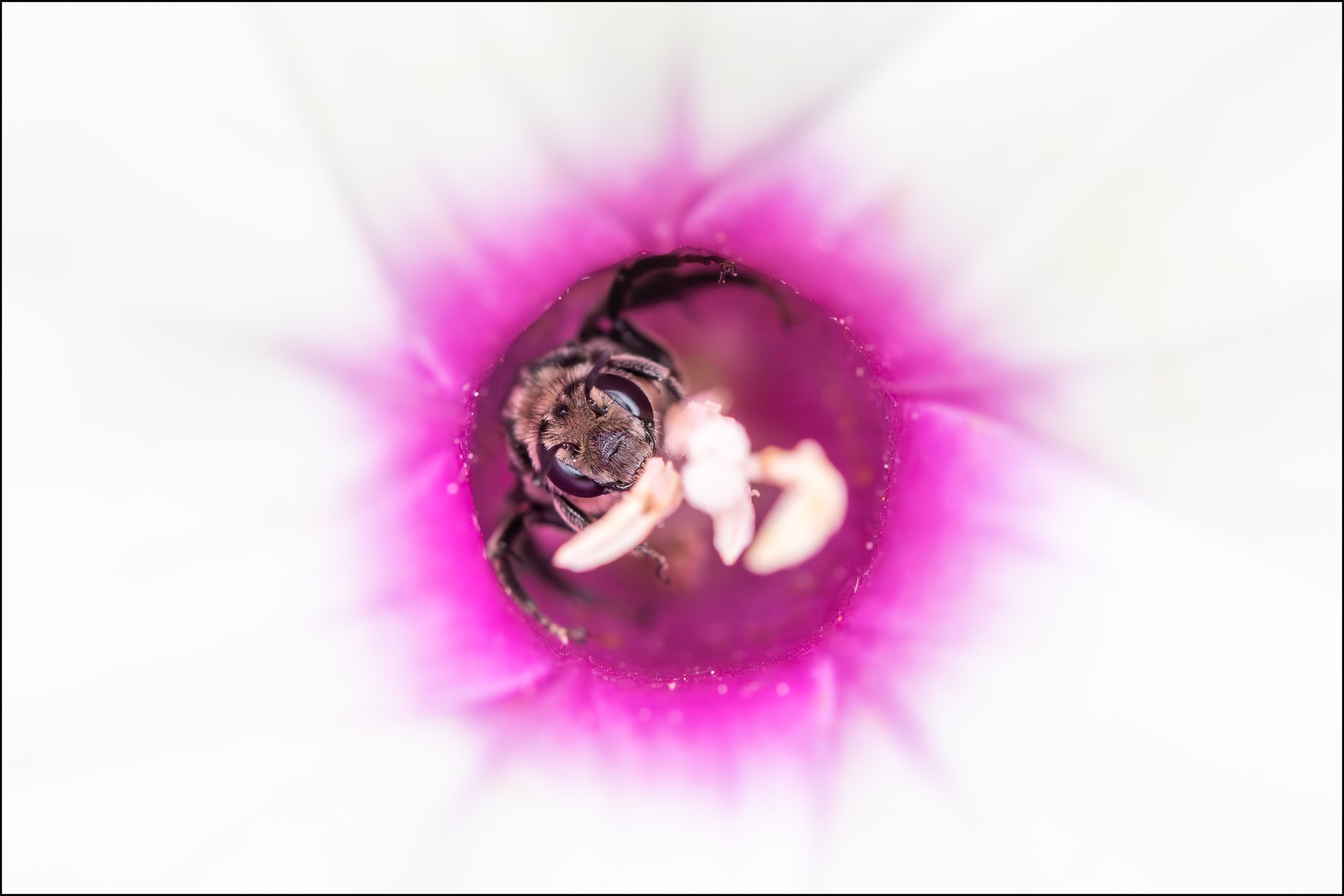
A visitor to the wild potato vine.

In mid-July my father and I walked around the shoreline trail of Occoquan Bay National Wildlife Refuge. I’m often drawn to the various flowers, many of which look very similar. In this case we found what I believe was a wild potato vine (Ipomoea pandurata), a member of the morning glory family, with their beautiful white flowers and deep pink interior. 

As I was attempting to find a decent view of a flower an insect, I believe some kind of bee, flew right into the one I was looking at. I then focused all my attention on that flower, getting as close as I could and attempting to see into the dark interior of the flower. The insect had flown in head first but by the time I had my camera positioned it had turned itself around and was facing me. I’ve photographed insects like this a few times and always enjoy the view it presents. Notice how the insect has its legs splayed out pushing against the flower to position itself.

Below is a slightly wider view to show the flower with the vines and leaves, and if you look closely, the tail end of the insect.

A wider view of the wild potato vine flower with the bee inside.

Tech Talk

For those technically inclined, I was photographing with my 105mm macro lens. It was an overcast day so I had my ISO up a bit to better see into the darker regions and still keep a high enough shutter speed for me to handhold.

For the wider view I used an ISO of 800, an aperture of f/6.3 and a shutter speed of 1/640. These were general middle-of-the-road settings while I was exploring the scene.

When I moved closer to see inside the flower it might have made sense to raise the ISO to better see the much darker region, but I didn’t think of that and was working fast before the insect left the flower, so I stayed at ISO 800. I was much closer to the subject so I had the foresight to stop down my aperture to f/9 to try to get more of the insect and interior in focus. The closer you get the shallower the depth of field. Stopping down the aperture helps get a wider depth of field with more in focus, and at this close range the depth of field is very small even with smaller apertures. But stopping down the aperture requires a slower shutter speed (ah, physics!), in this case 1/320 second, which I hoped was still fast enough for a sharp image.

In the end I’m pleased with how it turned out.


Do you enjoy these posts?

Sign up to receive periodic emails with updates and thoughts. Don’t worry, I won’t spam you. And please consider purchasing artwork or products from my online store, and using my affiliate links in the sidebar to the right when shopping online.

I appreciate your support!

Greens and Browns Along the Ground by Todd Henson

In autumn most of the forest floor is the brown of fallen leaves. But there are still patches of color, mostly shades of green, sticking up every so often through the brown. I’ve gathered together a small collection of photos from one hike through Prince William Forest Park on October 29th, 2023, that show some of these greens and browns along the ground. I hope you enjoy them.

Fan Clubmoss

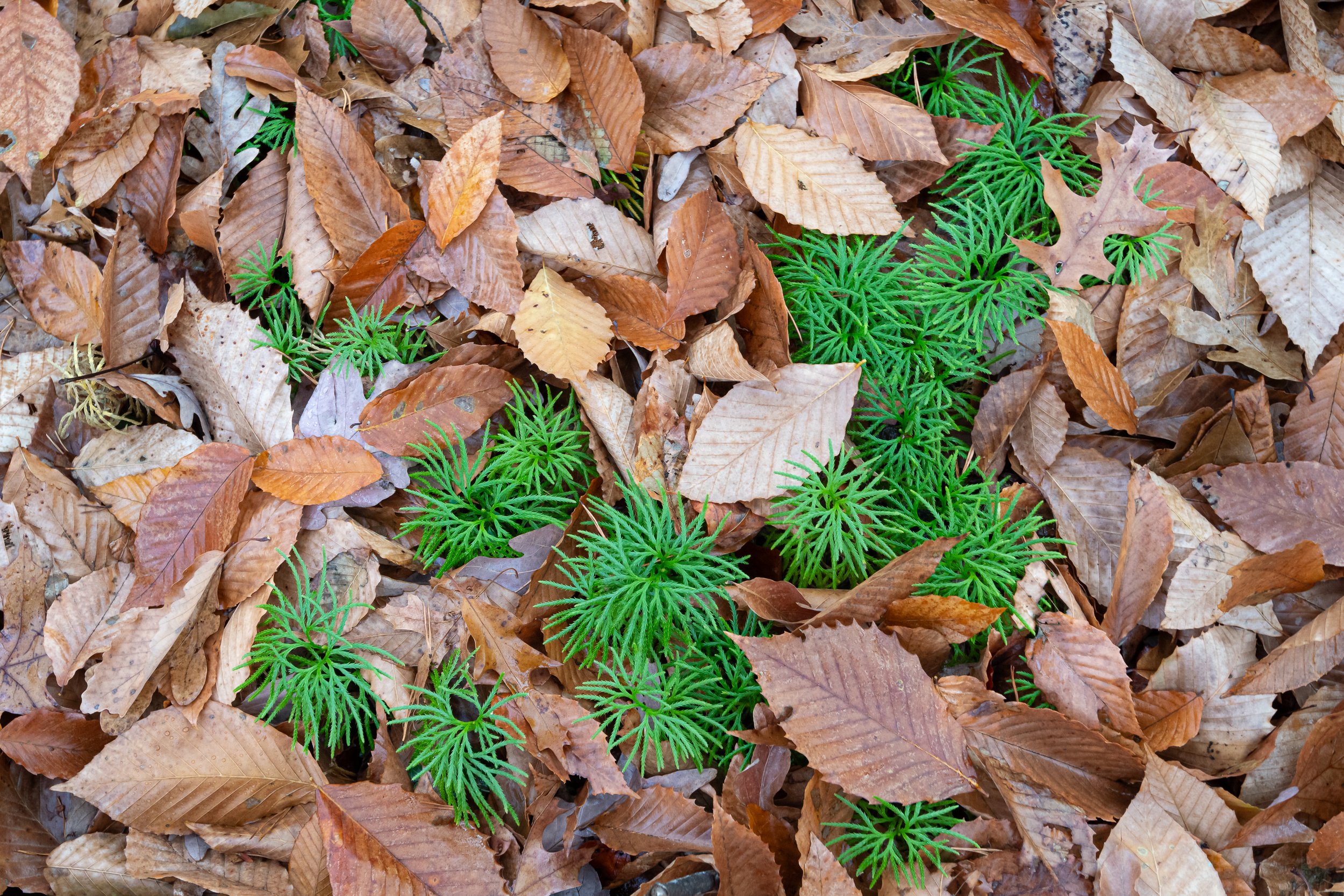
One of the common plants that remains green late in the year is fan clubmoss with its distinctive fan shape. It tends to grown very low to the ground and spreads out all over the forest floor.

Fan clubmoss spreads across the leaf-covered ground

Fan clubmoss and beech leaves (and a couple red oak)

Tree Clubmoss

Not quite as common in these woods is tree clubmoss, which grows taller than fan clubmoss and is far less smooth. In fact, the combination of the sharper bristles and the tall yellow stalks make it one of the plants sometimes used to create Christmas wreaths and other greenery. On one trail you can find fan clubmoss on one side and tree clubmoss on the other with the trail seemingly the dividing line between the two.

A field of tree clubmoss

Looking down on tree clubmoss

Delicate Fern Moss

What struck me about this scene was the beautifully delicate green fern patterns growing out of a hole in the fallen tree. Delicate fern moss is a very appropriate name. Sadly, I didn’t quite nail the focus with this image, but it still conveys the wonderful patterns and color.

The beautiful green patterns of delicate fern moss grow from a hole in a fallen tree

Partridge Berry

And speaking of color, it’s not at all uncommon to see the darker green leaves of partridge berry vining their way over other greenery like moss and lichen. And of course the bright red berries are an extra treat, especially when seen against all that green.

A bright red partridge berry with its darker green leaves set against lighter greens and brown leaves

Quartz

And let’s not forget the geology of this forest, one with plenty of quartz underground and sometimes poking out for us to appreciate. Here we see examples of quartz surrounded by leaves and some bits of greenery.

A wide view of quartz, leaves, moss and lichen

A quartz closeup


Autumn and winter often lead to less color in the landscape, but that doesn’t mean there’s no color. We just need to look a little closer to see it. And when we see it, to appreciate it.

Thanks for reading.


Do you enjoy these posts?

Sign up to receive periodic emails with updates and thoughts. Don’t worry, I won’t spam you. And please consider purchasing artwork or products from my online store, and using my affiliate links in the sidebar to the right when shopping online.

I appreciate your support!