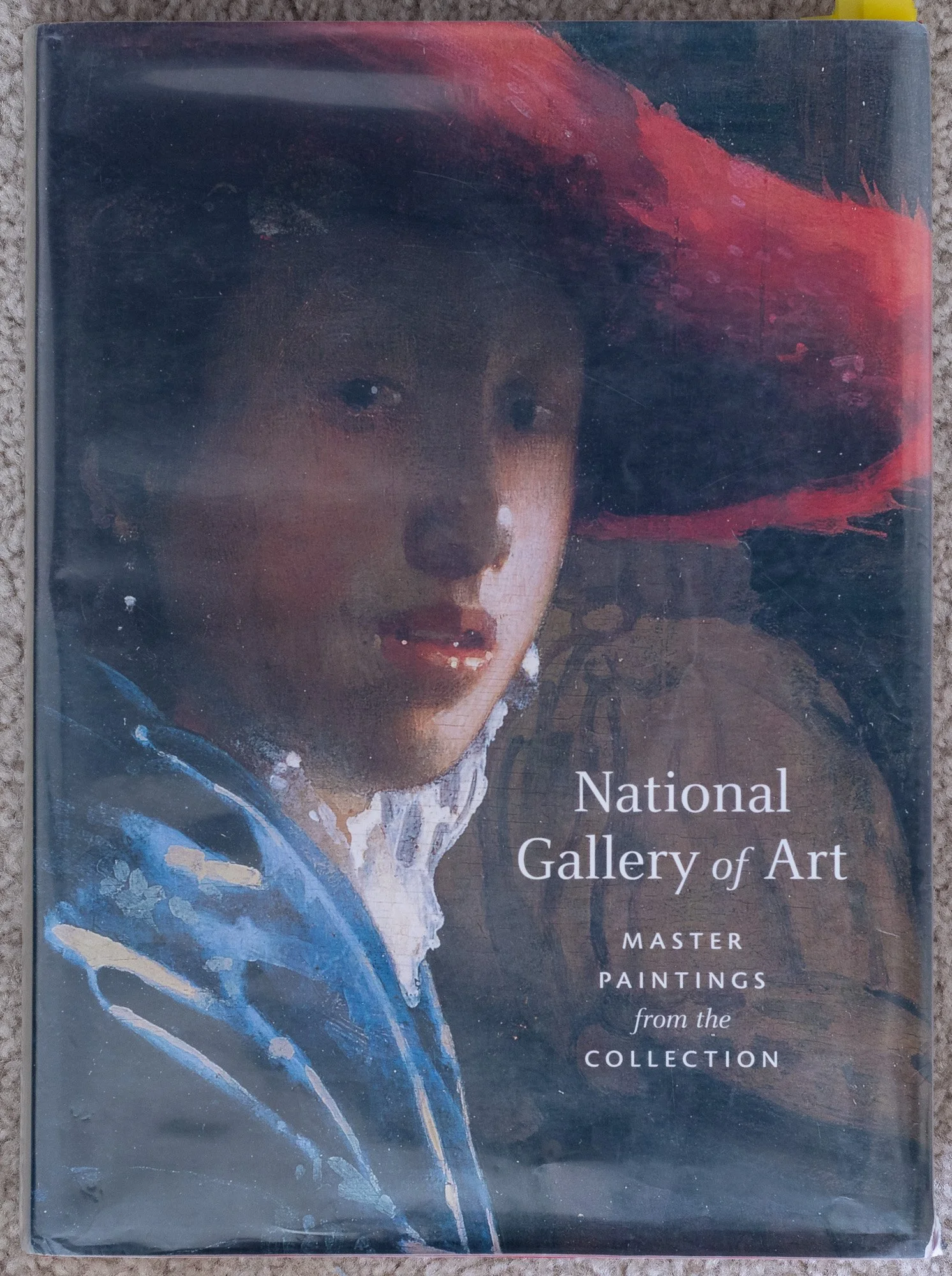
National Gallery of Art Master Paintings from the Collection by Todd Henson

Book cover of Daring to Look

One day when I visited my local library I saw this book, National Gallery of Art Master Paintings from the Collection, displayed near the entrance. I decided to check it out and spend some time with it, and I’m glad I did. I have visited the National Gallery of Art, in Washington, D.C., on several occasions so I’ve been fortunate to personally see some of these paintings. But it was still great to view them at my leisure while at home, granted in a smaller format, though this is an oversized book at approximately 9x12 inches. One big benefit the book has over the museum is the text. There are a number of short commentaries on many of the specific works with plenty of details about the artist and their life.
The book begins with a Director’s Foreword by Earl A. Powell. It’s very short but provides lots of background about the museum and its collection. It’s a very young art museum when compared both to other museums in the US and especially when compared to many of the well-known galleries in Europe. It opened in 1941, founded by Andrew W. Mellon, and began with his collection of 121 master paintings. From then on it has benefited from many donations, both of artwork and of funding to purchase artwork. This book contains roughly 400 paintings from their collection, selected by John Oliver Hand, who also wrote the commentaries.
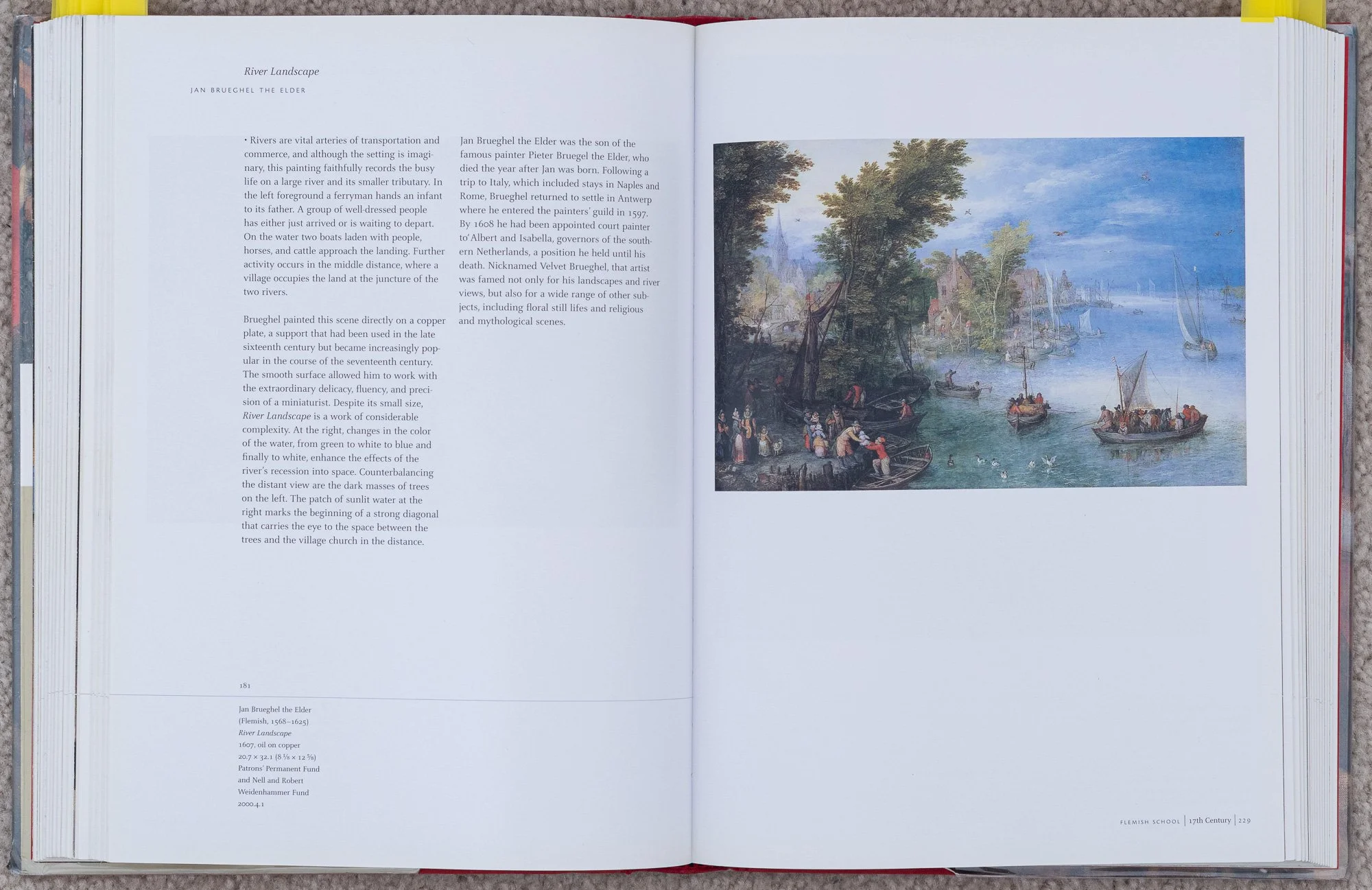
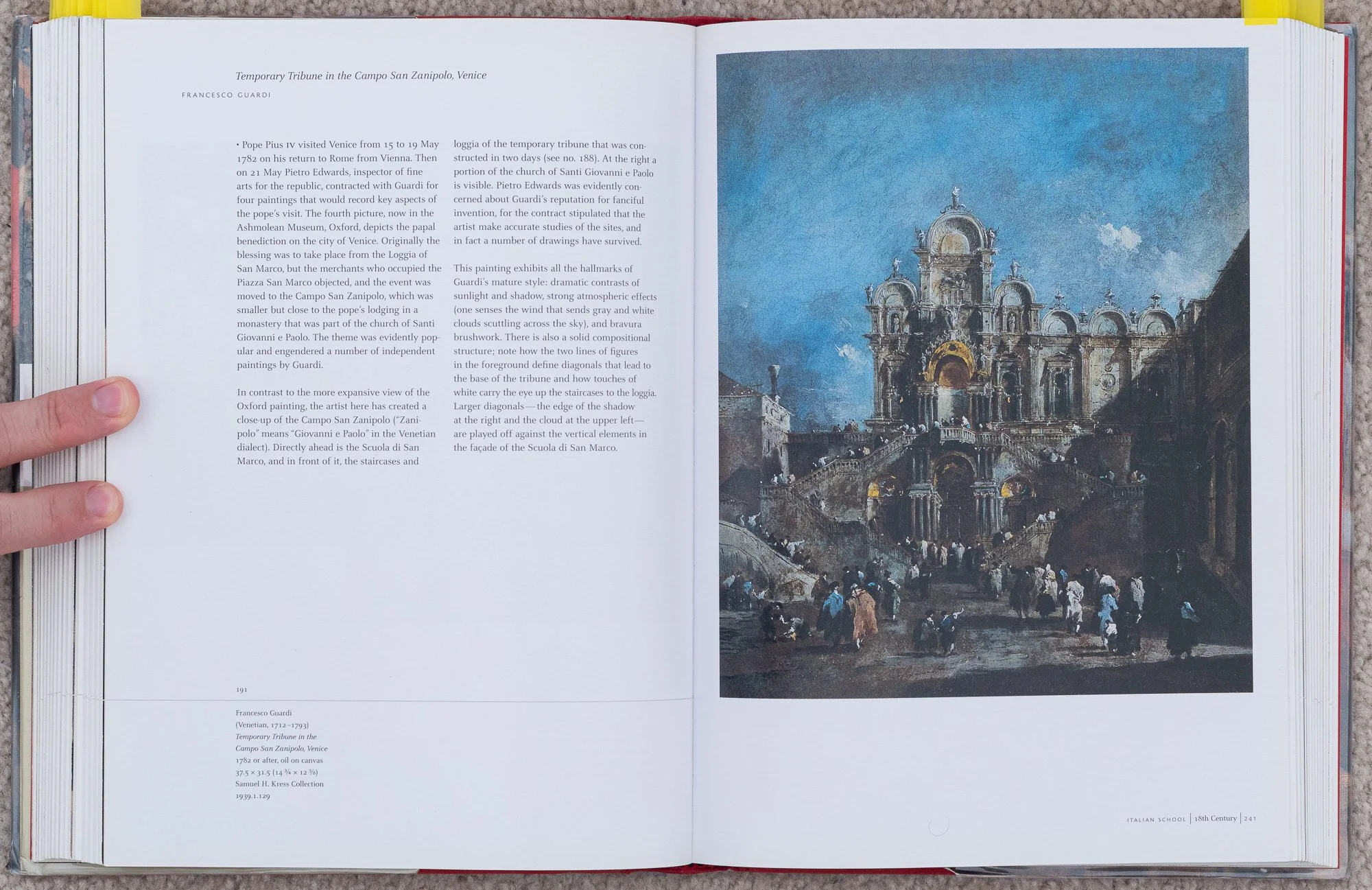
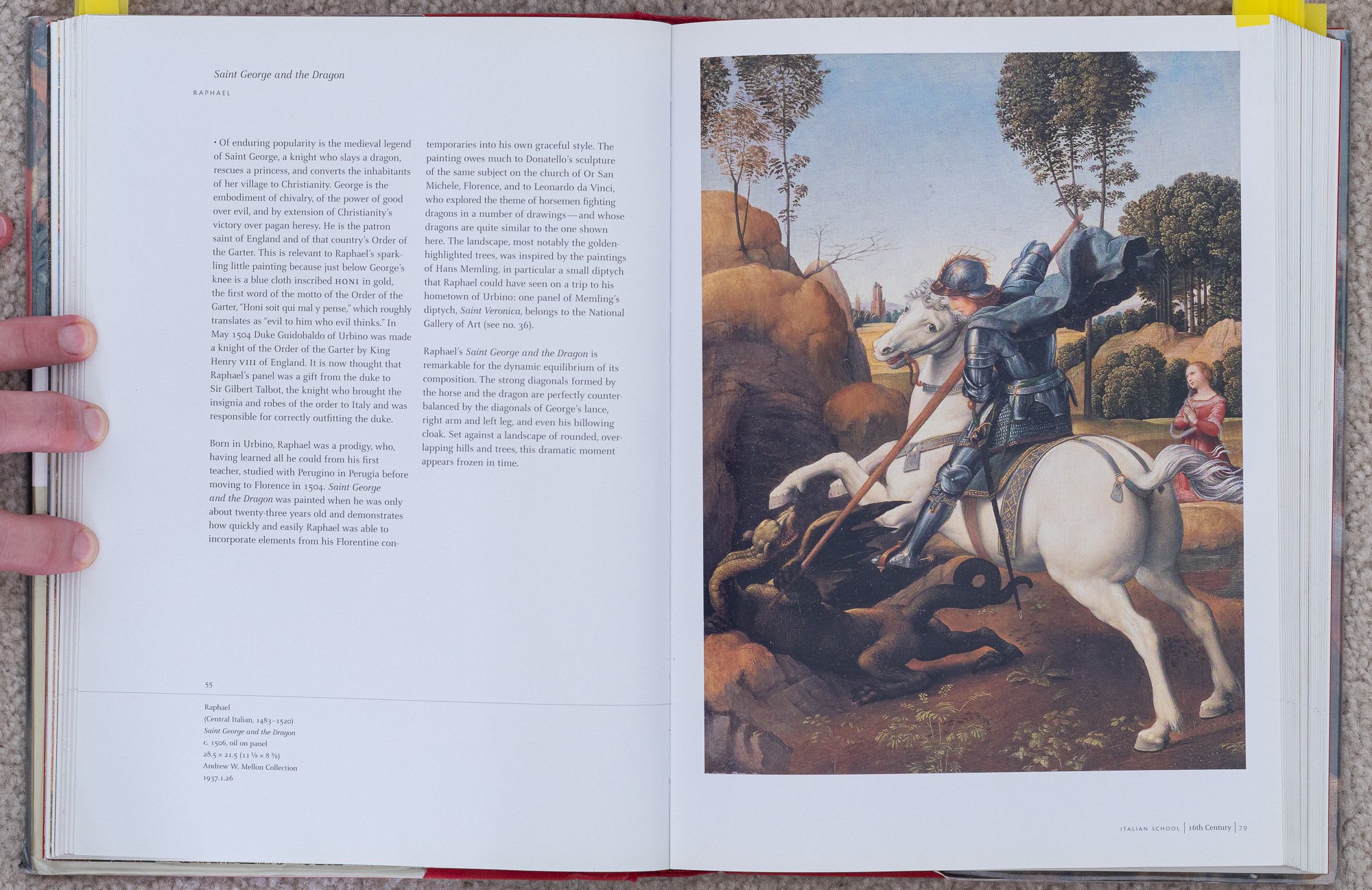
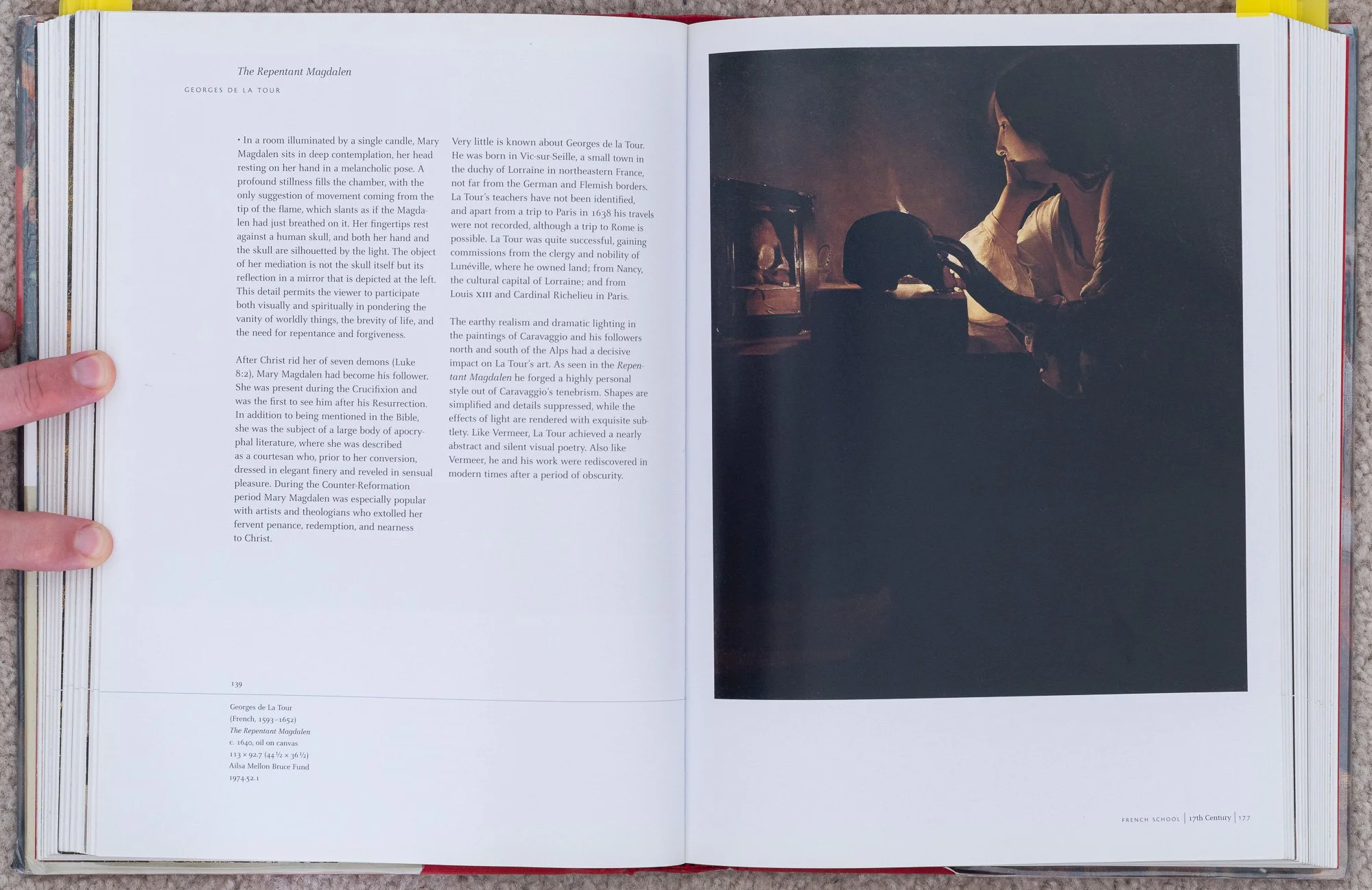
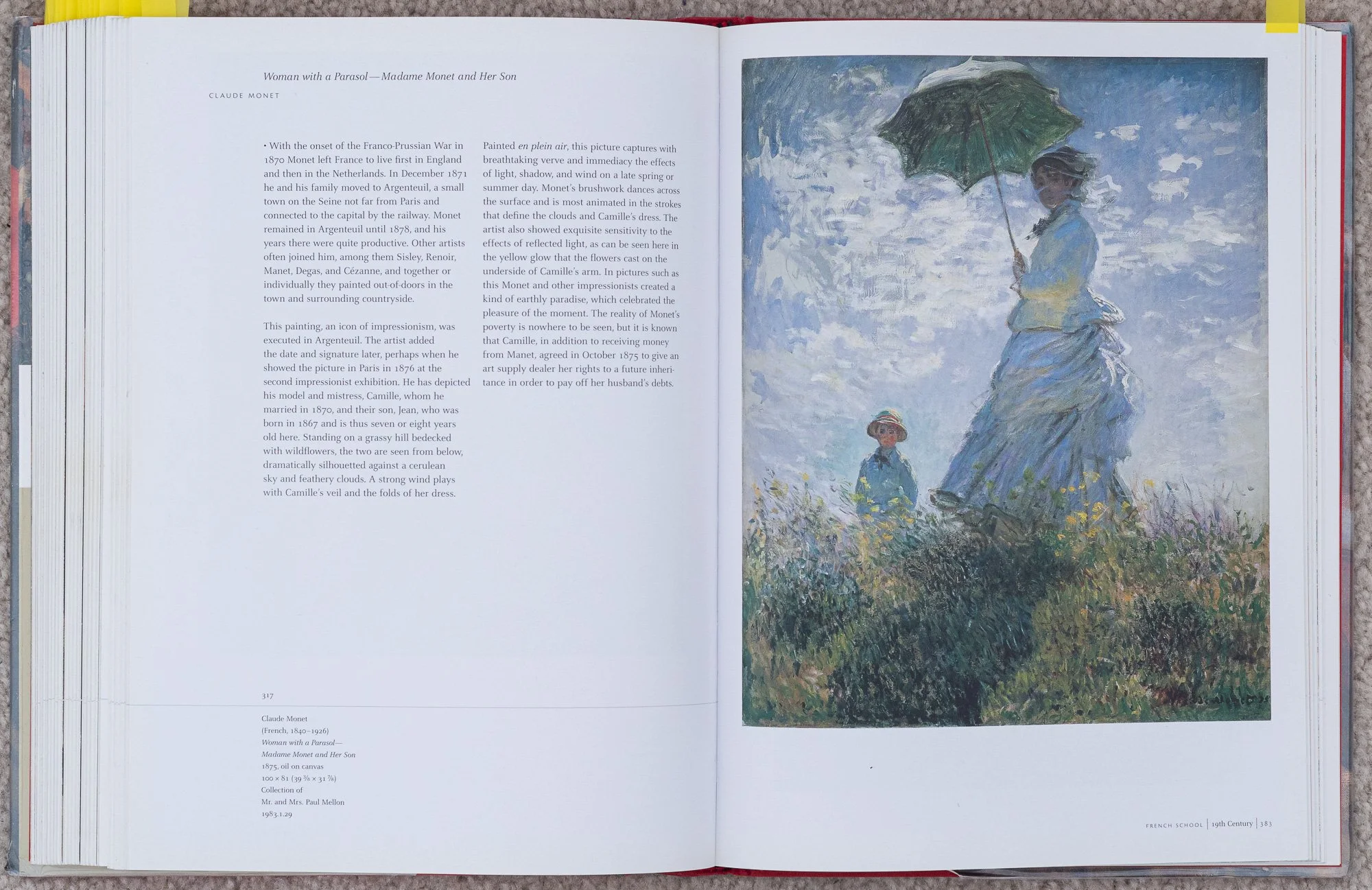
The majority of the book contains the artwork, with some pages featuring a single piece of work, others with multiple paintings on a single page, and in some cases with some detailed portion of a painting blown up to a full page size. Each painting is accompanied by details such as title, artist, date, media, size, and donator. Many are paired with a commentary providing lots of extra details and background.

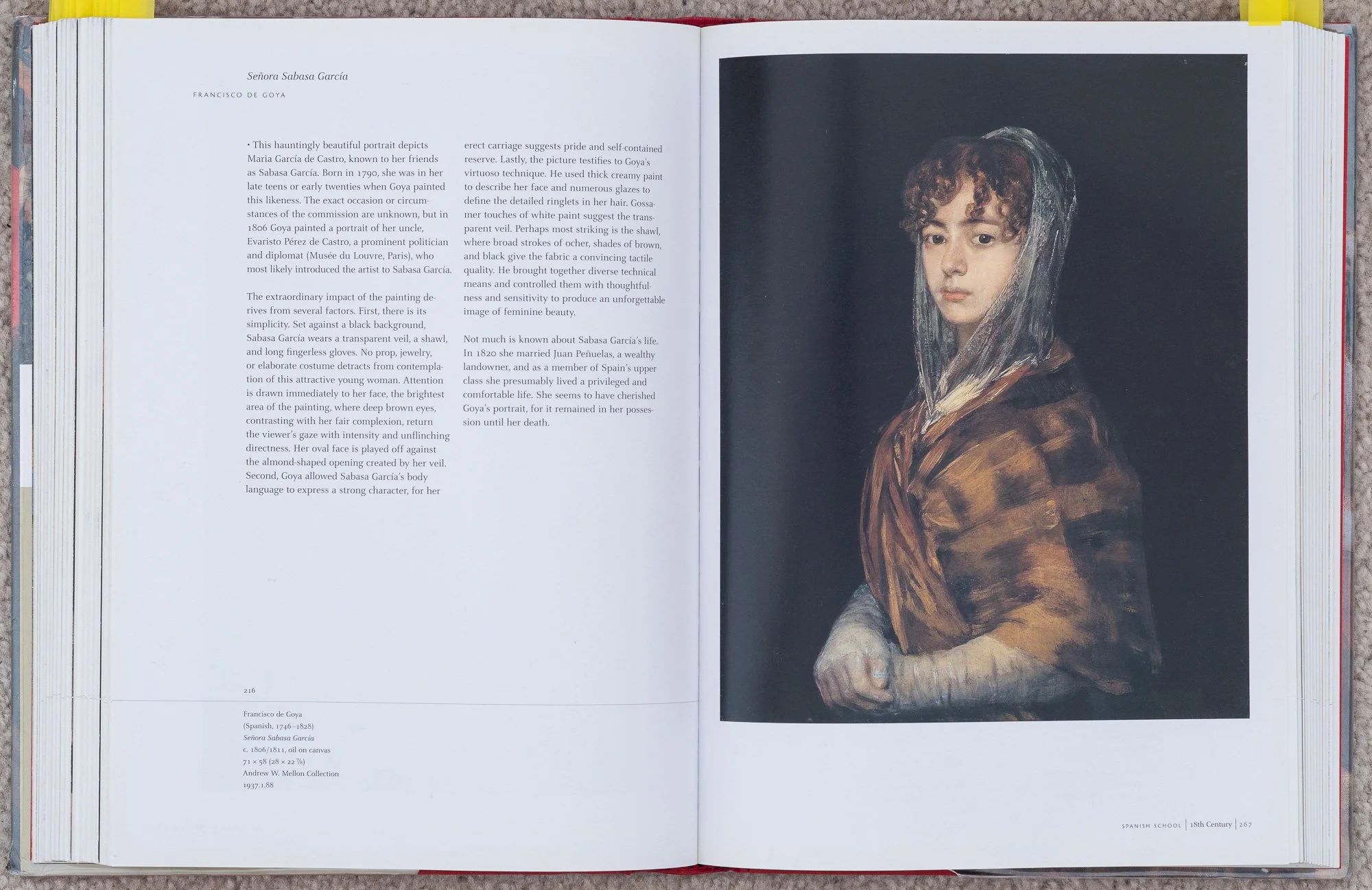
The book is organized by century, from the 13th/14th centuries to the 20th century. Within each of these sections the paintings are sorted by schools or art: Italian, Netherlandish, German, Hispano-Flemish, French, Spanish, Dutch, Flemish, British, American. I found it fascinating looking for stylistic similarities within schools and differences between them. I also found it fascinating studying how the styles changed over time. And as I found when visiting the actual galleries, there were specific styles and time periods that most appealed to me, and those I generally found least appealing. Being a photographer, I very much appreciated studying how each painter used light within their compositions, how they chose to apply highlights and shading. Some of these paintings really do achieve life-like quality, whereas others intentionally avoid that, using more impressionistic or stylistic techniques.
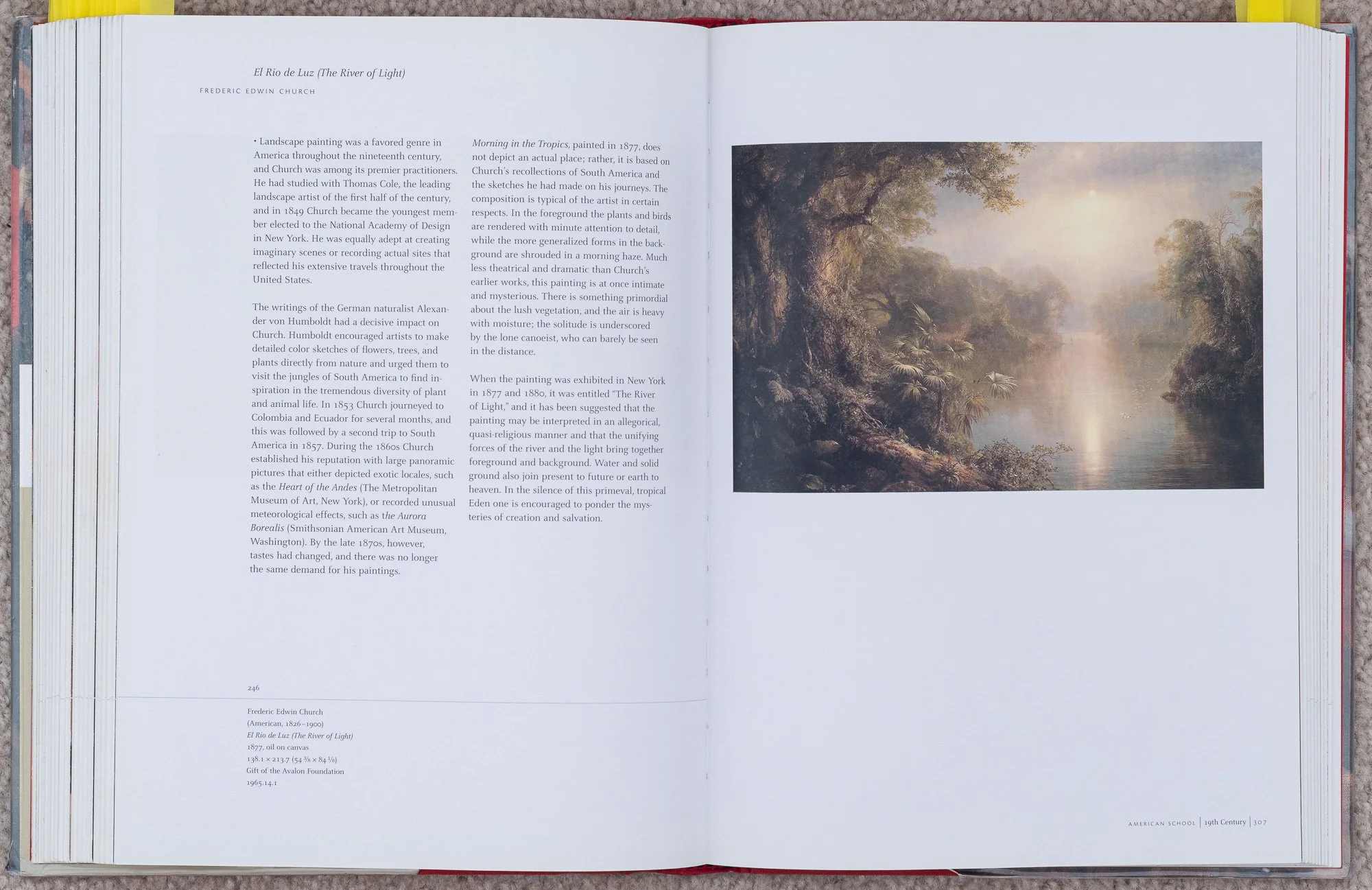
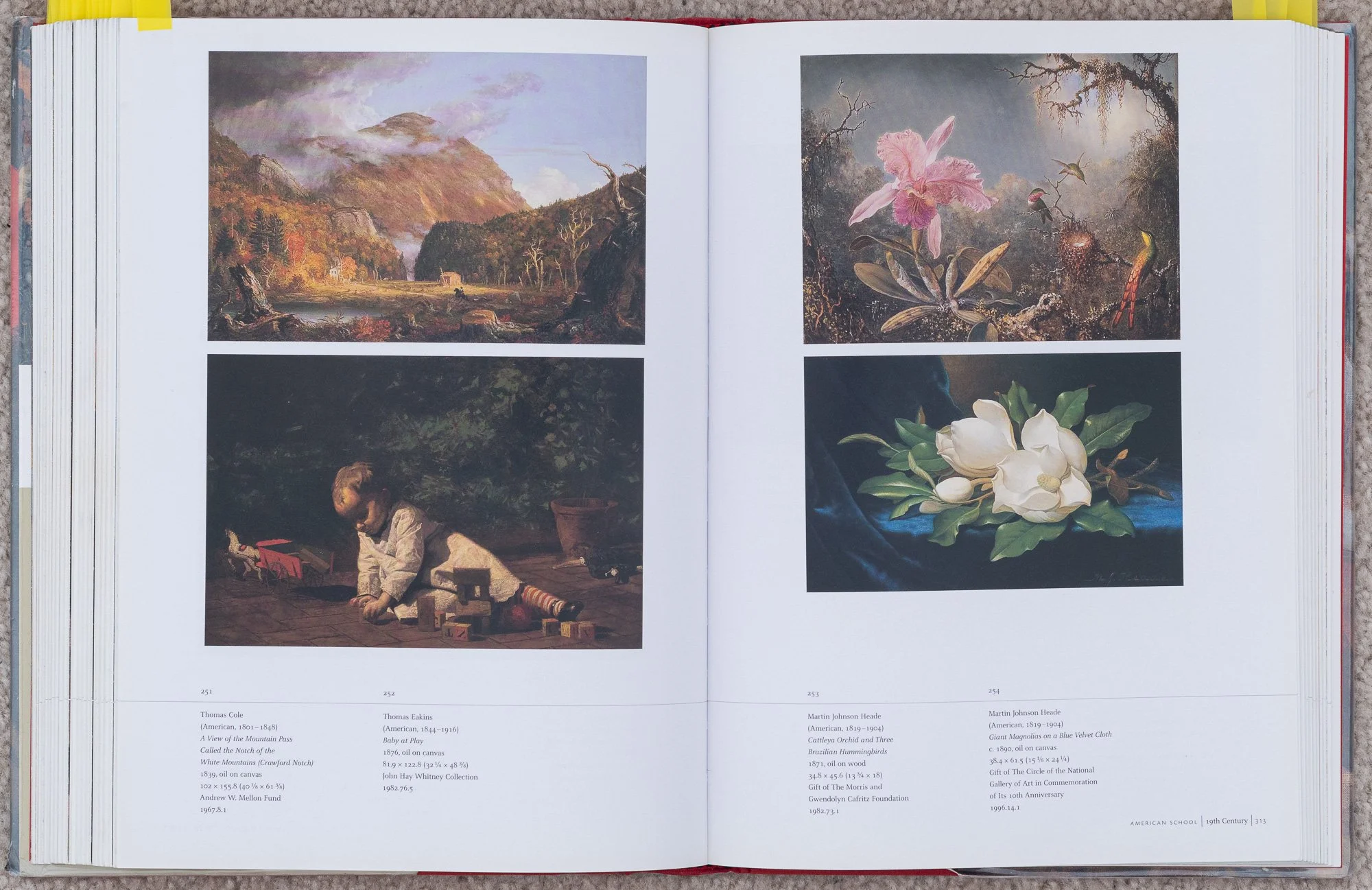
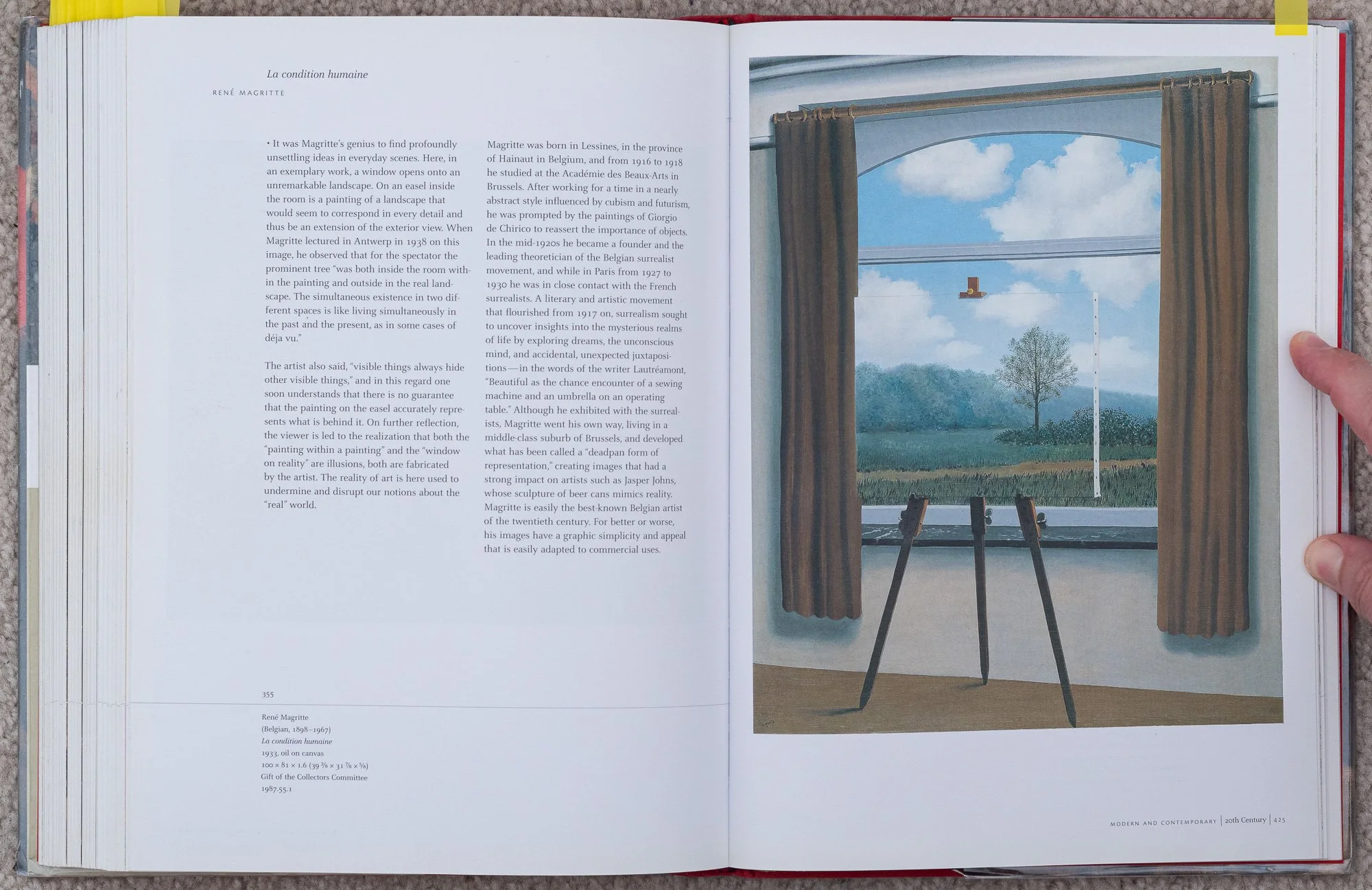
I struggled to choose a small subset of the 474 pages to show here as samples of what you can expect within the book. Naturally, I leaned towards works I found more appealing for one reason or another. This does mean I haven’t included many modern art pieces, so my apologies if that’s what you’d rather see more of. I obviously had to skip over so many fantastic pieces.
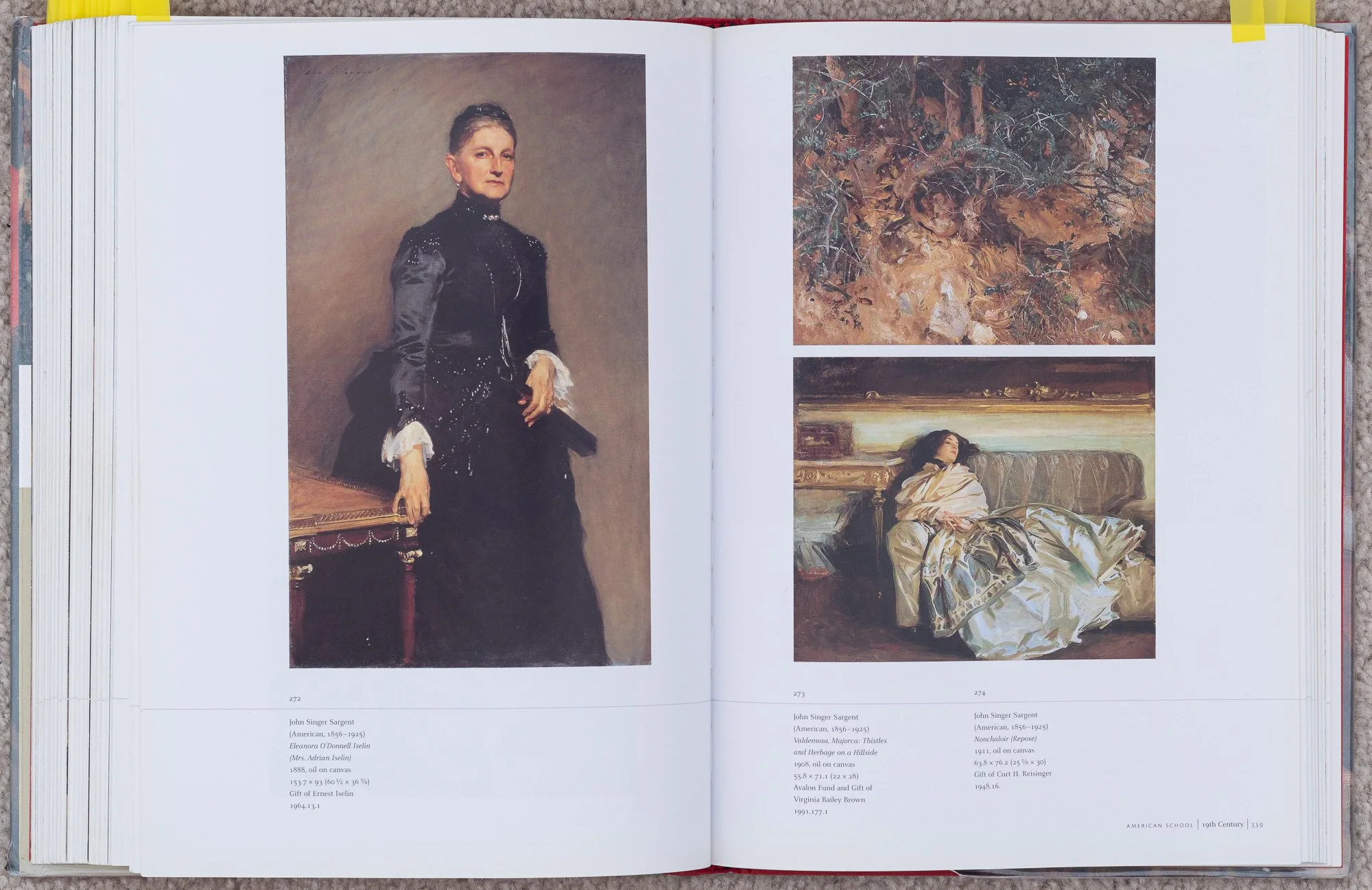
This book is well worth checking out if you can find a copy. And of course the museum is also worth visiting. I’d be curious to read your thoughts on the book, museum or artwork in the comments below.
Do you enjoy these posts?

Sign up to receive periodic emails with updates and thoughts. Don’t worry, I won’t spam you. And please consider purchasing artwork or products from my online store, and using my affiliate links in the sidebar to the right when shopping online.

I appreciate your support!


Historic Stark Covered Bridge (New Hampshire) by Todd Henson

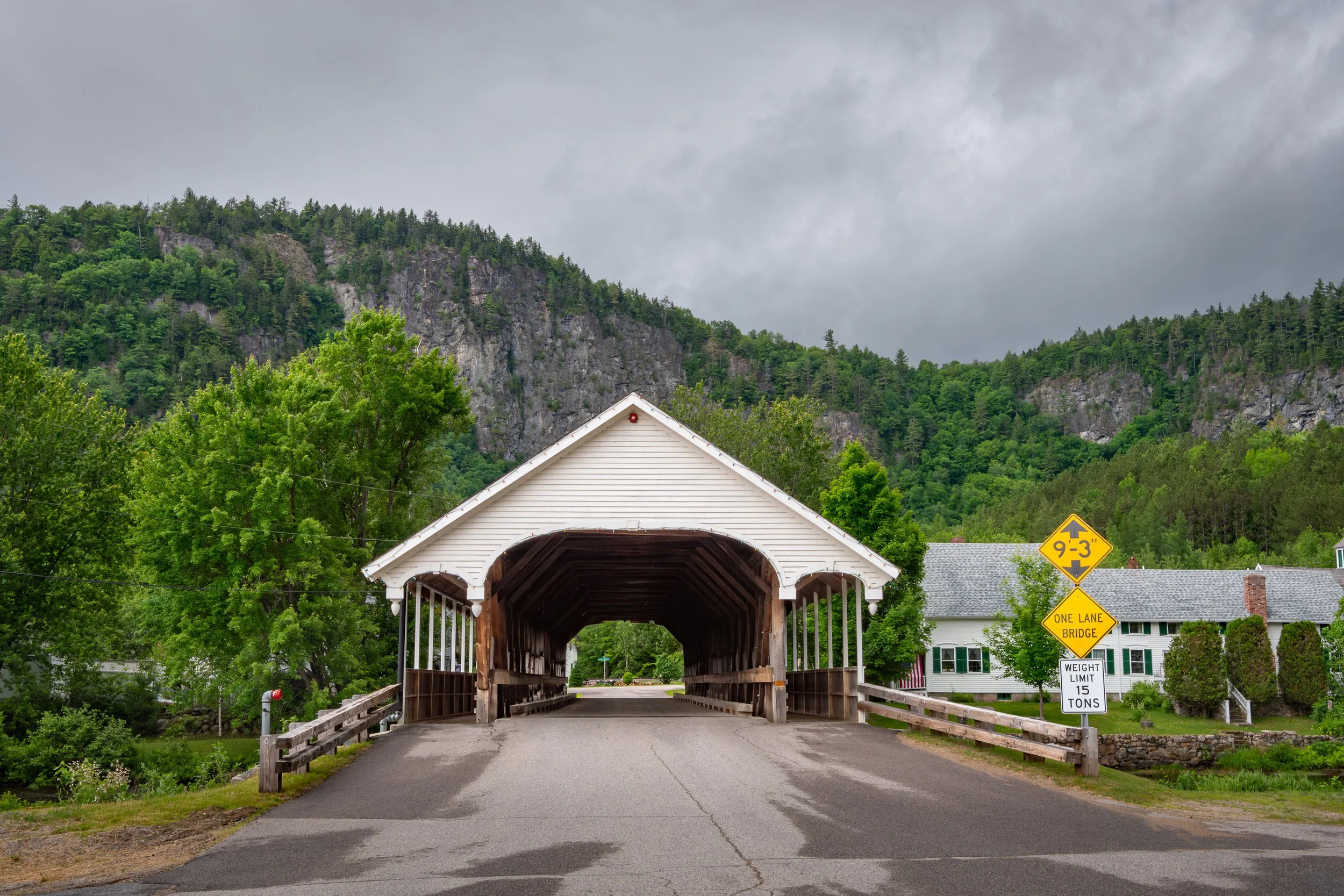
The Stark Covered Bridge with the beautiful forested mountains in the background, in Stark, New Hampshire.

The Stark Covered Bridge may be one of the best known covered bridges in New Hampshire. It’s become an iconic representation of the state, especially when paired with the Stark Union Church right beside the bridge, the Stark Inn Bed & Breakfast on the far side of the river, and the forested mountains and rocky cliffs in the background. This scene can be found on promotional materials all over the world. In fact, almost exactly a month after visiting Stark and photographing the bridge my father and I found a promotional picture showcasing this scene in the Strasburg Museum in Strasburg, Virginia (see further below).

The iconic view of the Stark Covered Bridge and Stark Union Church in New Hampshire.

A view of the full length of the Stark Covered Bridge in New Hampshire.

Facing the Stark Covered Bridge, built using a Paddleford truss design with various modifications over the years.

Walking through one of the two pedestrian walkways within the Stark Covered Bridge in New Hampshire.

There is some uncertainty as to exactly when the bridge was built. Some records claim 1857, others that it was built along with the church in 1853. According to the book, Covered Bridges of New Hampshire (see below), the town of Stark has settled on a date of 1862.

The Stark Covered Bridge was built using a Paddleford truss design and features a pedestrian walkway on both sides of the bridge. Interestingly it was originally built as a two-span bridge, spanning the Upper Ammonoosuc River. But in 1895 a flood tore the bridge from its supports and destroyed the center pier. Thankfully, the bridge remained largely intact and with much work was restored, but this time as a single-span bridge to hopefully avoid a similar occurrence in the future. But removing that center support required strengthening the bridge, so two arches were added inside the bridge to allow it to function as a single span.

The Stark Inn Bed & Breakfast and the Stark Covered Bridge in New Hampshire.

The Stark Union Church as seen from the Stark Covered Bridge in New Hampshire.

As can be seen in the photos, there is currently a center pier. It was determined in 1945 that the bridge was sagging and needed work. In 1948 they installed the new center pier to provide needed extra support. Later, in 1954, they continued work on the bridge, adding some steel beams inside to further strengthen the bridge and raise its load capacity. And as you can see in the photos, more repair work is needed. One of the photos shows what can happen when a vehicle that’s too tall for the bridge tries to pass through it anyway.

Visible damage to the Stark Covered Bridge in New Hampshire.

The Stark Covered Bridge is number 37 in the New Hampshire list of covered bridges. We visited this bridge on June 22nd, 2025. And on a more personal note, my grandfather was actually born in what is now the Stark Inn Bed & Breakfast, that building on the other side of the river from the church. Click here to see the list of covered bridges we visited while traveling through New Hampshire in mid-2025.

The Upper Ammonoosuc River in Stark, New Hampshire.

A view of Stark, New Hampshire, on a promotional piece found in the Strasburg Museum in Virginia.

Resources

Most of the details within this post were learned either from signs at the bridge or from the fantastic book, Covered Bridges of New Hampshire by Kim Varney Chandler, which I purchased from a small local shop in Lincoln while on our trip. It’s well worth it if you plan to visit the area or are just interested in covered bridges and their history and construction. The link takes you to the author’s website for the book with lots of extra information and with links to let you purchase directly from her.


Do you enjoy these posts?

Sign up to receive periodic emails with updates and thoughts. Don’t worry, I won’t spam you. And please consider purchasing artwork or products from my online store, and using my affiliate links in the sidebar to the right when shopping online.

I appreciate your support!


Brief Glimpses of Autumn in Fort Valley, Virginia by Todd Henson

The Colors of Passage Creek

On October 25th, 2025, my father and I went for a drive through Fort Valley, Virginia, to see any of the fall foliage still hanging around. It was a challenging day, exposure-wise, because of the blazingly bright sun and the shadows of the mountains, but I did the best I could to balance the two so you could see a bit of the beauty present in that valley, especially along Passage Creek.

A sunny autumnal day on Passage Creek

We entered the valley on Fort Valley Road and this time instead of trying one of the winding narrow one-lane dirt roads we chose to leave the valley via the winding but paved two-lane Edinburg Gap Road. Maybe not quite as exciting as the others, but a bit less stressful. 🙂

Driving into Fort Valley on Fort Valley Road in the fall

Autumn on Edinburg Gap Road leaving Fort Valley


Do you enjoy these posts?

Sign up to receive periodic emails with updates and thoughts. Don’t worry, I won’t spam you. And please consider purchasing artwork or products from my online store, and using my affiliate links in the sidebar to the right when shopping online.

I appreciate your support!