Pedal Boating by the Thomas Jefferson Memorial by Todd Henson

Pedal boating in the Tidal Basin in front of the Thomas Jefferson Memorial, Washington, D.C.

I recently realized I have not travelled into Washington, D.C. to photograph anything in over a year. This prompted me to look back over some of the photographs from my previous trips to see if perhaps there was something in there I had yet to process.

I have a bad habit of importing my photos onto the computer and then moving on to the next shoot, forgetting about what I’d just imported. So occasionally going through my back catalog is a useful exercise. Thankfully, it’s also a lot of fun, bringing back memories of the days I snapped the shutter.

Today’s photograph was from early Spring many years back. The cherry blossoms were in full bloom. You can see some of them on the shore surrounding the Thomas Jefferson Memorial. And of course, on days like this people love to take the pedal boats out into the Tidal Basin. So I included a family in a pedal boat as they passed by the memorial. I also positioned myself to include at least part of the profile of Thomas Jefferson’s statue in the memorial.

The weather was very interesting that day. For the first part of the day it was pleasant, if slightly overcast. This actually worked well for photographing the cherry blossoms. The clouds acted like a giant soft box, softening the light and helping to avoid harsh shadows. Today’s photo was from this time period, when the light was fairly soft.

Later in the day the sky darkened and we were drenched by a pop-up storm that quickly moved over the city. After that, the sun came back out and many of the clouds broke up. We ended up visiting one of the museums before heading back out of town.

But back to today’s photograph. It was from the time period prior to the storm, when the clouds in the sky contributed to a generally soft light without overly harsh shadows. Something about this prompted me to process the image as a high key black and white. I thought the soft light was perfect for a high key image, where everything is very light and bright, with very little dark throughout the image.

Split Toning settings I used in Adobe Lightroom

Split Toning settings I used in Adobe Lightroom

After I’d finished the conversion to black and white I felt the image seemed a little cool and wanted to warm it up just a touch. To do this I used split toning, where you tone the highlights one color and tone the shadows another color. But I didn’t want the image to feel like a color image so I kept the tones very, very subtle. I gave the highlights a very light touch of yellow and the shadows an even lighter touch of red.

Here are both versions of the photograph, one as a black and white, and the other as a black and white with the subtle split tone.
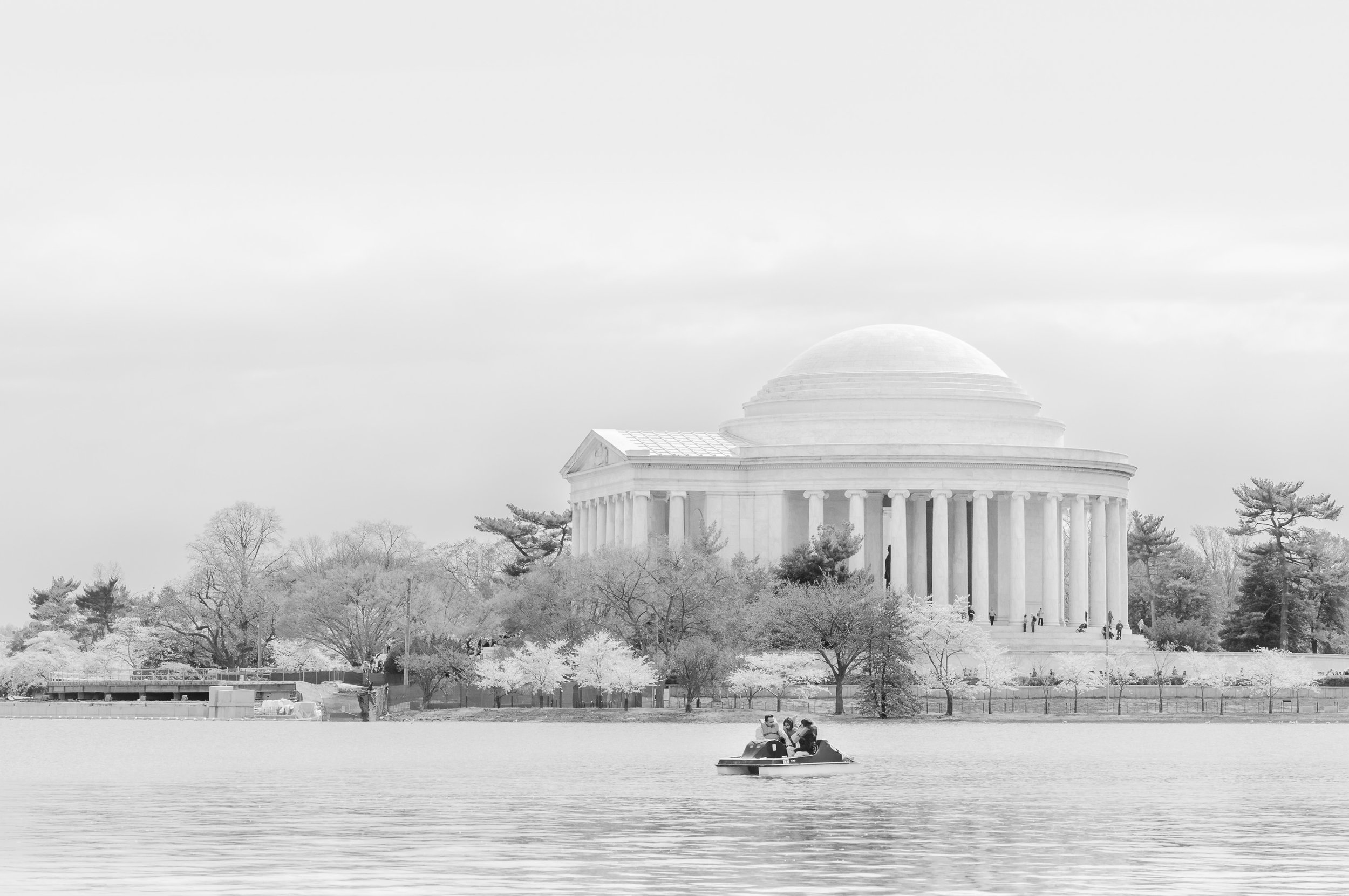
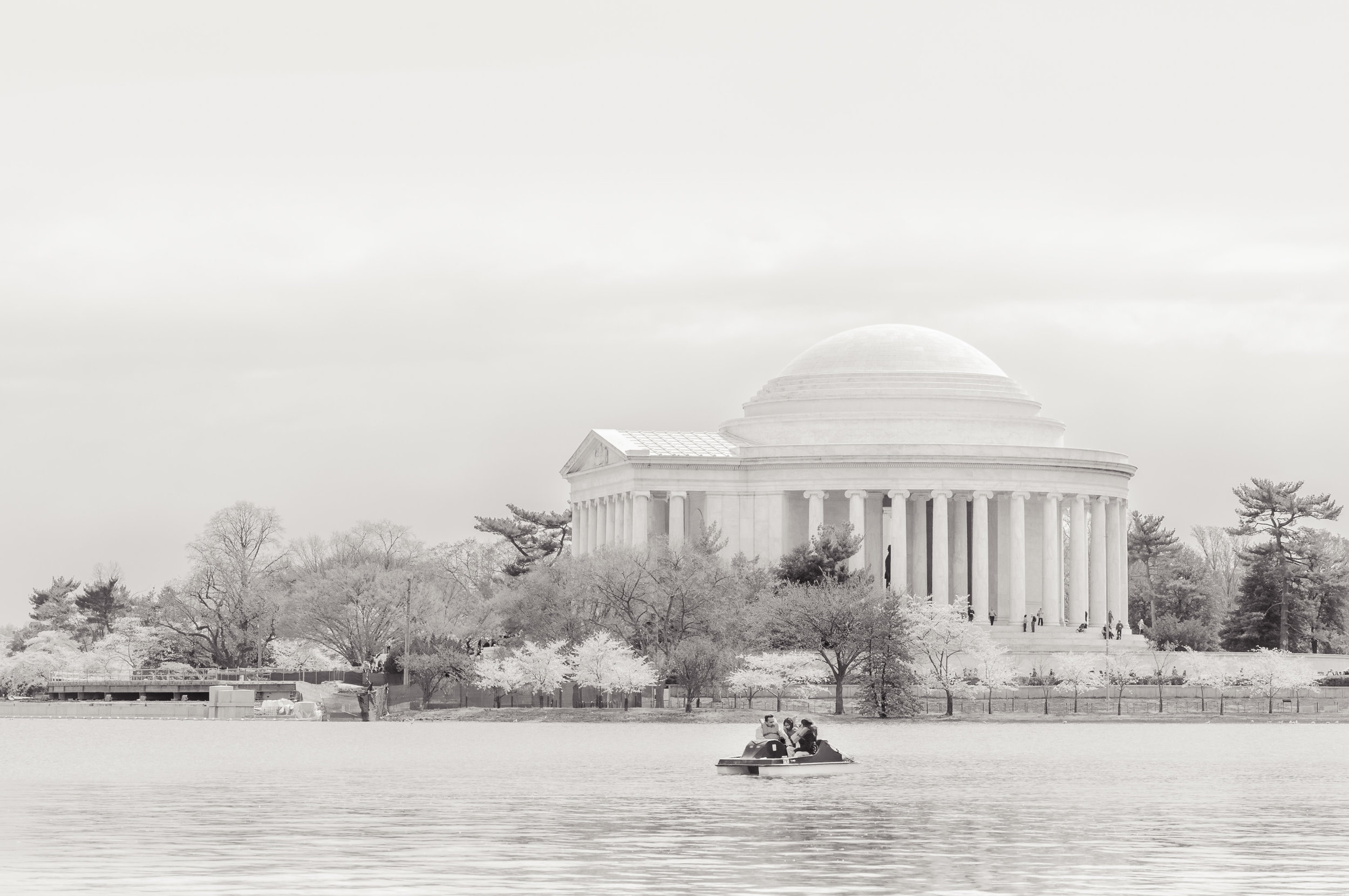
Which version do you prefer? Let me know in the comments below.


Do you enjoy these posts?

Sign up to receive periodic emails with updates and thoughts. Don’t worry, I won’t spam you. And please consider purchasing artwork or products from my online store, and using my affiliate links in the sidebar to the right when shopping online.

I appreciate your support!


Photographing Yellow-rumped (Myrtle) Warblers in the Wetlands by Todd Henson

Yellow-rumped (Myrtle) Warbler perched on a branch.

On a recent trip to a wetlands park I was fortunate to watch and photograph several Yellow-rumped Warblers of the Myrtle variety. These are a beautiful bird with a yellow patch on their rump, the top of their head, and on their sides. Their back is grey, and the rest of their body is white with black patches and stripes.

Side and underside of a Yellow-rumped (Myrtle) Warbler in the brush.

I worked to create photographs of these warblers from every angle I could, trying to capture images of their identifying characteristics. This makes it easier to identify the species from field guides.

Yellow-rumped (Myrtle) Warbler facing forward and singing.

Yellow-rumped (Myrtle) Warbler facing forward, head facing the left.

I also worked to create as many pleasing images as I could. In one location I noticed how the warbler would return over and over again to the same set of perches. I found a perspective to shoot this location that gave me a nice, simple, out of focus background. Then I just watched and waited. I readied my camera when the warbler appeared to be returning to the perches I’d seen it use before. And then I began photographing, hoping to capture some nice gestures, some pleasant angles.

Side view of a Yellow-rumped (Myrtle) Warbler perched in the brush.

There is skill in photographing wildlife. Some of that skill is learning the behavior of the animal, learning its patterns and anticipating what it might do next. Some of the skill is knowing your gear, getting it setup and ready.

Yellow-rumped (Myrtle) Warbler perched on a tree, head looking down towards the ground.

But there is also luck in photographing wildlife. You can’t control the animal. It will do what it wants. Luck will play a part in whether you see the gestures you might wish for. Luck will play a part in whether the animal actually does return to the same spot or whether it decides to move on to another location.

Profile of a Yellow-rumped (Myrtle) Warbler perched on a branch.

Finally, patience plays a huge part in photographing wildlife. The animal may very well return to the same location, but it might not do so right away. You may have to wait many minutes, or in some cases hours for the animal to return. It may not return at all that day. You may need to try again another day, over and over again, watching and waiting, but never giving up.

Yellow-rumped (Myrtle) Warbler perched on a tree, getting ready to fly.

A top down view of a Yellow-rumped (Myrtle) Warbler on the side of a tree.

But photographing wildlife is worth it. You get to spend some small part of your day out in nature watching, learning about, and creating images of all these beautiful creatures. It doesn't get much better than that!


The Art of Wildlife Photography with Tom Mangelsen by Todd Henson

The Art of Wildlife Photography with Tom Mangelsen. Image credit: CreativeLive

The Art of Wildlife Photography with Tom Mangelsen. Image credit: CreativeLive

Wildlife photography is an activity that brings me so much joy. I love getting out in nature, hiking the trails, observing animals, learning their behavior, working to capture some of what I see with a camera, and then sharing those images with others.

I think there is so much to learn by getting outside and practicing, learning through experience, by trial and error. But I think there is also value in learning from others. Books can be great sources of education. Or you could find a mentor who could teach you one on one. Or perhaps you can find and take a workshop with an expert in the field. Another great alternative I often use is watching online classes through CreativeLive.

I found this young Red Fox kit just outside its den. Shortly afterwards it curled up and fell asleep.

The Art of Wildlife Photography is a CreativeLive online class taught by Tom Mangelsen, a well known wildlife photographer. It was originally streamed live over 2 days, and includes almost 11 hours of video of both classroom discussions and video of Tom and several students in the field, photographing landscapes, elk, river otter, moose and more.

You really get to know about Tom in this class, where he came from, how he got into photography, and how passionate he is about the wildlife he photographs. And you get to learn some of the lessons he has learned over the years photographing wildlife all over the world. He talks about how to approach wildlife, how to read their behavior, and how the well being of the wildlife is always more important than the photograph.

An American Pika I photographed on the edge of a rock in Rocky Mountain National Park.

One of the elements of this class I most enjoyed were the videos of Tom in the field with students. I enjoyed seeing how Tom approached a scene, what he looked for, and how he adapted to the scene as things changed, whether that be lighting or wildlife moving around in the background. You could see how over the years he has learned how wildlife behaves and can often anticipate their movement allowing him to better position himself for an artistic wildlife image.

His experience photographing a very large family of river otter brought back fond memories of an experience I had in Maine with my father. We also ran into a family of river otter, granted, much smaller than the one Tom and his students found. But it was such a joy photographing them, and such a joy to watch his excitement as he photographed them with the class.

Four River Otter I photographed in Acadia National Park, along the Schoodic Peninsula in Maine.

Most of my wildlife photography could probably be labelled as wildlife portraiture. I tend to focus on single animals at as close a distance as possible, filling the frame with the animal and throwing the background into a pleasant out of focus blur. I really enjoy this style of photography, and it is something Tom has also done.

A Blue-gray Gnatcatcher I found sitting on its nest.

But Tom’s greatest works seem to be larger environmental landscapes where wildlife is integrated into the scene. These are often panoramic images of beautiful landscape backgrounds with wildlife as a subject in a key location. I would very much like to use his examples as a starting off point for myself, and try to explore creating these wider images of wildlife in their environment. I think these can help tell a larger story and really draw the viewer into the photograph.

I saw this Coyote out in a field and photographed it looking over its shoulder.