Photographing Orchard Spiders (Orchard Orb-weavers) by Todd Henson

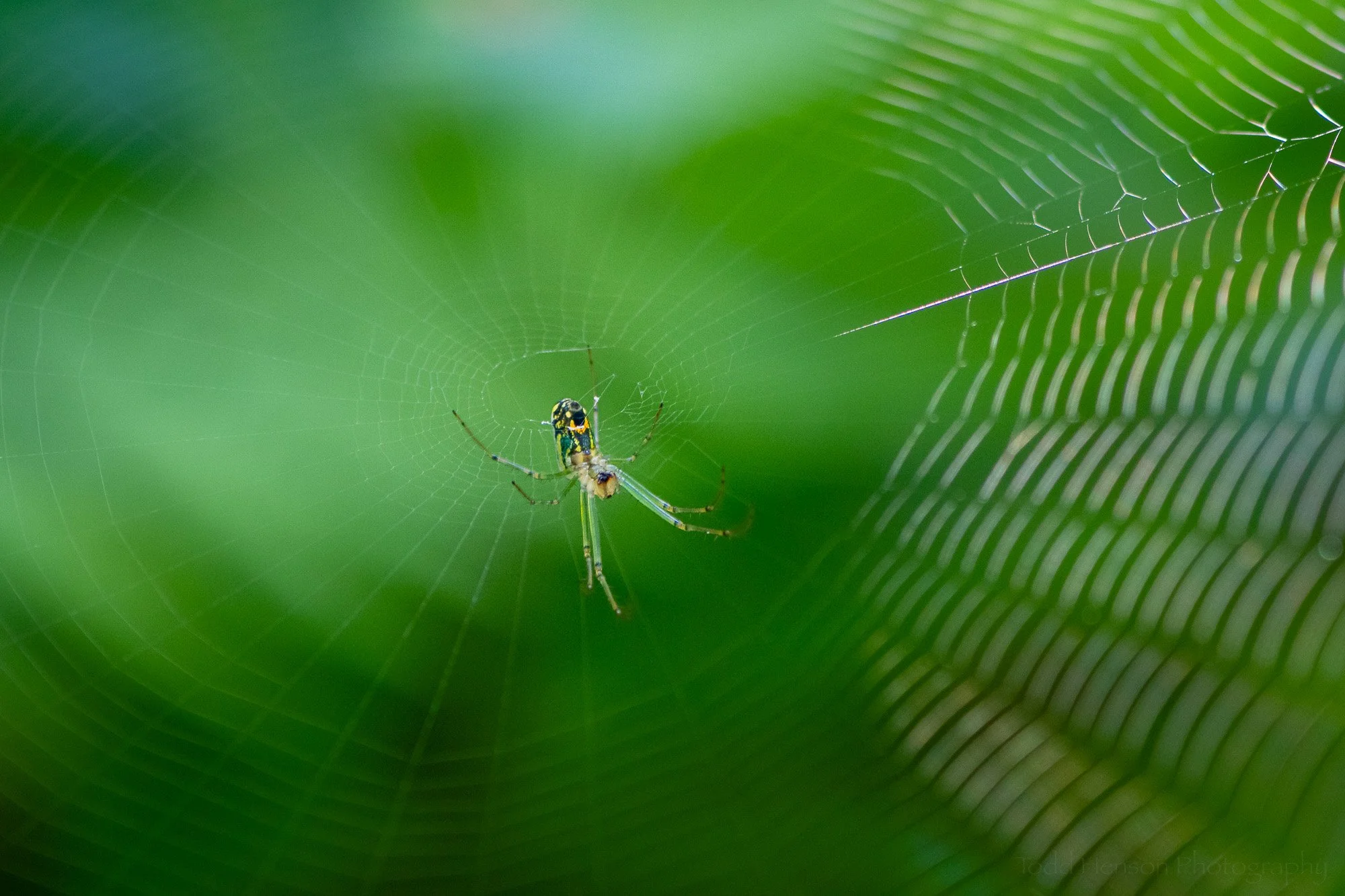
Profile image of an Orchard Spider.

About the Spiders

Hiking through the woods can reveal all manner of creatures if you keep your eyes open. One creature I found and photographed in a nearby park is the Orchard Spider, also called the Orchard Orb-weaver. It seems fairly common in this area, as I found quite a few of them on my hike.

The Orchard Spider is a very colorful spider. Its legs are primarily green. The abdomen has a range of colors, from shades of green, to whites and yellows, along with some darker black patterns. The underside of the abdomen can have a very bright splotch of yellow/orange that almost glows in the right light. I wonder if this is used to attract prey to its web, or perhaps to attract a mate?

Underside of an Orchard Spider showing bright yellow patch.

The yellow/orange patch on the underside of this Orchard Spider really glows.

One of the spiders I found had just begun digesting an insect that was caught in its web. Spiders digest their prey outside their bodies by regurgitating digestive enzymes and wrapping their prey in them. This breaks down the prey turning the majority of it to liquid nourishment that the spider drinks, leaving behind any of the larger, indigestible parts. Think of it like the green smoothies some of us drink.

Orchard Spider with prey.

Another image of an Orchard Spider with prey.

Final image of the Orchard Spider with prey.

Photographing the Spiders

I find photographing spiders in the field a real challenge, especially those on webs. The slightest little breeze can cause the web to move. From a distance it may not look as if the spider is moving much in the breeze, but when zoomed way in with a telephoto lens, or sitting very close with a macro lens, these small movements can actually be very large.

My main strategy for photographing these spiders was to shoot a LOT of photographs. I shot 303 photographs to get the 7 photos included in this post. The downside to shooting so many frames is that it does make it more time consuming and difficult to sift through them and find any that might be acceptable.

Orchard Spider in its web.

I do the best I can to frame the subject in a pleasing manner, and I try to get the focus as close as I can. It helps to wait until the lulls between breezes when the web may settle down before moving again.

I try to use a fast shutter speed, but I also try to stop down the aperture a little to give me more depth of field and more wiggle room. These two things fight each other. As I stop down the aperture I get a slower shutter speed. That can prompt me to raise the ISO to boost the shutter speed back up to something reasonable. It’s all a balance. If there isn’t much wind you may get away with slower shutter speeds. One of the photos here was shot at 1/13th of a second.

Another important consideration in these sorts of photographs is the background. You typically want a nice, clean background, something that doesn’t distract from the subject. This can be easy to achieve if the subject is far enough from the background. Using a macro lens tends to give a very shallow depth of field. This helps keep the background less distracting. If you use a longer telephoto lens this can also help, especially if you open the aperture wider, which also helps blur out the background. But sometimes you can actually include the background to show the subject in its environment. In the photos here I’ve chosen a clean, out of focus background to help the subject stand out.

Gear Used

The links below are affiliate links and I will be compensated if you make a purchase after clicking on my links. This is at no extra cost to you.
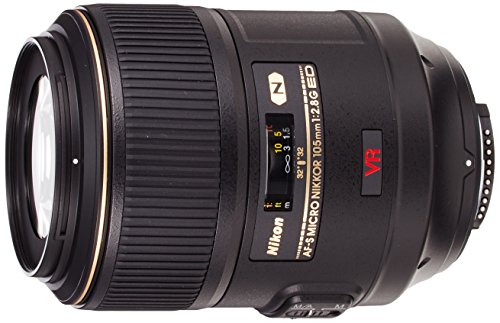
All of these photos were shot with a Nikkor 105mm Micro lens. It’s a very sharp lens and great for macro work. I really enjoy using it. It’s compatible with teleconverters, so you can turn it into a 147mm lens with a 1.4x teleconverter, a 178mm lens with a 1.7x teleconverter, and a 210mm lens with a 2x teleconverter. You can also use extension tubes to let you get even closer to a subject, though the depth of field falls away fast when you use these.

I hope these tips help you in photographing while out in the woods. They can apply not just to spiders, but also other insects and plants or flowers of any sort. If you’d like more tips try my post, 7 Tips for Photographing Insects and Other Little Crawly Things. Now get out there and practice.

If you have any questions, comments, or suggestions feel free to leave a comment below.


Do you enjoy these posts?

Sign up to receive periodic emails with updates and thoughts. Don’t worry, I won’t spam you. And please consider purchasing artwork or products from my online store, and using my affiliate links in the sidebar to the right when shopping online.

I appreciate your support!

The Calm Before Spring by Todd Henson

The Calm Before Spring

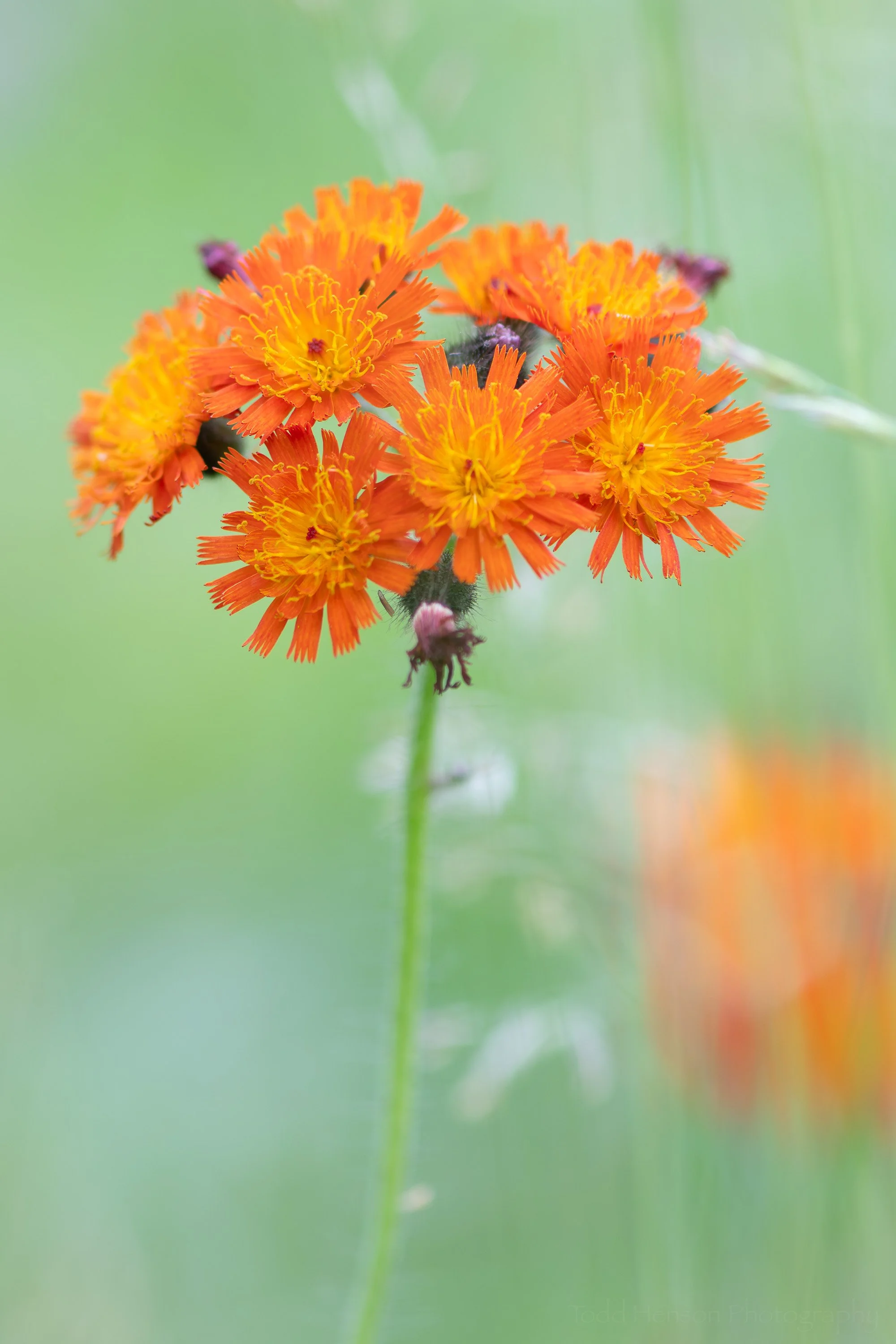
It was the first week of April. We were transitioning from winter to spring. The day began cool, almost cold, but it slowly warmed to a more comfortable range. Most of the trees still lacked leaves, though that will have changed by now. To the right were a couple of weeping cherry trees in bloom. The rest of the cherry trees wouldn’t bloom for another week or so.

It was a fairly calm day. I liked the idea of creating an image with a reflection of the trees on the far shore of the lake. I decided to set up my tripod on the gazebo on the lake, pointing back towards the rest of the park. I put on a filter to slow down the shutter speed and smooth out the surface of the lake as much as possible. I wanted something simple and quiet to reflect the calm before spring.

I would very much like to return to this location and attempt additional exposures as the seasons change.

Filter Geekery

This was my first photograph with my new Singh-Ray I-Ray 690 Infrared filter. The 690 is not a pure infrared filter. It allows both infrared and near-infrared light to enter the camera. This gives a different look than the pure infrared filter (Singh-Ray I-Ray 830), and it requires far less time to create an exposure.

I look forward to experimenting more with the 690 filter and comparing its results to those of the 830. These sorts of filters can be a lot of fun.


Do you enjoy these posts?

Sign up to receive periodic emails with updates and thoughts. Don’t worry, I won’t spam you. And please consider purchasing artwork or products from my online store, and using my affiliate links in the sidebar to the right when shopping online.

I appreciate your support!


Hooded Merganser Ducklings Leaving Their Nest Box by Todd Henson

A swallow flies by, watching two little Hooded Merganser ducklings in their nest box.

Sometimes when photographing or observing wildlife advanced planning is incredibly important. But other times pure chance, being at the right place at the right time, plays a much larger role. This post is about a recent experience where luck made all the difference.

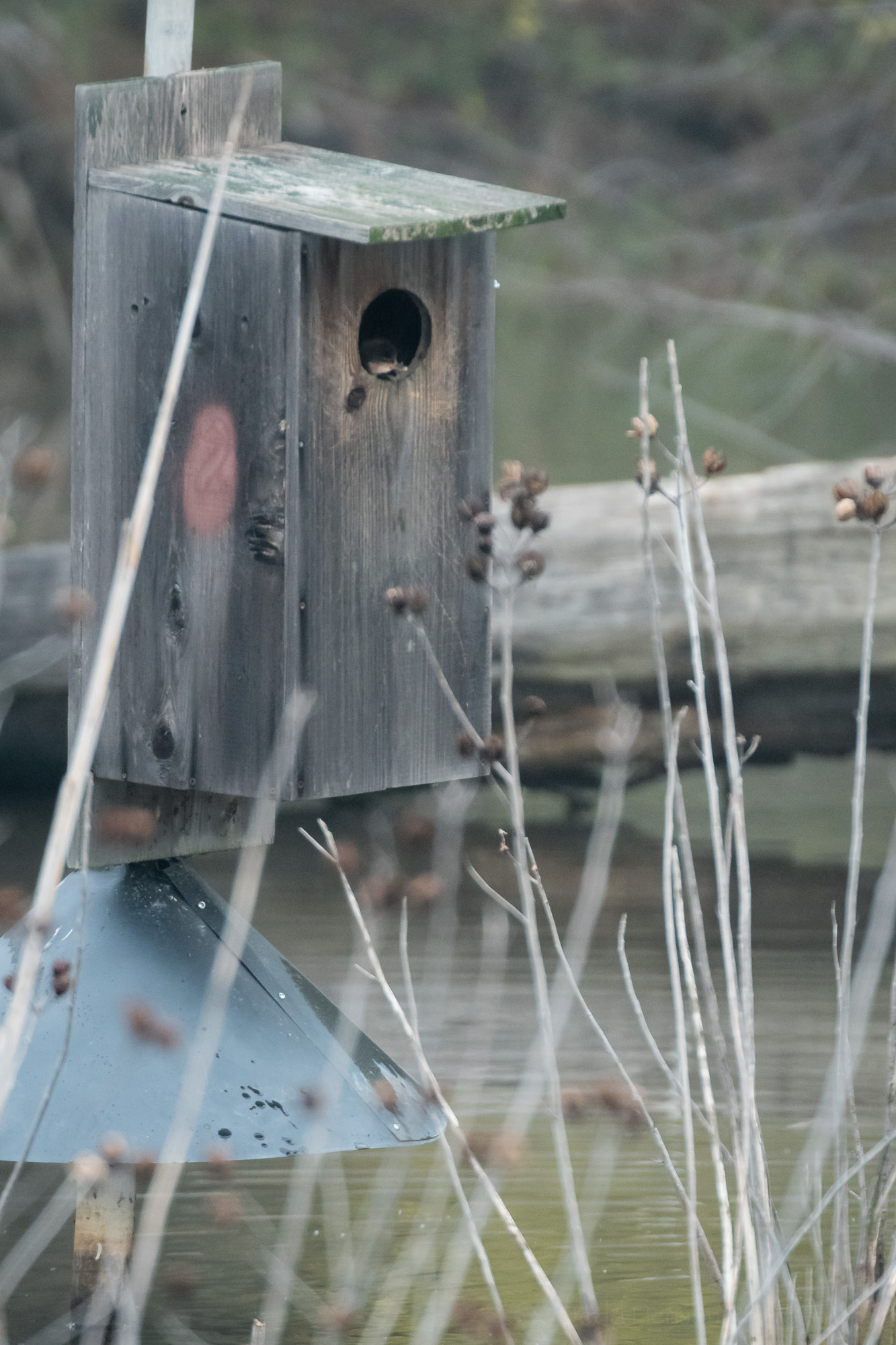
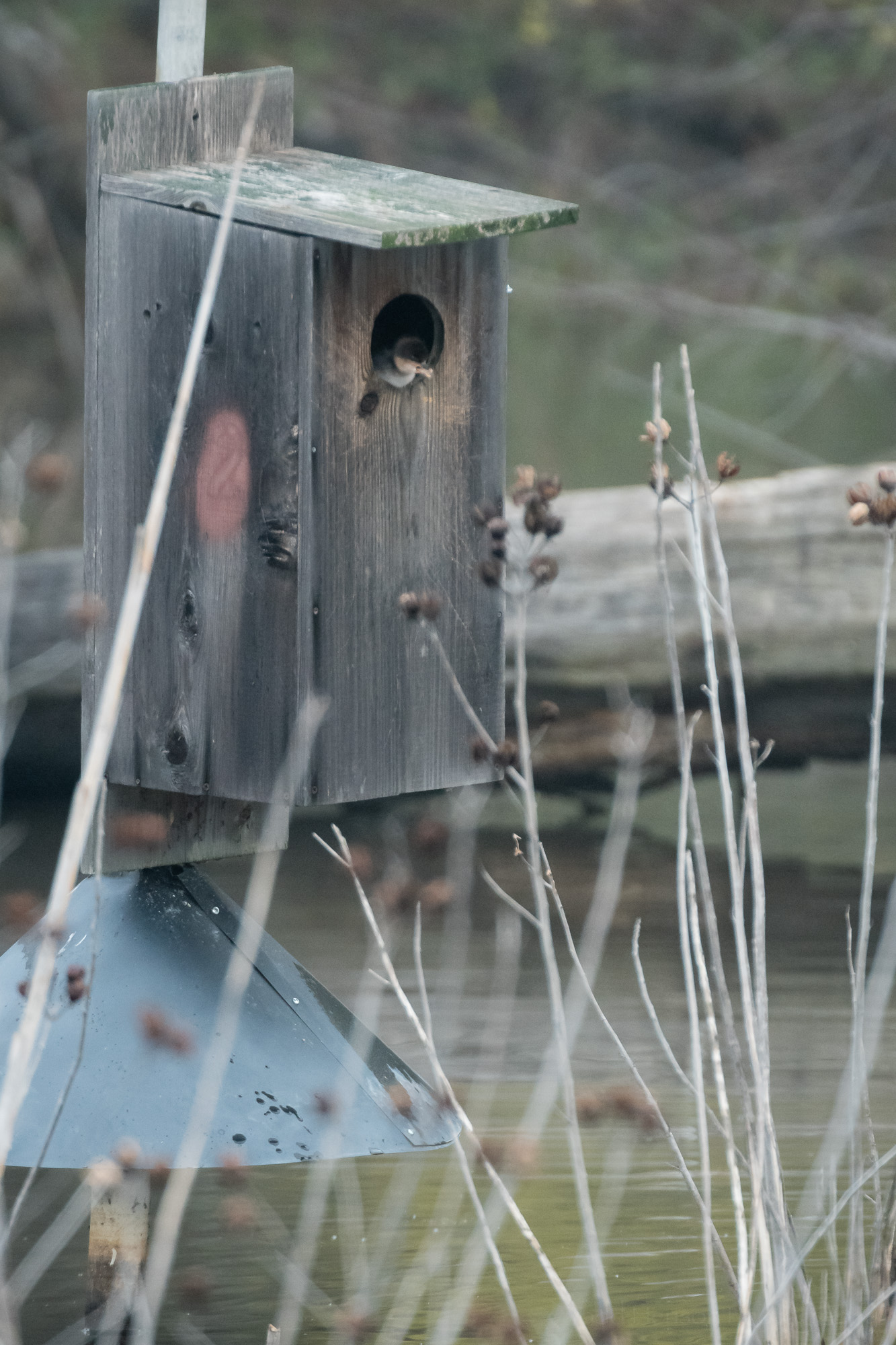
We were visiting a local wetlands park, one I often frequent. I knew of a nesting box occupied by a Hooded Merganser, so I set up on the boardwalk facing that box and watched for quite some time. No activity at all. So I continued on, seeing what else the wetlands would show me this day.

I began photographing a couple Yellow-rumped Warblers flitting through the brush when I starting hearing a strange sound, something I’d not heard before. I can’t really describe it, but it seemed to grow in volume and there appeared to be more than one source. I turned around and my eye happened to catch movement at the entrance to the nest box of the Hooded Merganser.

And what I saw was a waterfall of little puff balls falling from the nest box into the water below! The ducklings were leaving the box, and I just happened to be there to observe it. What were the odds I would be there at just that moment?

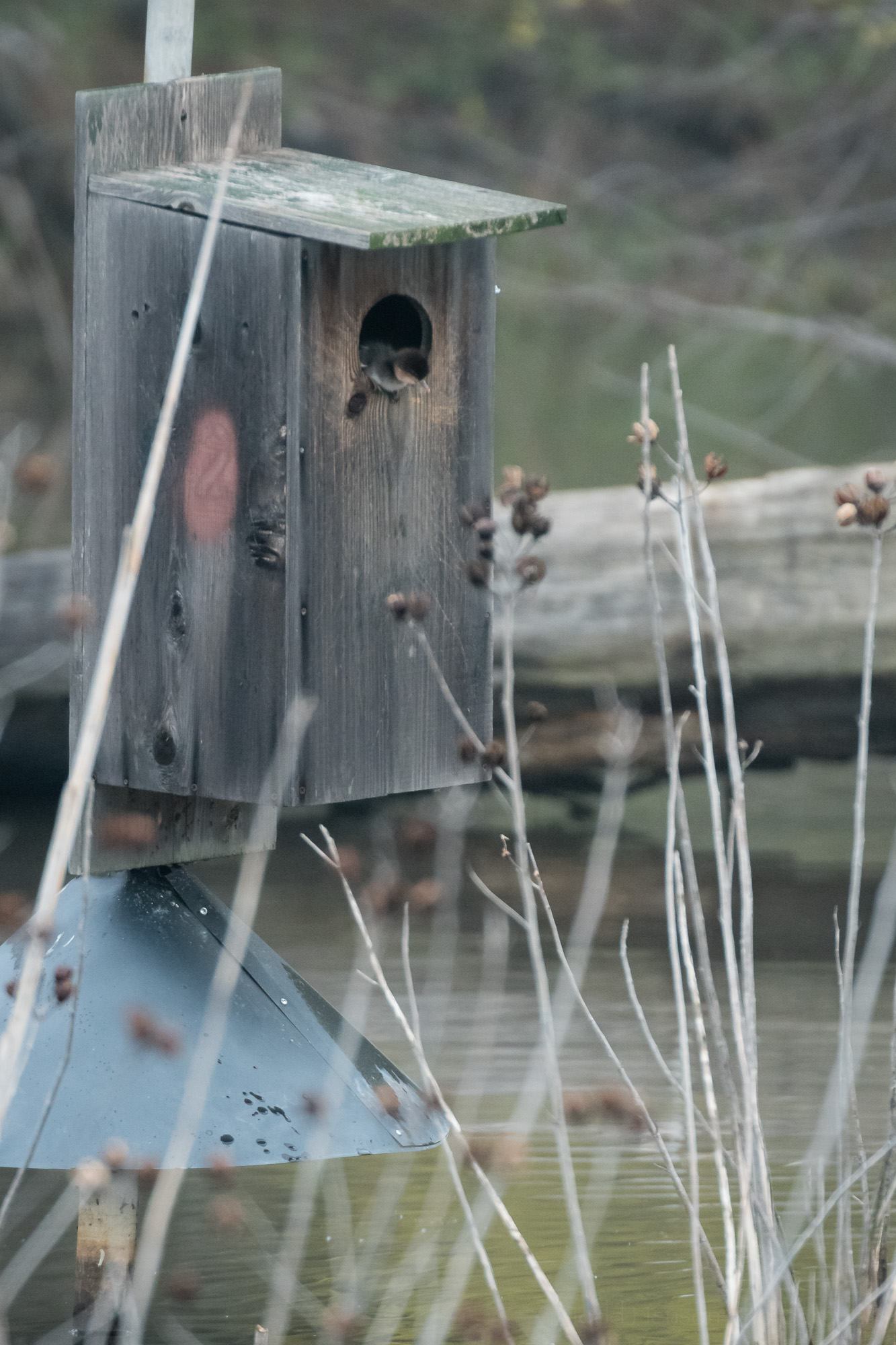
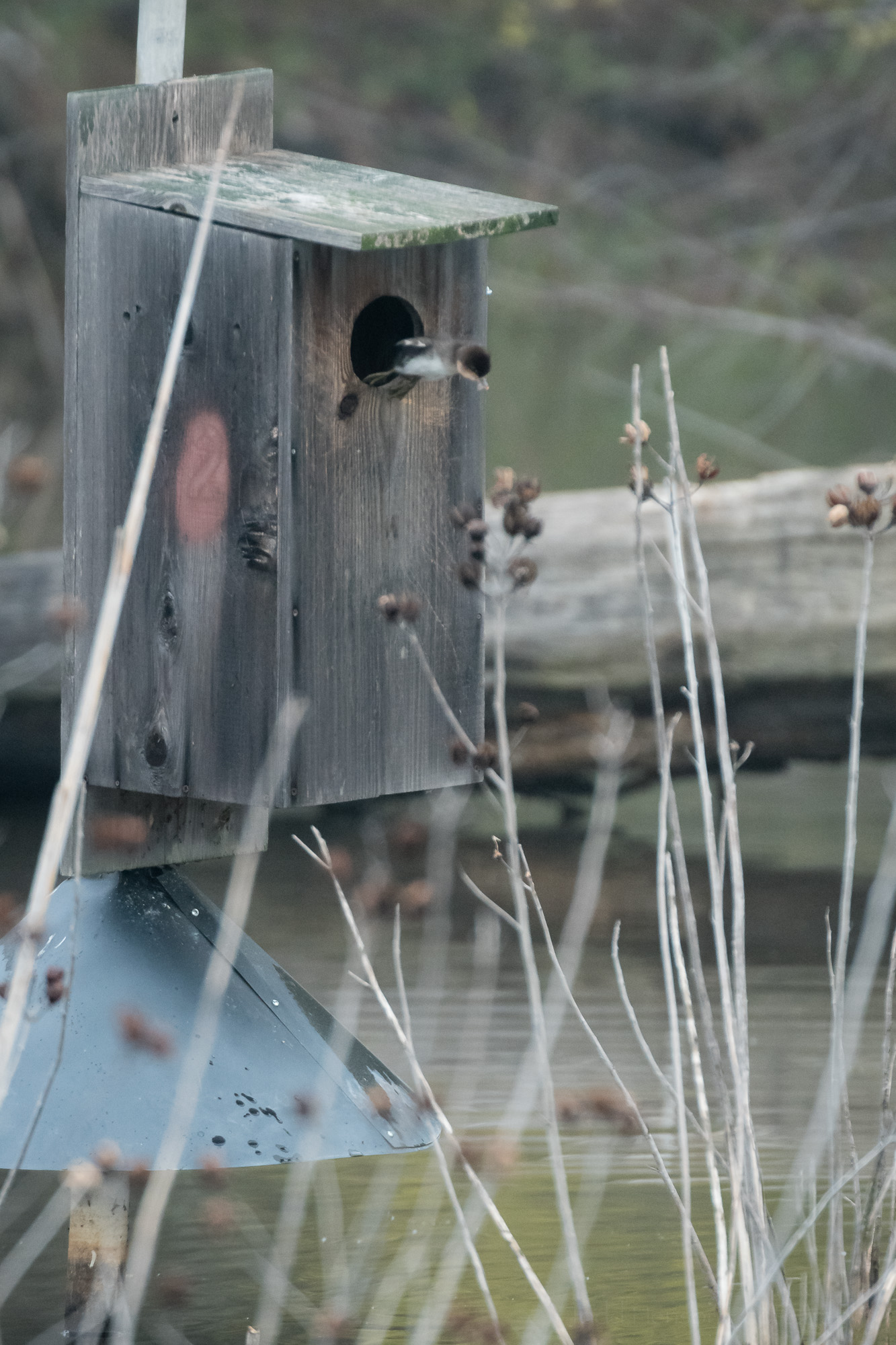
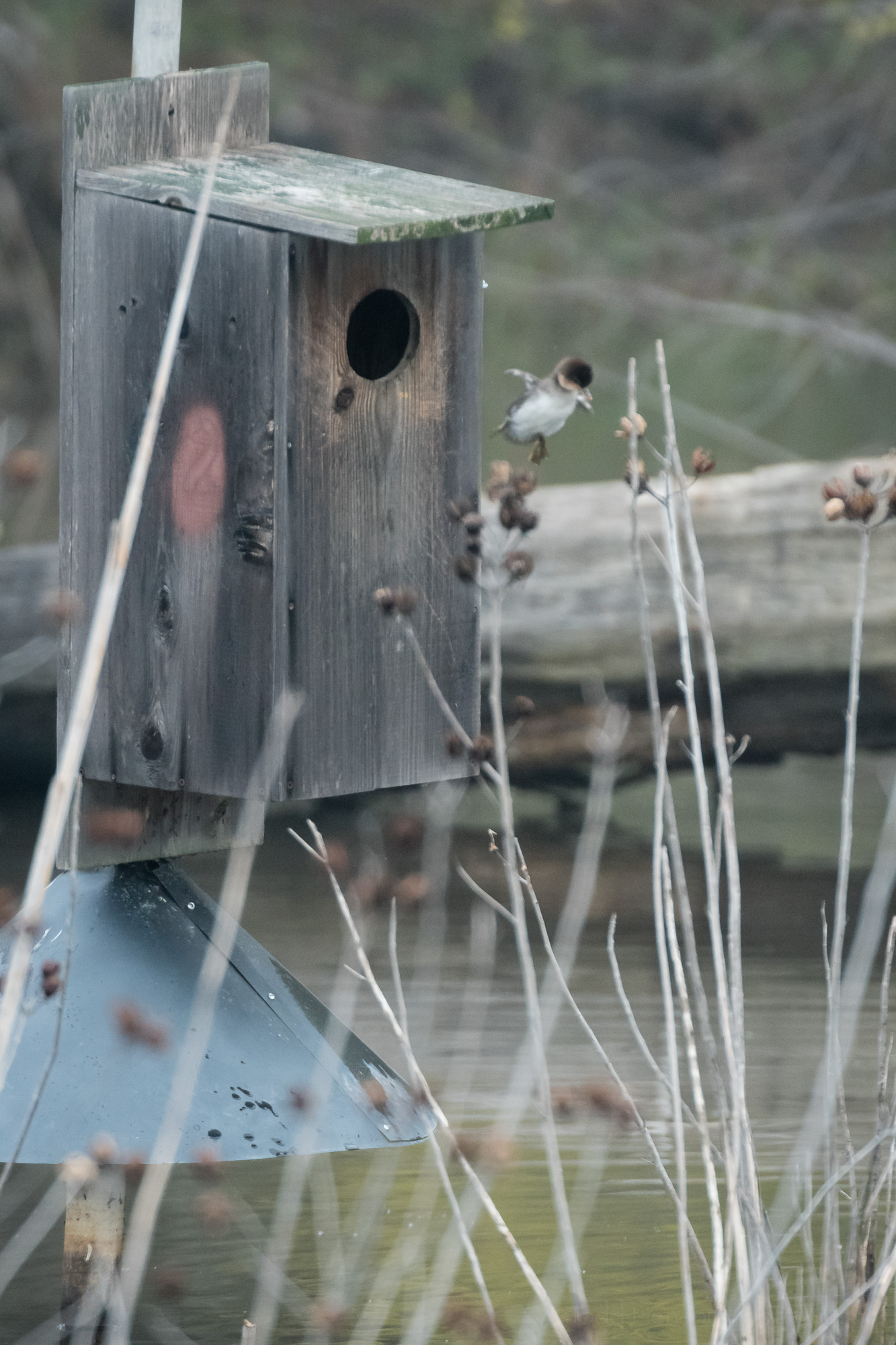
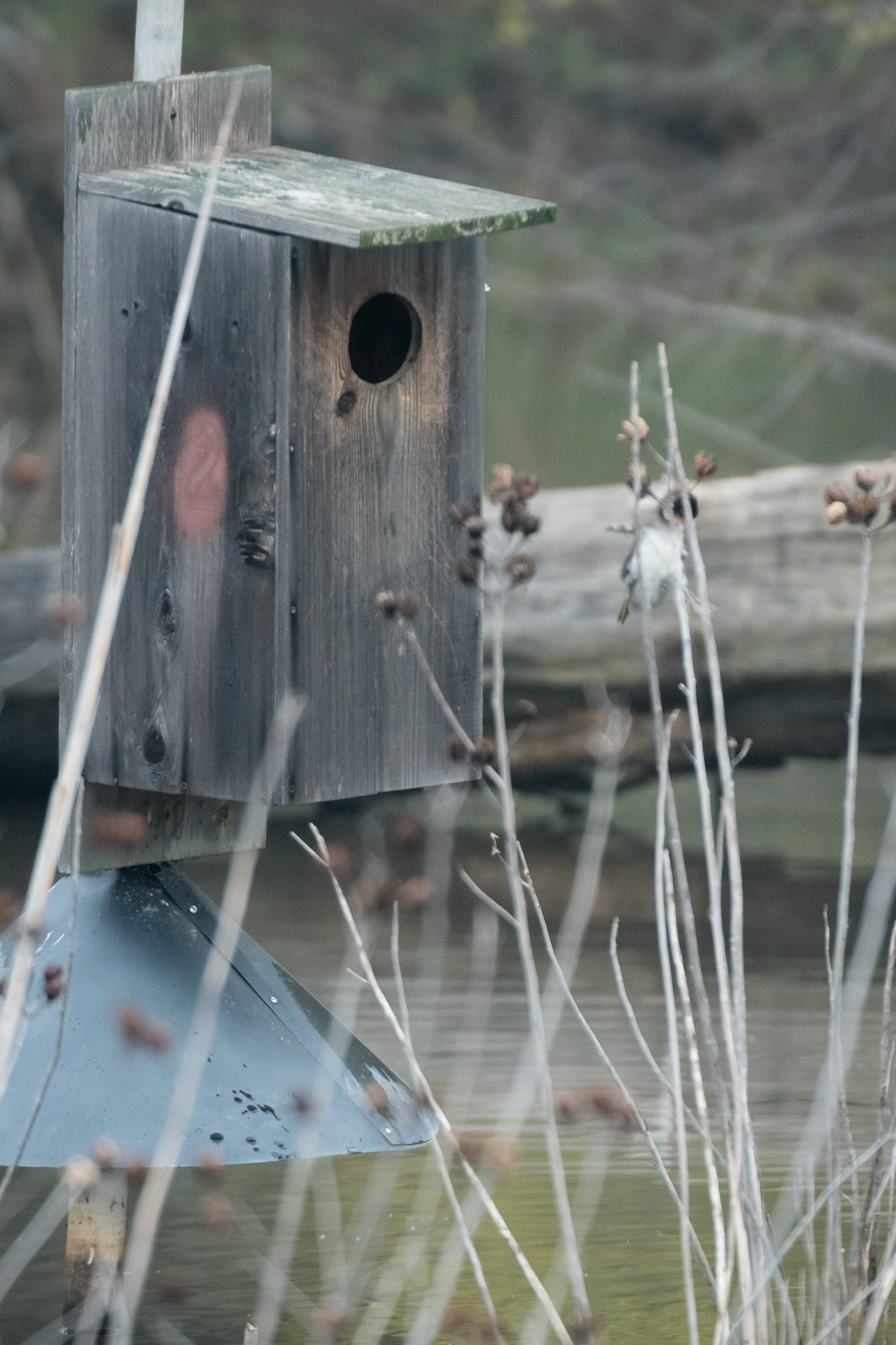
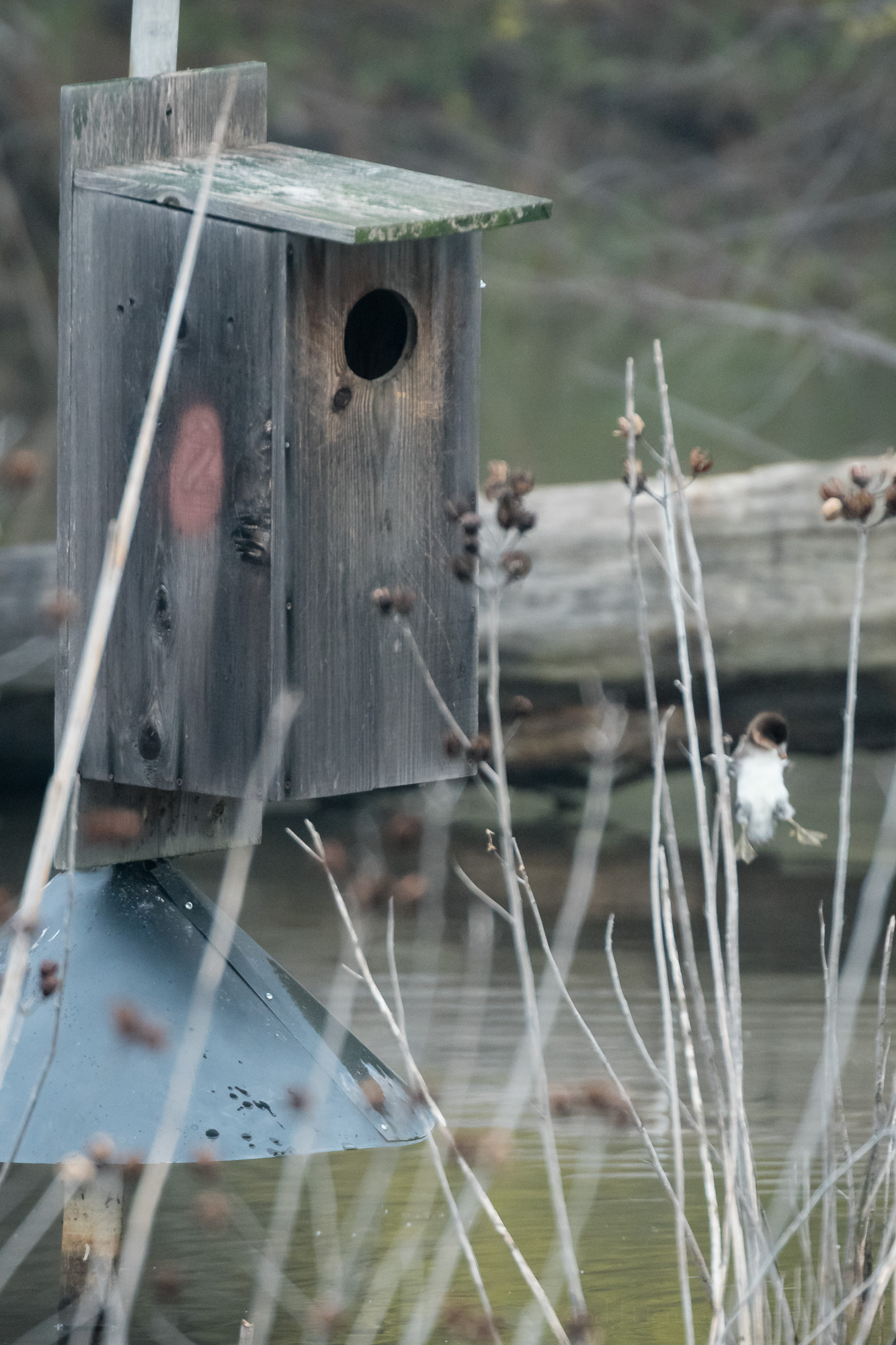
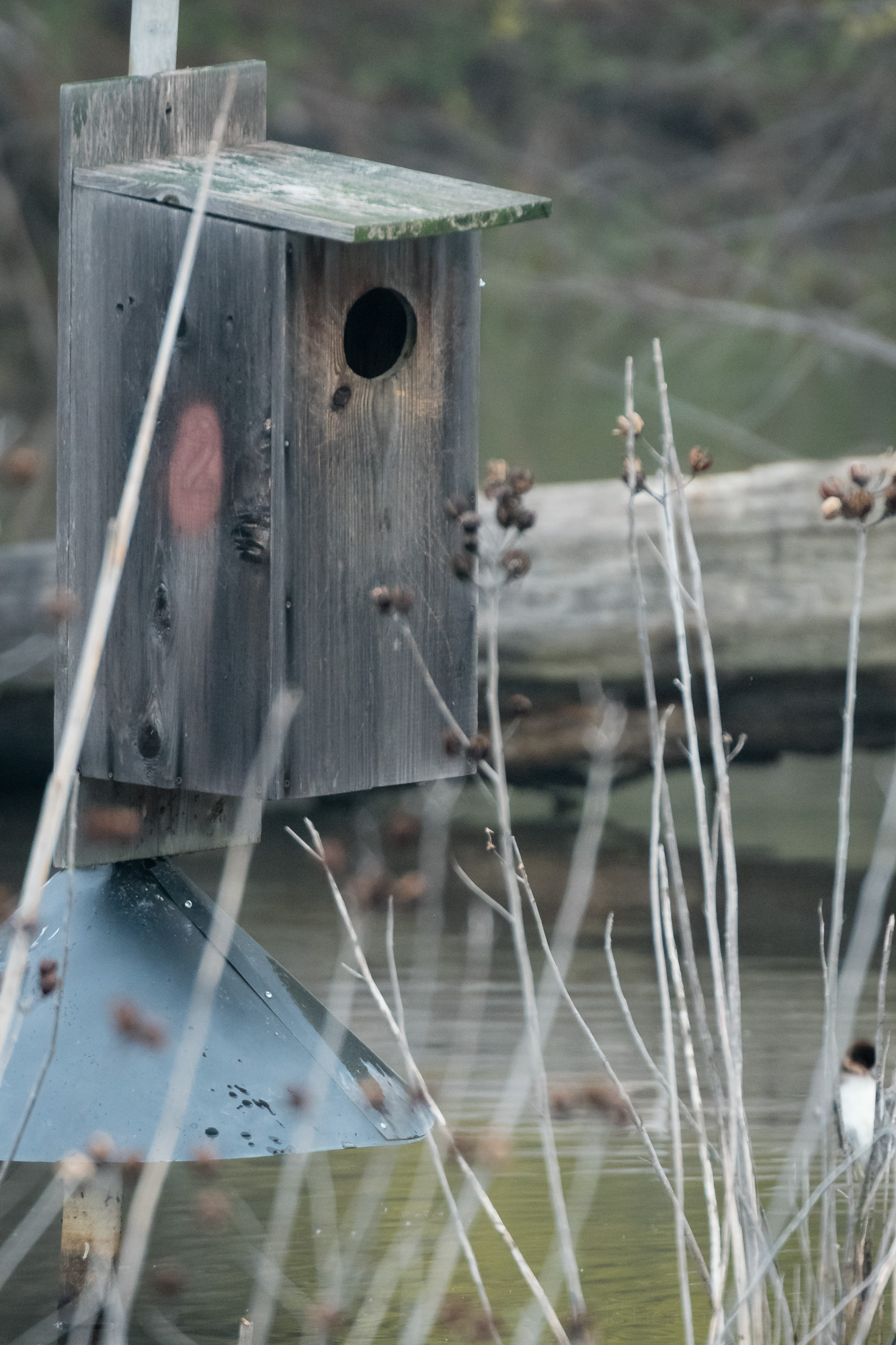
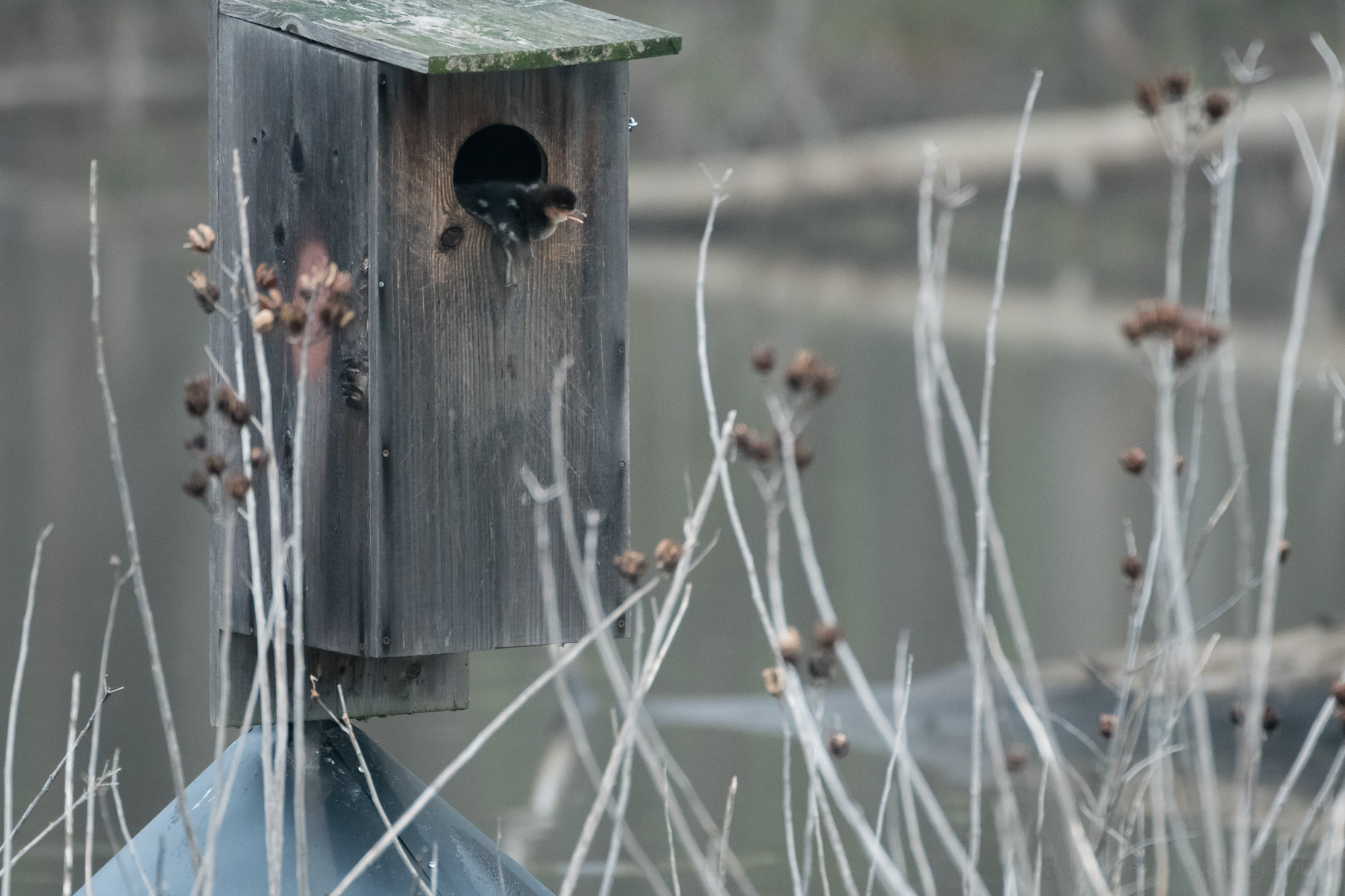
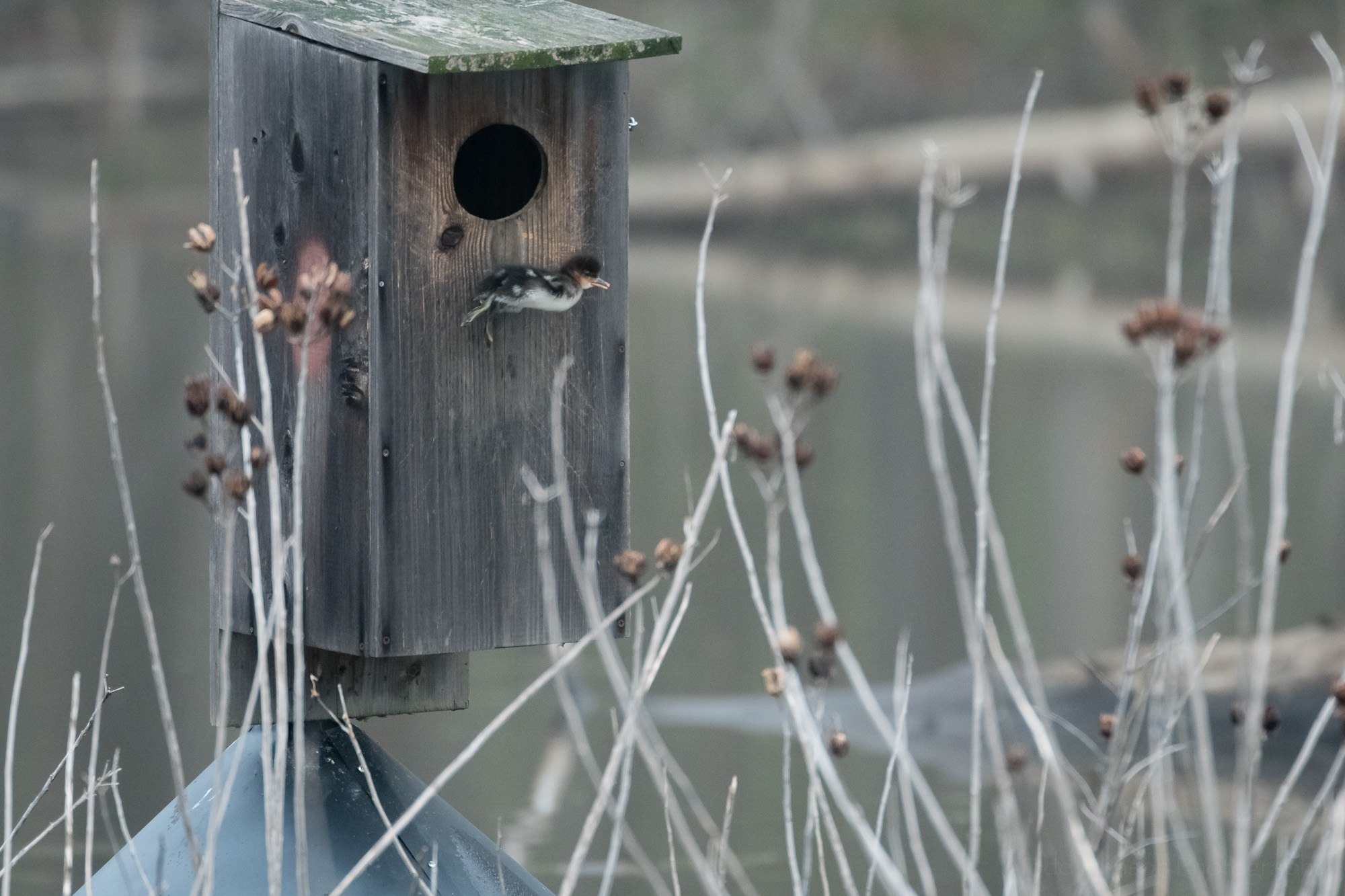
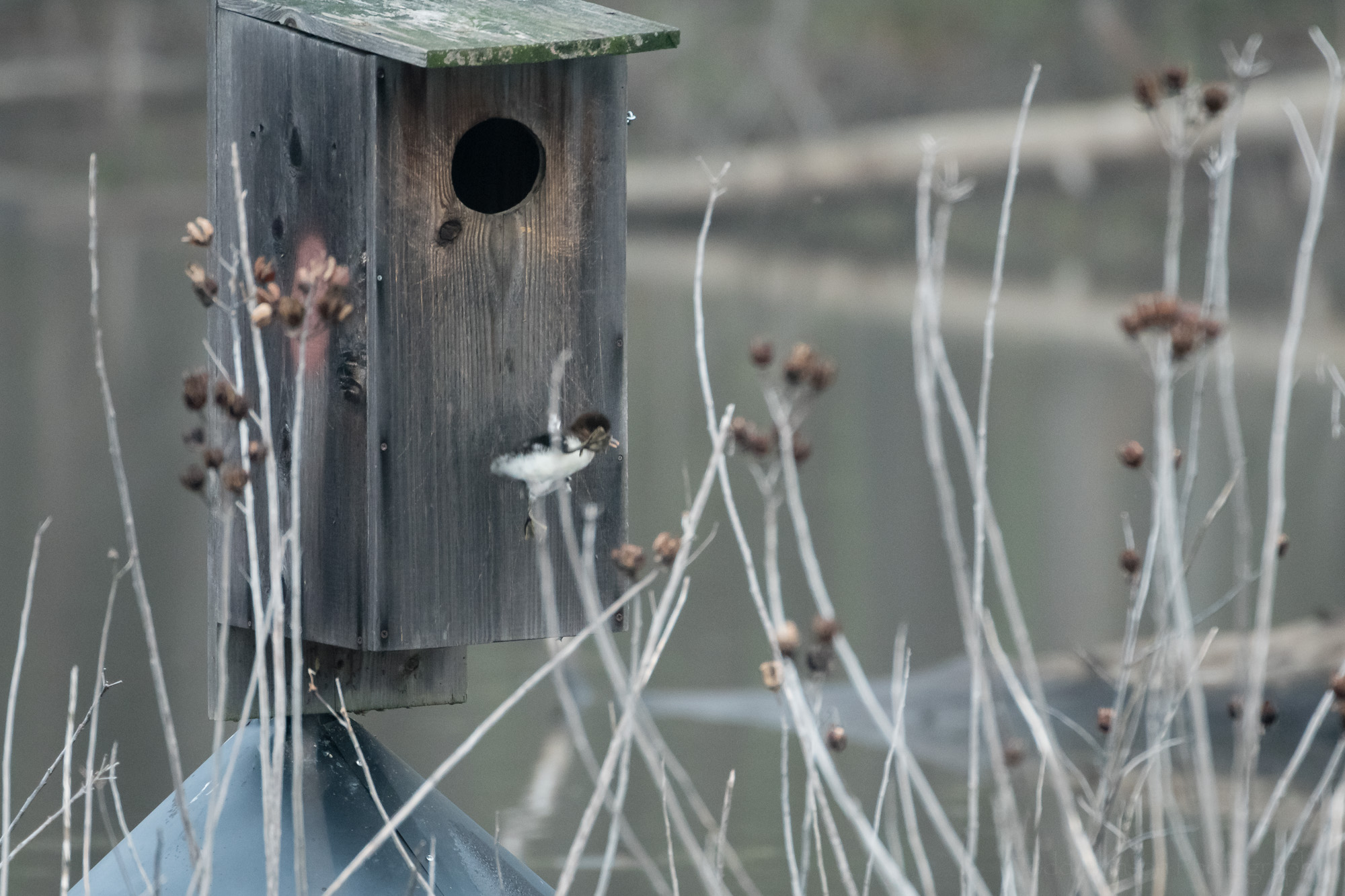
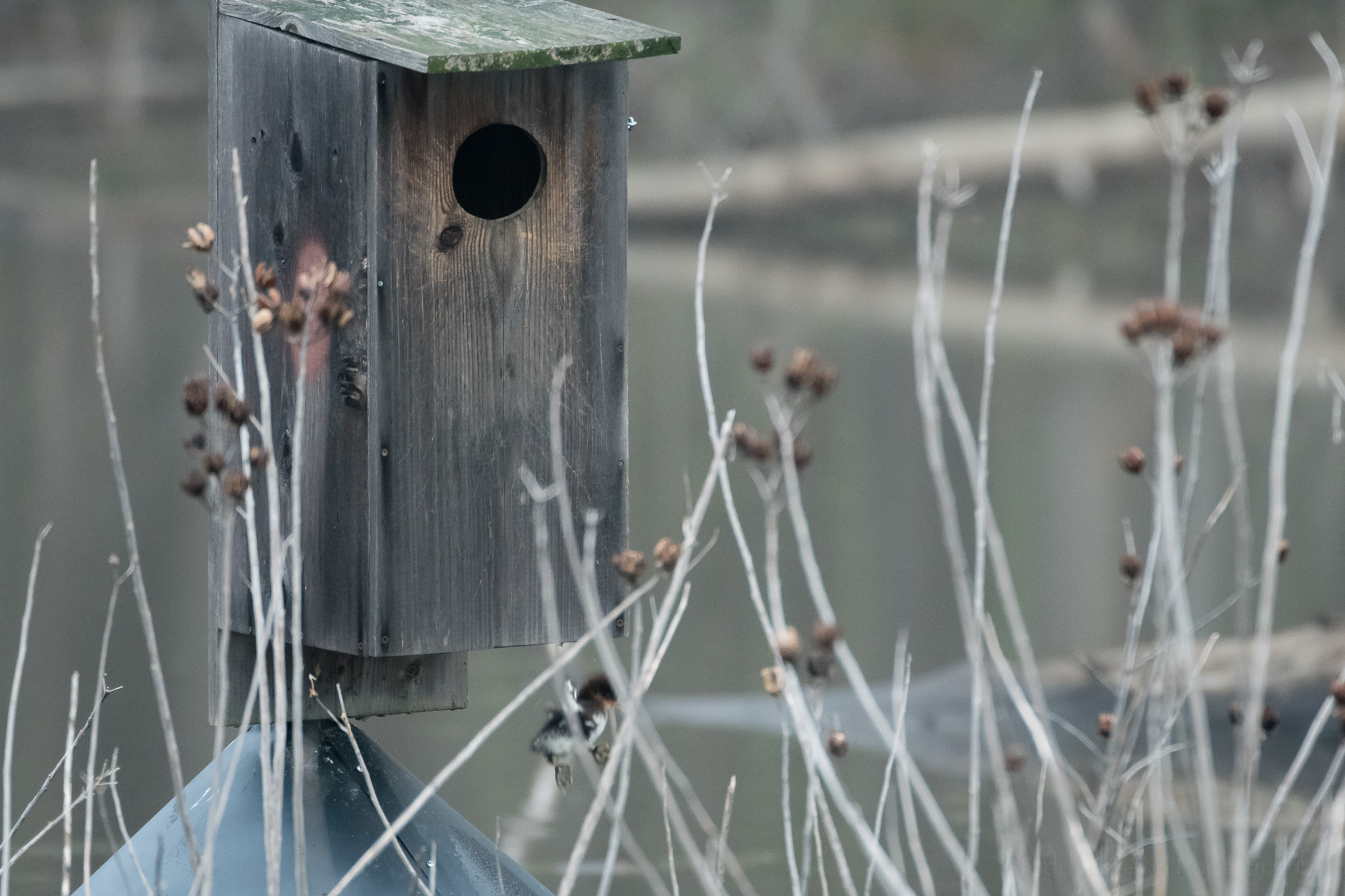
Here is a sequence of images showing one duckling jumping from the box to the water below. Click on the image to cycle through the sequence.

I wasn’t able to photograph the majority of the ducklings as they poured from the box, but I did manage to get my camera repositioned and moved in closer in time to capture a few of the chicks at the box entrance and jumping (or falling) to their siblings below.

Here is another sequence of images, this time of a duckling falling from the nest box. Click on the image to cycle through the sequence.

Just after the majority of ducklings had left the box the mother saw another female Hooded Merganser, apparently too close to the box. She attacked the other duck, making all kinds of noise, and driving the young ducklings in the opposite direction where they could hide in the brush.

Hooded Merganser ducklings just out of the box, swimming away from the fight between their mother and another duck.

When the mother had chased off the other duck she returned to gather her ducklings. They all huddled very closely together, likely to make them appear as one large bird instead of a number of small ones, hoping to fool any predators that might happen by. The group of merganser swam past an oblivious male Wood Duck and a turtle resting on a log before finally heading further out into the wetlands and beyond my view.

Mother reunites with her ducklings.

Hooded Merganser mother leading her ducklings through the brush.

I can hardly describe how thrilled I was to be there watching this sequence of events. I was so excited I likely introduced some extra shake into the camera which may have resulted in less than perfect focus. It was also a very overcast morning with some remaining fog that hadn’t quite dissipated. Because of this I boosted the ISO to 1600 to let me shoot at 1/640th of a second. Perhaps I should have boosted it a little more. I set my aperture to f/7.1. I didn’t want to stop down too much because that would drop the shutter speed, but I also wanted enough depth of field to keep the entire family of ducks together. I might have been able to open the aperture a little more than I did.

Hooded Merganser family swimming past an oblivious male Wood Duck (in the background).

Hooded Merganser Family sticking together and swimming further into the wetlands.

Overall I’m very pleased with having captured these images. I don’t consider them great photos, by any means, but I do consider them photos of a great experience. Have you ever been present when birds fledged the nest or left the nest box? What was the experience like for you?

They briefly broke up when passing behind a turtle basking on a log.

But they quickly came back together as a group before disappearing into the distance.

Lesson of the day

When you hear a new, unusual sound seek out its source. You never know what you may find.