Before & After: Water & Stone /  by Todd Henson

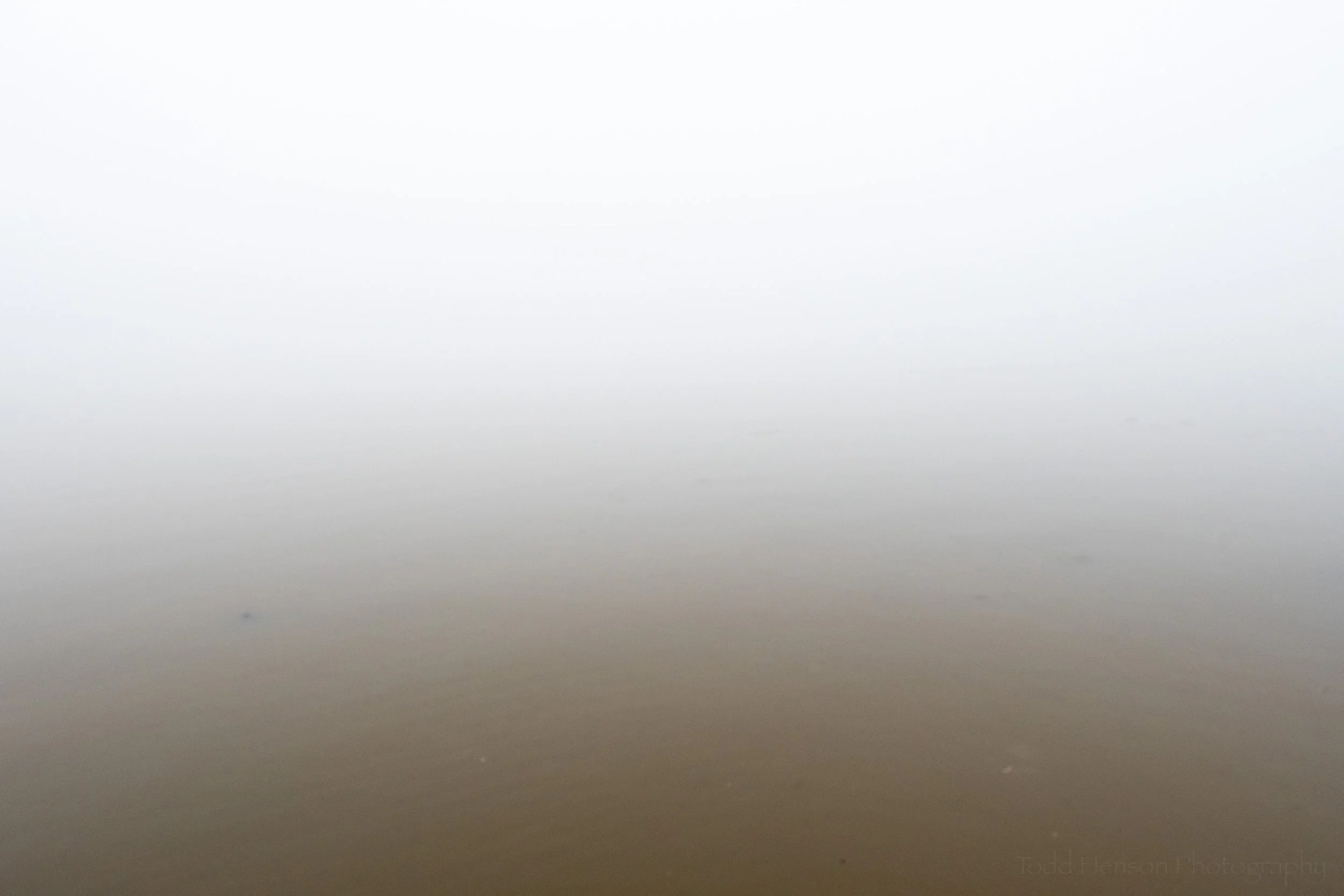
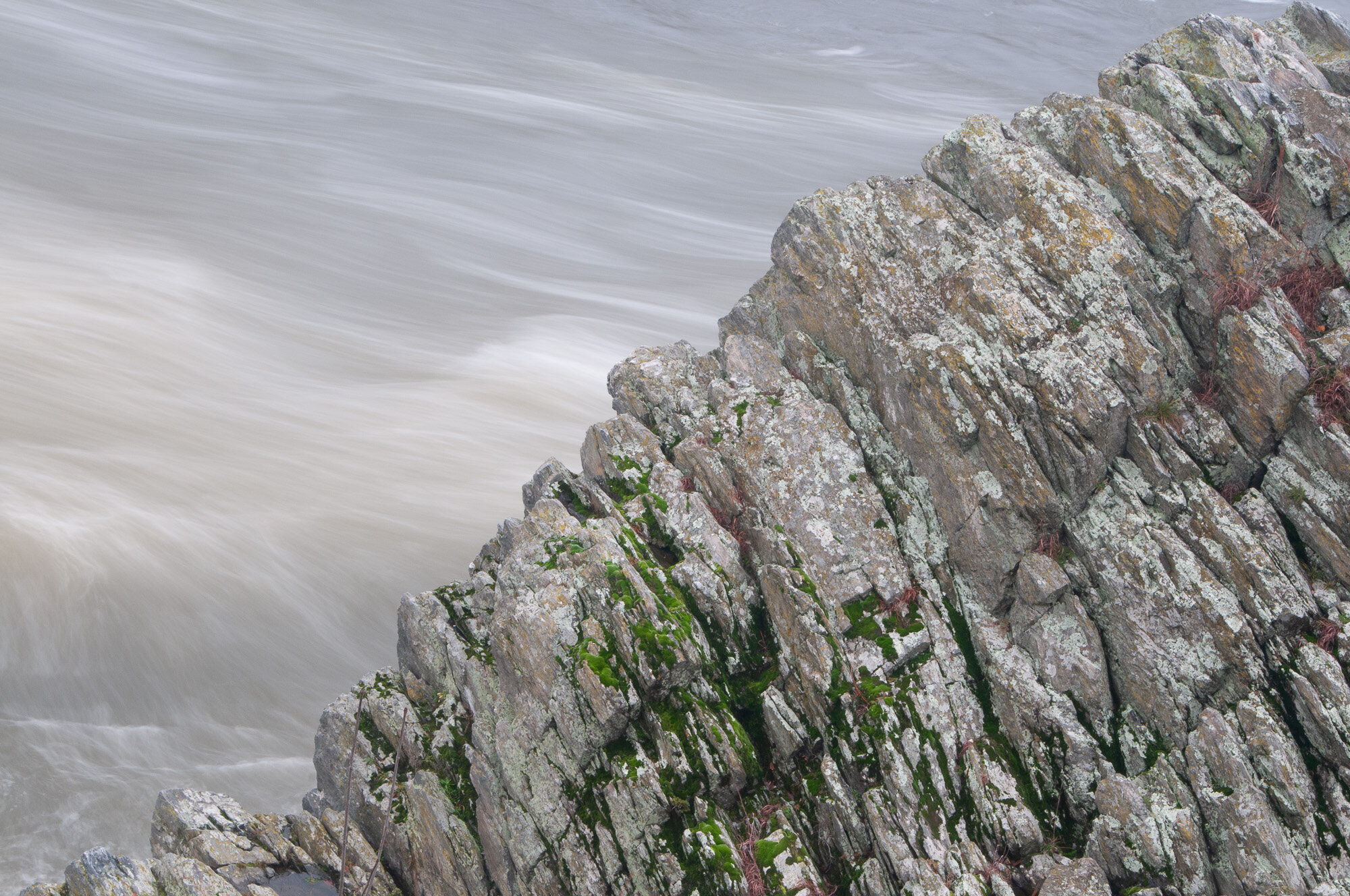
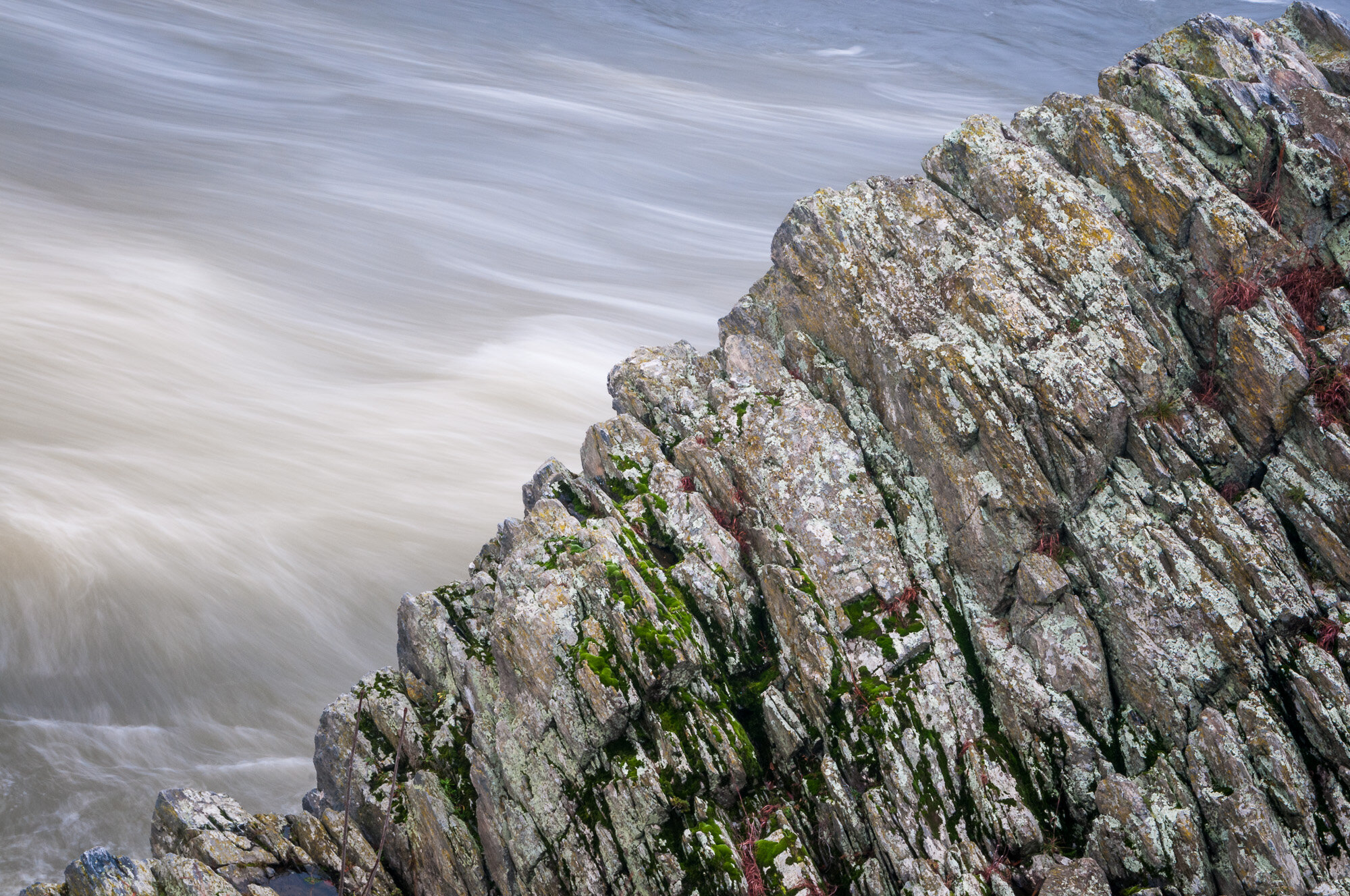
A look at the before & after of the image, Water & Stone.

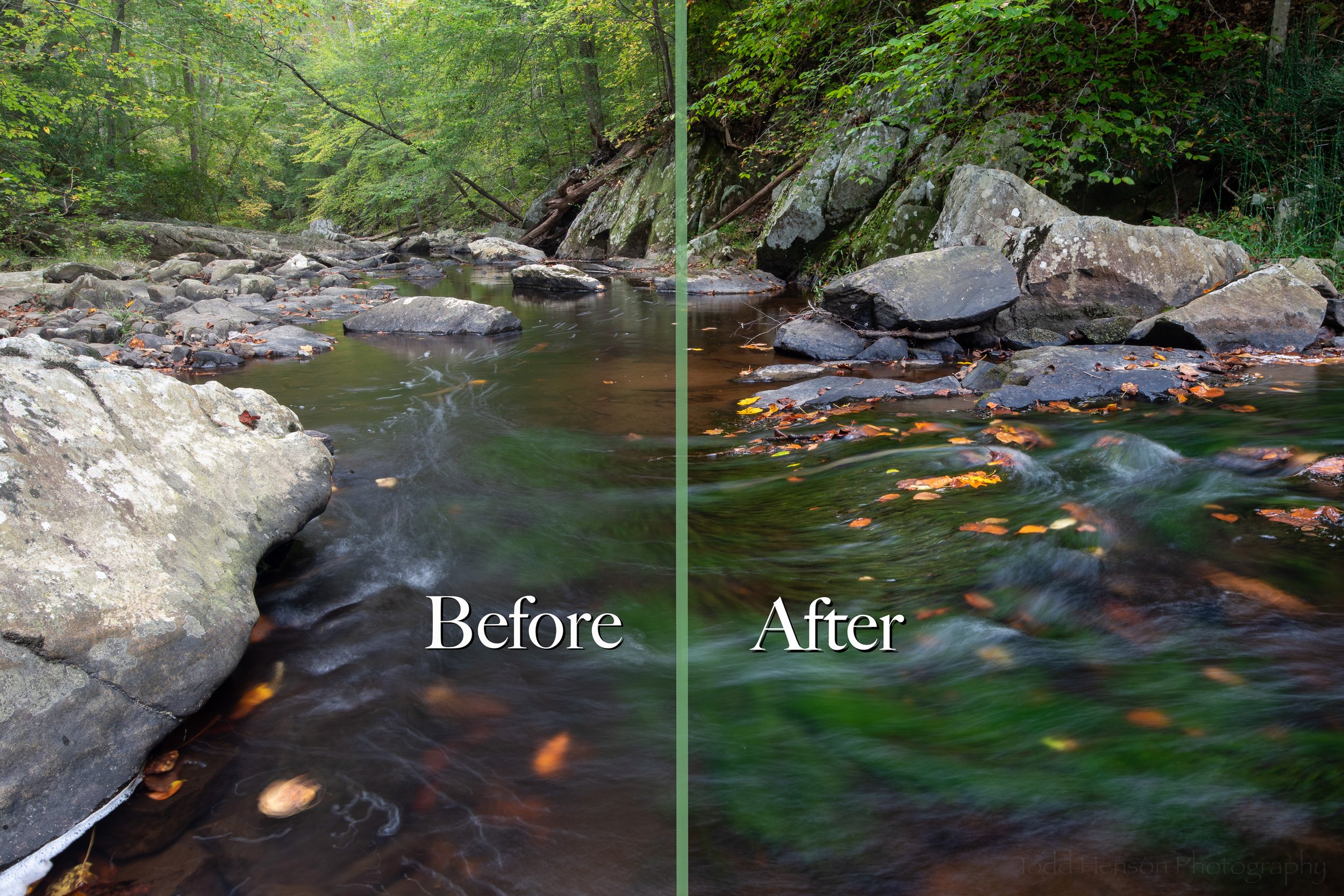
Sometimes folks are curious how much work happens in post-production after the image file leaves the camera. So today I thought I’d show a simple example of a before and an after image. Sometimes I spend hours tweaking a photo in Adobe Lightroom and/or Photoshop, but most times, such as this one, I spend very little time and make a small number of adjustments.

If you use a camera that produces JPEG images then you may not need to make any adjustments in post. JPEG is a “finished” file format. Cameras have all kinds of settings, and these are baked in when shooting to JPEG, meaning the camera creates an image ready to be displayed. When shooting JPEG, for the most part you are letting the camera do the work of processing the image.

Some cameras can also produce images in a custom raw format. This gives us, as photographers, much more control. When shooting JPEG we let the camera do all the processing. When shooting raw the camera just captures all the information it can and packs that into the file, leaving it to us to process that data into a finished image later, in software. So raw images are like digital negatives, they require a bit of processing to create a finished photograph, whether that be a print or an image for online viewing. Because of this, sometimes the raw files that come out of cameras are a little dull until we process them.

Water & Stone: The unprocessed raw “before” image.

Water & Stone: The finished “after” image.

Most times I make a very small number of adjustments, often trying to create an image that looks like the actual scene. Other times I try to create something that looks as I imagined the scene based on how it made me feel at the time, which may or may not be exactly how it looked to others. It’s up to us at this point whether to get more artistic or creative in the processing, or just try to bring out what we created in camera. For this example I kept things simple, opting to create an image that looked much like the actual scene.

Let’s take a look at some of the settings I tweaked in Lightroom. I brought down the exposure just a bit to darken the overall image. I brought up the whites, brightening them, and brought down the blacks, darkening them. This increased the contrast, helping get past the dullness raw files sometimes have. I brought up the shadows a bit to keep them from getting too dark when I’d brought down the blacks. I added a bit of clarity and vibrance, which further increased contrast, but in more subtle ways. There were a few other settings I adjusted, but these were the big ones.

Click the image below to cycle back and forth between the before and after image. You’ll see the difference the settings made. These were fairly basic settings. This is how I adjust most photographs, though the specific settings vary based on the image. In future posts I’ll show more before and after examples, some of which may be more involved than this one.
I hope you enjoyed this brief look at the before and the after of image making.


Do you enjoy these posts?

Sign up to receive periodic emails with updates and thoughts. Don’t worry, I won’t spam you. And please consider purchasing artwork or products from my online store, and using my affiliate links in the sidebar to the right when shopping online.

I appreciate your support!


Keep Your Eyes Open - White-tailed Deer /  by Todd Henson

Peek-a-Boo! A White-tailed Deer in the brush.

This post is all about keeping your eyes open when out hiking or photographing. You never know what you might see, what might be hiding just out of view, or perhaps just in view if you’ve trained yourself to see.

Several years ago I was hiking through a local park, mostly photographing birds. But I try to keep my eyes peeled for any movement, pattern, or interesting shapes. And in this case it helped me find a young white-tailed deer hiding in the brush just off the trail.

A White-tailed Deer winking at me as it walked away

Honestly, I don’t know that the deer was actually trying to hide, especially given how close it was to the trail. But it was frozen when I walked by. I noticed it because of those big white ears. They really stood out. So I put down the tripod and started photographing.

These aren’t great photos, but I’m happy I made them. They bring back great memories of being very close to wildlife, something I always enjoy. And they’re a reminder to keep our eyes open when hiking, to continue training our eyes, looking for those patterns that might help us find other animals in the future.

A month later I found these three White-tailed Deer at more of a distance but also hiding in the brush


Do you enjoy these posts?

Sign up to receive periodic emails with updates and thoughts. Don’t worry, I won’t spam you. And please consider purchasing artwork or products from my online store, and using my affiliate links in the sidebar to the right when shopping online.

I appreciate your support!

Circe by Madeline Miller /  by Todd Henson

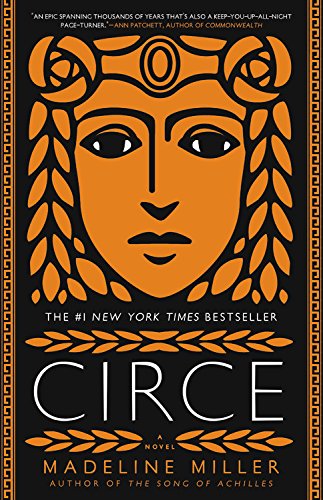
The hardcover edition of Circe, by Madeline Miller

The hardcover edition of Circe, by Madeline Miller

This post contains affiliate links and I’ll be compensated if you make a purchase after clicking on my links, though this won’t cost you anything extra. Thanks much!

Today I’d like to take a short step away from photography and explore another art form, that of storytelling. People love stories, and stories can greatly influence us, often staying with us through the years. Stories can influence how we see the world, and doing so can change how we photograph the world. So today I share my thoughts on Madeline Miller’s book, Circe.

I grew up loving stories of ancient mythology. But the only exposure I typically had to them was film and general mythology books. Film comes with its set of strengths and weaknesses, one weakness often being its shorter length. And the mythology books I read tended to be short passages about a large number of stories from various mythos, often very dry reading. Since then, though, I haven’t read or watched nearly as much as I once did, though I do sometimes pull out Bulfinch’s and read about some event or character.

Over the last year or so, though, I kept seeing references to Madeline Miller’s Circe. Eventually, I decided to pick up a copy and read it, and I’m very glad I did. I thoroughly enjoyed Circe. It’s exactly the sort of story I wish I’d had when younger (though written for an adult audience), taking those dry, plodding tales from generic mythology books and giving them the life I’d seen in some of the movies, but on a grander scale and with more depth. Circe isn’t an action packed Hollywood blockbuster, but instead a memoir of the life of a very interesting, though perhaps lesser known, character in Greek mythology.

Circe was a nymph, a lesser goddess, whose father was the great Titan Helios, god of the sun, and whose mother was Perse, the naiad daughter of the Titan Oceanus. I knew some of these names, but it’s been so long since I’d read of them I’d forgotten most of whatever I once knew. Perhaps that increased my enjoyment, making the story seem fresh, slowly revealing other names I knew, such as Zeus, Hermes, Daedalus, the Minotaur, Athena, Odysseus, and many more. As Circe’s life story unfolds, we see her place in the stories of all these others.

The book is told from Circe’s perspective. We feel her pain and anger, her sorrow and love, her longings. And this perspective is an interesting one given she’s a goddess and a witch. And though that makes her very different and in some ways above and beyond us mere mortals, it’s beautiful to be taken into her life and see just how similar are the machinations of the gods, with their petty rivalries and over-inflated egos, to our mortal lives and politics. But Circe differs from so many of her kind, making the story that much more interesting, as she chooses paths most others might avoid.

If you’ve always been interested in, or even just curious about, Greek mythology and want to learn more about these interesting gods and goddesses, heroes and monsters, if you want to know what they felt and experienced in their lives between the great events, then you may very well enjoy Circe. I loved how it weaved together so many stories I was familiar with, but also introduced ones new to me. Madeline Miller has brought to life the character of Circe, taking us from her beginning to her end, and I thoroughly enjoyed the journey. Now I look forward to reading her earlier book, The Song of Achilles.


Do you enjoy these posts?

Sign up to receive periodic emails with updates and thoughts. Don’t worry, I won’t spam you. And please consider purchasing artwork or products from my online store, and using my affiliate links in the sidebar to the right when shopping online.

I appreciate your support!