Focus by Todd Henson

Focus: A Green Heron walking along a downed tree looking for its next meal.

Green Herons are very sleek birds, and along with other herons have an amazing ability to focus on finding their next meal. Perhaps I’m anthopomorphizing too much, but just looking at them you can see the concentration, the determination, the focus, as they slowly and quietly move forward.

We found this particular Green Heron while walking along a boardwalk at a local wetlands park. It had landed on a fallen tree and was slowly walking down its length, watching the edge of the water. They can move through water seemingly without causing any noticeable disturbance. But when walking outside the water their prey below has little chance of escape.

I don’t recall now whether this heron caught anything. I certainly didn’t capture a photograph if it did. But I was pleased with this photograph, showing that amazing focus. And a bonus feature for observant viewers is a white feather out of place along its back. It had attempted to fix this, but being unsuccessful left it alone and went back to looking for food.


Do you enjoy these posts?

Sign up to receive periodic emails with updates and thoughts. Don’t worry, I won’t spam you. And please consider purchasing artwork or products from my online store, and using my affiliate links in the sidebar to the right when shopping online.

I appreciate your support!

A Brief Look at the Anatomy of a Grasshopper by Todd Henson

A grasshopper perched on a pink chrysanthemum.

I recently shared some photographs of a grasshopper on chrysanthemums. Viewing these photographs piqued my interest in grasshopper anatomy, so I’ve zoomed in on certain sections of a couple photographs to take a closer look at some key features. I am not an expert in grasshopper anatomy by any stretch, so this will only be a very brief look.

Head and Thorax

Take a look at the head region of the grasshopper, where you can see its eyes, antennae, and mouthparts. They have more eyes than we do. The compound eyes are easy to identify, they are the large dark objects that look like eyes. But you can also see smaller simple eyes, called ocelli (singular ocellus). These are whitish in color in the photos and are located beside each compound eye and above the antenna. They have another ocellus, which we can’t see in these photos, right on their forehead between the compound eyes and antennae.

A side view of the head and the pronotum over top of part of the thorax. I wonder if that red line on its cheek is a scar from a fight with another grasshopper?

A side view of the head and the pronotum over top of part of the thorax. I wonder if that red line on its cheek is a scar from a fight with another grasshopper?

Naturally enough, the grasshopper gets its sense of taste from organs in its mouth, and its sense of vision from its many eyes. But interestingly, it gets its sense of smell from its antennae. That surprised me.

A good look at the head, and just behind it the pronotum.

A good look at the head, and just behind it the pronotum.

Just behind its head is a feature called a pronotum, which looks like a piece of armor to protest its neck and lower back. And perhaps that is part of its function. It covers part of the thorax, which is the middle portion of the grasshopper where the legs and wings are attached to the body.

Legs and Wings

Moving along the body we next see the interesting patterns in the wings, which are folded along the back of the grasshopper. You can also see the size of its rear legs, which provide it the ability to jump so far. And look closely at the spines along the rear legs. These can be used for defense. At the end of each rear leg is a claw to improve its grip, both when hanging on to something, like the flowers in these photos, and when it jumps.

Look at the claw at the end of the rear leg of the grasshopper.

Look at the claw at the end of the rear leg of the grasshopper.

Details of the grasshopper’s rear leg and wings.

Details of the grasshopper’s rear leg and wings.

End of Abdomen

Finally, we move down to the tail end of the grasshopper where we see part of its abdomen. It’s made up of a number of interconnecting segments that give it some flexibility. In some of these photos you get a better look at the spines on its rear legs.

The end of the abdomen of the grasshopper. Notice the spines along the rear leg.

The end of the abdomen of the grasshopper. Notice the spines along the rear leg.

Look near the very end and there are a pair of interesting features, one of either side. I believe these are called cerci (singular cercus). On one side it almost looks like a horn or a hook of some kind. These are sensory organs that, along with a number of other organs along its body, give it the sense of touch.

At the end of the grasshopper is what I believe to be a cercus, one of its touch organs.

At the end of the grasshopper is what I believe to be a cercus, one of its touch organs.

I hope you’ve enjoyed this brief look at a grasshopper. They really are fascinating creatures.


Do you enjoy these posts?

Sign up to receive periodic emails with updates and thoughts. Don’t worry, I won’t spam you. And please consider purchasing artwork or products from my online store, and using my affiliate links in the sidebar to the right when shopping online.

I appreciate your support!


Favorite Books A - Z: Photography by Todd Henson

Some of my favorite photography books, from A to Z.

This post contains affiliate links and I will be compensated if you make a purchase after clicking on my links. This is at no extra cost to you.

I recently posted lists of my favorite fiction and non-fiction books for each (or almost each) letter of the alphabet. This time around I’m trying to pick a favorite photography book for each letter. This was far more difficult than the other lists because I haven’t read nearly as many photography books. But I did the best I could, and the results are below.


A - Ansel Adams: 400 Photographs

How could I not choose Ansel Adams for A? I, like so many others, have been greatly inspired by his work, and 400 Photographs is a fantastic collection of his images.


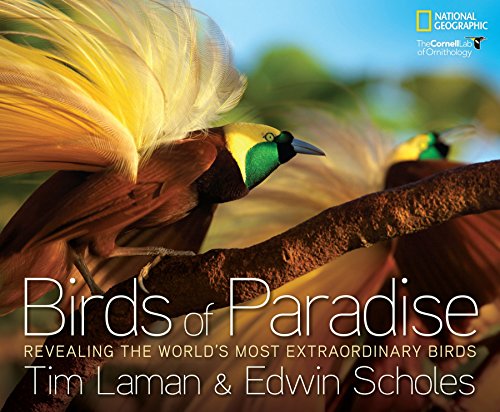
B - Birds of Paradise: Revealing the World’s Most Extraordinary Birds by Tim Laman and Edwin Scholes

This is one of my more recent purchases, so I haven’t actually read the entire book yet. Perhaps that means I’m cheating choosing it for B, but I’ve really enjoyed what I’ve read so far, and I love the many photographs of these incredible birds, ones I may never see in person in the wild.


C - A Camera, Two Kids, and a Camel: My Journey in Photographs by Annie Griffiths Belt

I love this style of book. It contains photographs by Annie Griffiths Belt, but it also contains her story, how she travelled the world with her family, the sights they saw, and the lessons they learned. Great read, even for non-photographers.


D - Dorothea Lange: Aperture Masters of Photography

Dorothea Lange had to be D. As with Ansel Adams, I find her work very inspiring, even if it’s not a style I tend to shoot, myself. She can tell a story with a photograph better than most, and that’s something we can all learn from.


E - Edward Steichen: Lives in Photography by Todd Brandow and William Ewing

I really love this book. It’s an excellent representation of Steichen’s work and has some great essays on the man and his life. But I did struggle to choose just one book for E, so I’m going to cheat and also mention Earth is My Witness by Art Wolfe.


F - Fine Art Nature Photography by Tony Sweet

I like the way Tony Sweet approaches photography, from an artistic perspective I find very appealing. This is a small book that focuses mostly on the photographs. But it’s one I enjoy looking through every so often.


G - Genesis by Sebastião Salgado

Genesis is such a powerful book full of absolutely stunning black and white photography. I really admire Salgado’s work, and this is just an incredible example of that work. Highly recommended.


H - Himalaya: Land of the Snow Lion by Andrea Baldeck

Andrea Baldeck takes us to another part of the world and lets us explore the culture, art, nature, and geography of that region through her photography. She tells the story of the people and the place.


I - Irving Penn: Platinum Prints

Another one of my favorites, the only thing better than this book would be seeing the prints in person. These are excellent reproductions of Penn’s work, showing the incredible tonal ranges he captured in his compositions. Beautiful work.


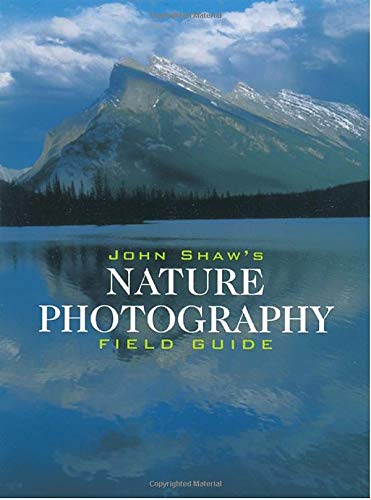
J - John Shaw’s Nature Photography Field Guide

This was one of the first nature photography books I purchased, so perhaps I have a soft spot for it. It helps give an overview of many of the different topics relevant to the field, even if some sections do show their age.


K - Andre Kertesz: Of Paris and New York

I’m cheating a little with this book, as I’m nowhere near finished reading it. But how could I not include Kertesz for K? This book contains a nice sampling of his work and several essays about his life.


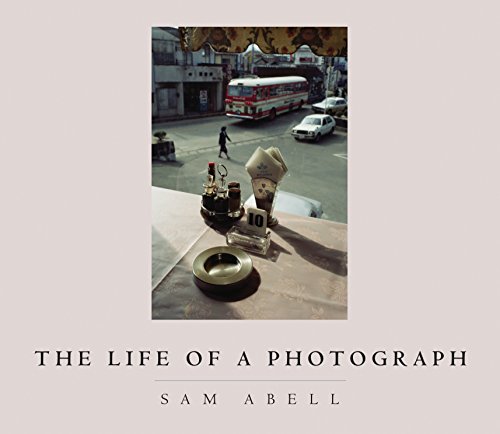
L - The Life of a Photograph by Sam Abell

When I first bought this book I felt a little disappointed, the photographs just didn’t stand out to me. But the more I read and looked through it the more drawn to it I felt, the more the photographs resonated with me, the more I started to really feel like I understood something about them, about the story they were telling. Now I really like The Life of a Photograph.


M - Michael Kenna: Images of the Seventh Day

This is the first book I’ve purchased of Michael Kenna’s work, and I couldn’t be happier. I find his photography so inspiring, I just love the ethereal feel to some of it. Another highly recommended book.


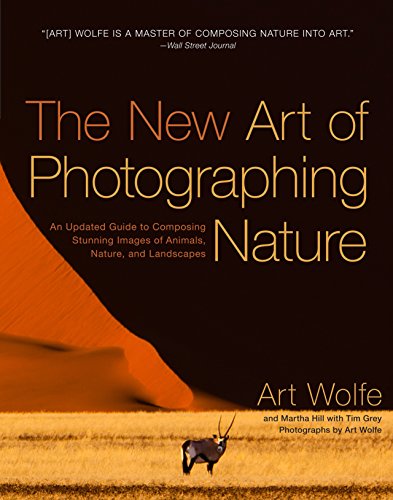
N - The New Art of Photographing Nature by Art Wolfe and Martha Hill

I love the way this book is written, with one or more photographs, followed by some text by Art Wolfe from the perspective of the photographer, and then Martha Hill from the perspective of an editor. This adds so much depth to the discussions.


O - Obscure Destinations by Dan Westfall

I was fortunate to meet Dan Westfall at an art show, which is where I purchased this book. It contains a very nice sampling of his black and white photography.


P - The Photographer’s Eye by Michael Freeman

Michael Freeman wrote a series of books teaching many photography topics. My favorite of the series is the first book, The Photographer’s Eye.


Q - . . .

Move on, there’s no Q here today.

R - Reflections of Seoul in Four Seasons by Jodi Cobb

This is a nice picture book of Jodi Cobb’s photographs of Seoul, Korea. I love photography of cultures that differ from my own. It’s a great way to learn more about the world and its people.


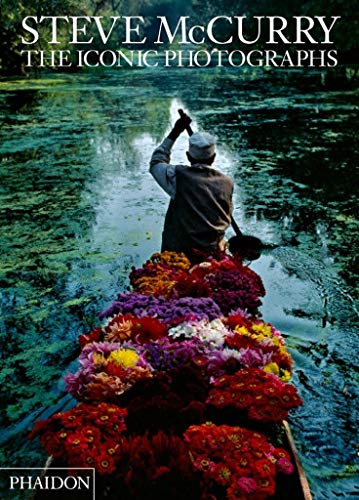
S - Steve McCurry: The Iconic Photographs

I regard this as one of the most incredible books of photography I own. It’s large, so it has impact from that alone. But the photography is just amazing. Steve McCurry has such a great skill at photographing people and conveying story in his photographs. Beautiful book.


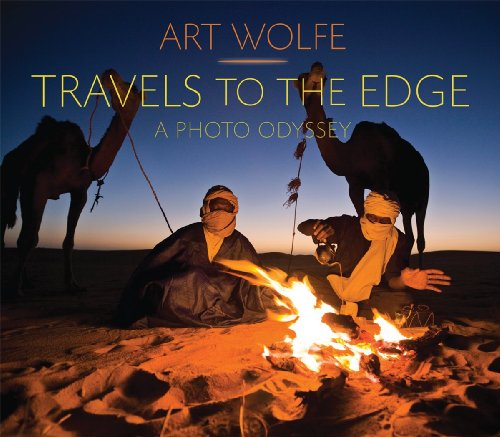
T - Travels to the Edge: A Photo Odyssey by Art Wolfe

I loved Art Wolfe’s television series, Travels to the Edge. This book is a companion to the series, containing many of the photographs talked about during the show, along with some extra background about the travels.


U - Understanding Exposure by Bryan Peterson

In my view, this is the classic book on exposure. Bryan Peterson has a way of explaining the topic that just makes sense, or at least it seemed to when I read it. I like his style of writing, and I also enjoy his photography.


V - The Vision by David Noton

I find David Noton’s writing and photography very inspiring. The Vision is all about starting out with an idea that when mixed with all the required technical know-how and artistry can lead you to that final impactful photograph.


W - Waiting for the Light by David Noton

Am I cheating again by including two David Noton books in a row? Well, I don’t care. Waiting for the Light is one of my favorite photography books for the beautiful combination of inspiring writing and beautiful photographs. It’s almost lyrical. Anytime I read this book I feel the pull to go out and create, to see the world, breath the early morning mountain air, walk down a path, and explore whatever the world has to offer. And if I haven’t cheated enough already, I’m going to do it again by also mentioning Within the Frame by David duChemin, another favorite book of mine.


X - . . .

X marks the spot, but that spot ain’t here.

Y - . . .

Y couldn’t I find a book to fill this slot?

Z - . . .

Zzzzzz is what you must be doing after this many missing letters.


Well, I hope you enjoyed reading this list as much as I enjoyed trying to create it. I couldn’t quite finish it, but I was surprised just how many letters I could fill. Have you read any of these books? Do you have favorite photography books that could fill any of my missing letters? Or have you created a list of your own?


Do you enjoy these posts?

Sign up to receive periodic emails with updates and thoughts. Don’t worry, I won’t spam you. And please consider purchasing artwork or products from my online store, and using my affiliate links in the sidebar to the right when shopping online.

I appreciate your support!