Field Notes Update

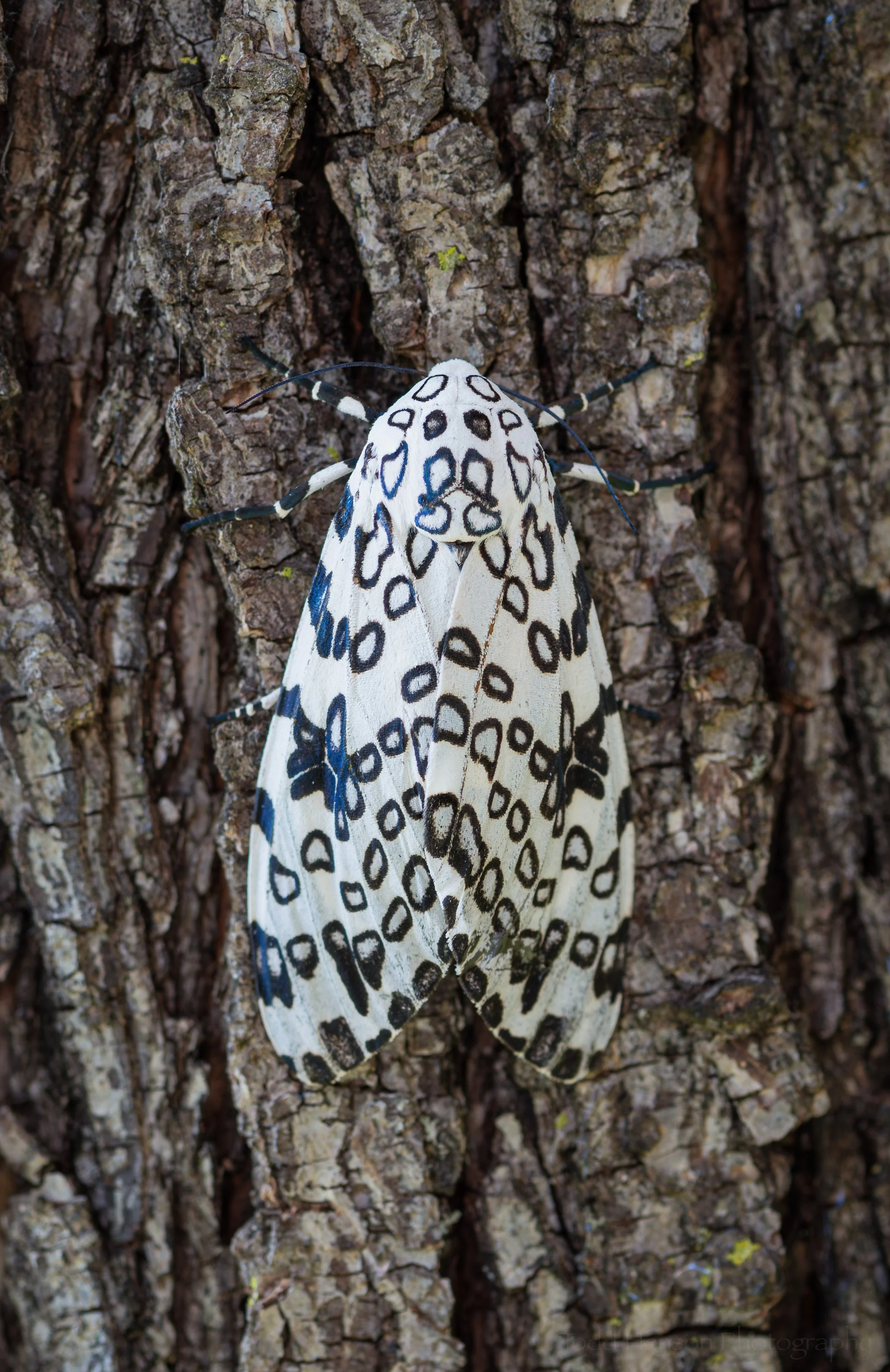
Luna Moth on Bark by Todd Henson

A Luna moth resting on the bark of a tree along the trail.

There are species I sometimes think I’ll never see in a natural setting, and many moths fall into that category. I might see them early in the morning or late at night around buildings, but finding them out in nature? Nope.

A closeup of the Luna moth showing some of the fascinating patterns and structures.

Thankfully, the Luna moth proved me wrong! While hiking the trails of Prince William Forest Park one afternoon in late April I just happened to see a shape and color that stood out near the base of a tree, and found this particular Luna moth resting on the bark. As often happens with resting moths, this one paid me no heed whatsoever as I inched closer and closer with the camera, so I was able to get some closeup views of this beautiful moth. I hope you enjoy them.

A vertical view of the Luna moth.

Then in late May I had a second encounter in the same park. This time I found a Luna moth resting upside down on the branch of a downed tree. Seeing it from this perspective allows us to see that nice set of eyes on the lower inside wings, and also gives a view of the white body of the moth. This particular one appears to have lost the tips of its two tails.

The underside of a Luna moth

Facing down a Luna moth


Do you enjoy these posts?

Sign up to receive periodic emails with updates and thoughts. Don’t worry, I won’t spam you. And please consider purchasing artwork or products from my online store, and using my affiliate links in the sidebar to the right when shopping online.

I appreciate your support!

Three Grebes of Two Species by Todd Henson

On a recent morning while hiking a nearby wildlife refuge we spoke with someone who said they’d seen several grebes out in the water, so I kept my eyes open when we made it to the bay trail. Sure enough, we also saw a few grebes swimming around and fishing, sometimes near shore.

Plumage Transition of Horned Grebes

We found two great examples of Horned Grebes. One has almost completely transitioned to its summer, or breeding, plumage with fairly dark body feathers and the distinctive lighter yellow “horns” stretching from its eye to the back of its head.

Mostly summer (breeding) plumage of a Horned Grebe

The other appears to only recently have begun its transition and still retains more of its winter, or non-breeding, plumage, which is less colorful and more grey.

A Horned Grebe transitioning from its winter (non-breeding) to summer (breeding) plumage

I wonder if perhaps one is male and the other female. Some birds have distinctly different plumage for male and female, but with grebes they look alike and instead change plumage with the seasons, so I can’t tell their sex from their plumage.

Pied-billed Grebe

The other grebe we found was a single Pied-billed Grebe, which is smaller than the Horned Grebe. This one appears to have transitioned to its breeding plumage, which includes that distinctive black bar across its bill.

A Pied-billed Grebe in breeding plumage

All of these grebes were very busy feeding, which meant they kept disappearing from view, diving down below the surface for food and resurfacing, often at a distance from where they first dove. They are a very enjoyable bird to watch and photograph, and I’m glad we happen to be in an area they migrate through on their way north to their breeding grounds.


Do you enjoy these posts?

Sign up to receive periodic emails with updates and thoughts. Don’t worry, I won’t spam you. And please consider purchasing artwork or products from my online store, and using my affiliate links in the sidebar to the right when shopping online.

I appreciate your support!

Some Bald Eagles Like Duck by Todd Henson

Most often I see bald eagles in this area eating fish, either that they’ve caught or stolen from another bird. But eagles are opportunistic and will feed on many things besides fish.

The bald eagle ruffled its feathers just after landing on the dead tree.

One morning while hiking a local wildlife refuge we saw an eagle fly from its massive nest and head out over the bay. We thought it was going fishing, but when we kept watching as it got further and further away we saw it begin to dip down towards the water then back up into the air again, and it did this several times. That’s not how they typically fish. But we noticed small dark spots moving around on the water just below the eagle, too small to make out but we assumed some species of duck. It was only when the bald eagle flew back to a tree in the refuge that we noticed it had, indeed, caught a duck as its next meal.

After ruffling its feather the bald eagle stretched out its wings.

The tree was at a bit of a distance so I cropped these images fairly aggressively to give you a better view of the bald eagle and the duck it caught. The first few images show the eagle shortly after it landed on the dead tree, ruffled its feathers, and then began eating.

Now the bald eagle was ready to begin eating the duck it had just caught from the surface of the water.

Eventually, it had eaten enough and would soon take flight. How did I know it was just about to take flight? As gross as this may seem, they often defecate just before lifting off, and sure enough, about 10 seconds after lightening its load it stretched out its wings and took flight. If you want to photograph eagles or other large birds as they take flight then watch for these signs. They won’t always do it, but when they do it’s often followed by flight.

Pre-flight preparation, lightening the load (1 of 3)

Pre-flight preparation, lightening the load (2 of 3)

Pre-flight preparation, lightening the load (3 of 3). Watch out below!

The bald eagle positions itself for taking flight. I love how they look!

The bald eagle opens its wings, ready to take flight.

I love how bald eagles look as they take flight, so very majestic and powerful. Once the eagle has left the tree you can get a better view of the duck, or at least its legs. I don’t know exactly what species it was. Also, click on the last photo to see a bigger view and look closely at the eagle’s eye. I happened to photograph it while it had its nictitating membrane closed over the eye. That’s why it looks cloudy instead of that bold yellow and black you’ll see when the eyelids are fully open.

The bald eagle takes flight, pushing itself off the tree while still clasping the dead duck.

Stretching out its powerful wings the bald eagle flies away from the tree, duck securely clasped in its talons.

Flying away from the tree the bald eagle stretches out its wings and begins to angle itself back towards its nest. Notice both the legs of the duck dangling from its talons and also the cloudy look to its eyes because of the closed nictitating membrane.

In a future post I hope to share some photos of this eagle’s massive nest, so large and deep you can’t always tell when there’s an eagle in the nest.


Do you enjoy these posts?

Sign up to receive periodic emails with updates and thoughts. Don’t worry, I won’t spam you. And please consider purchasing artwork or products from my online store, and using my affiliate links in the sidebar to the right when shopping online.

I appreciate your support!