Young Hooded Mergansers Out With Mother by Todd Henson

Family of Hooded Merganser ducks taking a break on a downed tree.

A short while back I posted a series of photographs of a family of Hooded Merganser ducklings emerging from their nest box for the first time. A number of years ago I was fortunate to photograph another Hooded Merganser family in the same location. These photos show how the young ducklings quickly grow into adolescents that very much resemble their adult parents.

"Mom, watch that tail!," says a young Hooded Merganser as its mother swishes her tail dry.

Mother Hooded Merganser looking one way...

... and then looking the other way.

The mergansers had grown accustomed to seeing people on the boardwalks that stretch through the wetlands. They swam to a downed tree not very far from the boardwalk and took a short nap. I was lucky to be there at that time. I took my camera off the tripod and sat down on the boardwalk to photograph the birds as close to their eye level as I could. To help steady the long lens I brought my knees up and rested the lens between my knees. I’m sure it looked awkward, but it helped steady the lens better than I could have otherwise.

A young Hooded Merganser resting on a downed tree.

The Hooded Merganser mother looks my way one more time before closing her eyes and napping with her young family.

I sat and watched them through their entire nap, slowing down my photographing when they had all closed their eyes. I didn’t want the shutter to bother them too much, though it likely wouldn’t have. I ended up spending a little over half an hour with this wonderful family of Hooded Mergansers, and was fortunate to be the only person there for the majority of the time. I treasure these sorts of moments, and I’m thankful that photography lets me capture them and share them with you. I hope you get at least some small amount of enjoyment viewing this beautiful family.

Rest time over, the family of Hooded Mergansers rise. Notice how sleek the mother's head can sometimes look. 

Family of Hooded Mergansers swimming away after their short rest.

Lunch time! A young Hooded Merganser has caught a tasty morsel.


Do you enjoy these posts?

Sign up to receive periodic emails with updates and thoughts. Don’t worry, I won’t spam you. And please consider purchasing artwork or products from my online store, and using my affiliate links in the sidebar to the right when shopping online.

I appreciate your support!
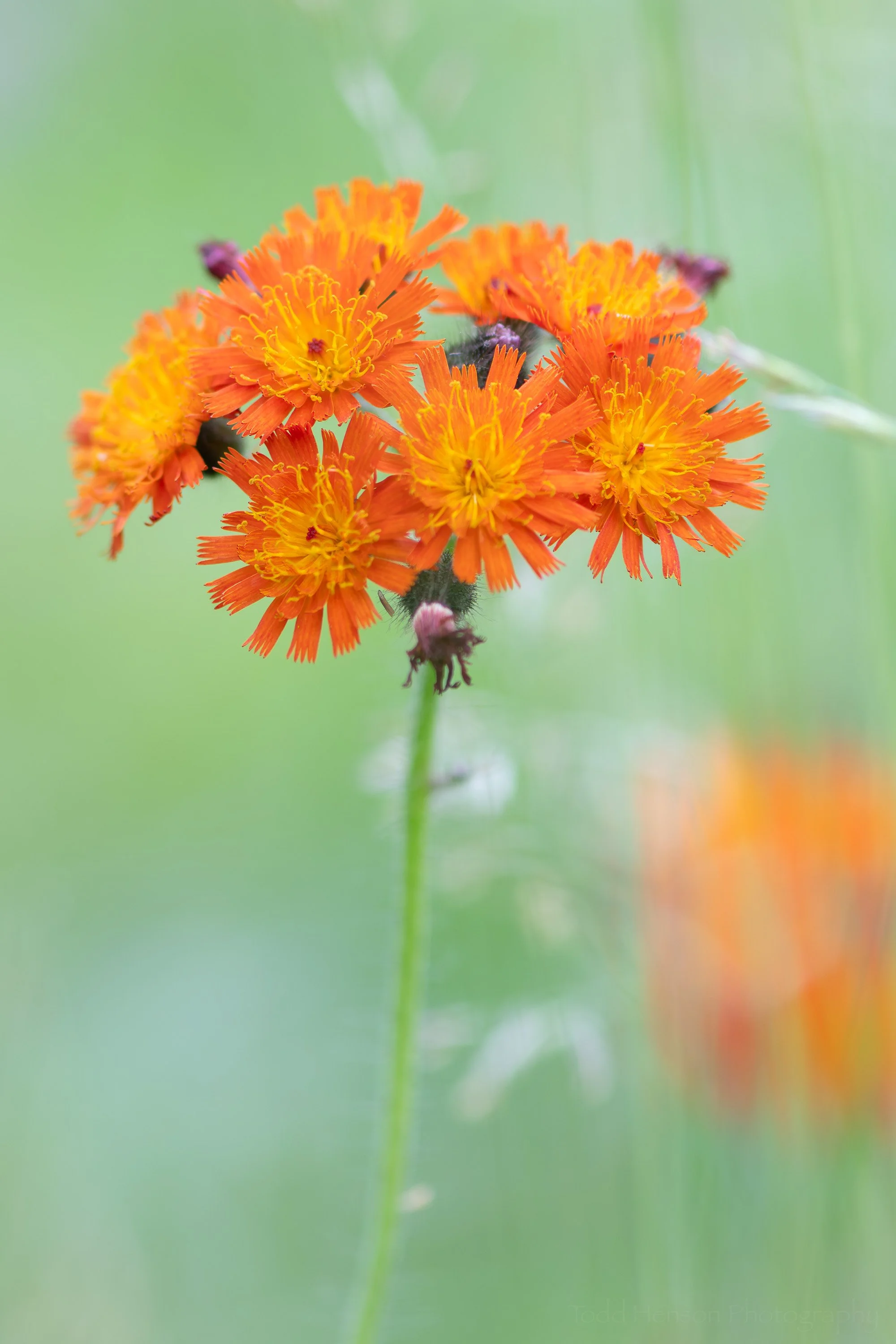


Katydid Cleaning Itself by Todd Henson

First of a sequence of a katydid cleaning itself.

Second of a sequence of a katydid cleaning itself.

Animals aren’t the only creatures to exhibit interesting behaviors. Insects do, as well. These images are of a katydid cleaning itself much as a cat, dog, or bird would. This process lasted several minutes as the katydid cleaned much of what it could reach, which was mostly its ovipositor.

Third of a sequence of a katydid cleaning itself.

Fourth of a sequence of a katydid cleaning itself.

The ovipositor is the large curved organ at the tail end of the insect used to lay eggs. Different katydid species have differently shaped ovipositors to help them lay eggs in their locations of choice, whether that be on grass stems, under a layer of dirt, in the stems of dead or living plants, etc.

The fibers stuck to the back of this katydid are from the cattails it had been moving through. I found many other katydid in this area, some in the fluffy portions of the cattails. It appeared they may have been eating these parts of the plant.

Fifth of a sequence of a katydid cleaning itself.

Sixth of a sequence of a katydid cleaning itself.

Another characteristic I found interesting in these photos are the katydid’s antennae. Notice how much they move around from image to image, sometimes facing forward, other times straight up, sometimes down.

Seventh of a sequence of a katydid cleaning itself.

Eighth of a sequence of a katydid cleaning itself.

Next time you’re out hiking keep your eyes open for katydid or other interesting insects that are so easy to overlook, but so fascinating when you take the time to investigate.

Please leave a comment below if you can identify this specific species of katydid. I believe it may be a Dusky-faced Meadow Katydid, but I find many of them very difficult to identify.

And if you’re curious what katydid look like in action, I found the following video on YouTube showing a katydid laying eggs.


Do you enjoy these posts?

Sign up to receive periodic emails with updates and thoughts. Don’t worry, I won’t spam you. And please consider purchasing artwork or products from my online store, and using my affiliate links in the sidebar to the right when shopping online.

I appreciate your support!


The Life of a Photograph by Sam Abell by Todd Henson

This post contains affiliate links and I will be compensated if you make a purchase after clicking on my links. This is at no extra cost to you.

Cover of Sam Abell's The Life of a Photograph.

Cover of Sam Abell's The Life of a Photograph.

The Life of a Photograph by Sam Abell is an absolute gem of a book. It is a collection of Abell’s photographs, ones that have meaning to him, that demonstrate how he saw the world and how he went about making his photographs. And that is one of the points from the book: making photographs, not taking them. He says only one image in the book was taken instead of intentionally made, and that was a photograph of a train in the process of derailing.

Sometimes there’s more than one finished photograph. By presenting alternative images side by side or in sequence this book suggests the process of seeking the picture — a process with no absolute ending as time and thought continue to shape the life of a photograph.
— Sam Abell, page 6
Pages 18-19 of The Life of a Photograph by Sam Abell.

Pages 18-19 of The Life of a Photograph by Sam Abell.

Sam Abell was a National Geographic photographer who captured life in photographs. He sought scenes that caught his attention. He spent time taking them in, then he would compose his shot and wait for the right moment to make the photograph. He spent time crafting his images, working to tell stories through his photography. He describes how his intent was to bring the world under his aesthetic control, but that the world often didn’t cooperate.


Making a picture just right takes time even when the thing you’re photographing isn’t moving. Instead you do the moving — closer, not so close, change lenses, commit to a tripod, micro compose some detail, step back, reconsider, recompose, repeat. And when it looks right it also feels right — just so.
— Sam Abell, page 158
Pages 96-97 of The Life of a Photograph by Sam Abell.

Pages 96-97 of The Life of a Photograph by Sam Abell.

Abell’s photographs are about life, they tell stories. He isn’t known for photographing iconic landscapes, striking portraits of people, or powerful wildlife images. Instead his landscapes were usually anonymous, locations that told their story but in a more subtle down to earth way. His portraits of people had to tell a larger story, they had to bring you into the world of that person, to share a bit of their life through the image. And his wildlife photography was more often about showing evidence of the animals, whether through tracks, by showing a burrow, or a behavior of an animal in its environment.

Someone other than me cared about a picture I’d made. The photograph had a life, and so did I.
— Sam Abell, page 204, speaking about a photograph winning an award when he was sixteen.
Pages 156-157 of The Life of a Photograph by Sam Abell.

Pages 156-157 of The Life of a Photograph by Sam Abell.

The Life of a Photograph is a book of photography. The words are few and far between, but what words are there have meaning. Some describe a photograph, or a series of photographs, how Abell went about creating the images, or what was happening in the image. But there are also lessons in the text if you’re open to them, lessons both about photography and about life. In describing scenes from his own life Abell also shares insights into our lives and those of others. In the end we’re not so very different, and that’s why Abell’s photographs can have such impact. In showing us the lives of others he allows us to pause and also consider our own lives.

Pages 180-181 of The Life of a Photograph by Sam Abell.

Pages 180-181 of The Life of a Photograph by Sam Abell.

I honestly didn’t think I would enjoy this book nearly as much as I did. When I first flipped through the book many of the photos did not stand out. But that’s not what Abell is about nor what he was trying to accomplish. The photos are more subtle. They require more time to appreciate, or at least they did for me. The more I view them the more I appreciate them.

Three of my favorite images from the book are included in this post. I love the cover photograph, which is also included on page 25. It was made in Hagi, Japan, and is of a table setting in a restaurant looking out the window at the street below. He describes the image as such: “It’s like a scene from a short story that will soon change.”

Pages 6-7 of The Life of a Photograph by Sam Abell.

Pages 6-7 of The Life of a Photograph by Sam Abell.

The photograph on page 7 is of a very graphic and monochromatic plaza in Toronto, Ontario, with a woman walking by the lower right corner. He uses this image as an example of making a photograph. Something drew him to the plaza, perhaps the striking graphic nature of it. So he composed the image and then waited. When the woman walked into the scene he knew this was what he’d been waiting for and made the photograph.

Pages 32-33 of The Life of a Photograph by Sam Abell.

Pages 32-33 of The Life of a Photograph by Sam Abell.

I also very much enjoy the photograph from page 33 of a city courtyard in Dublin, Ireland. It is such a beautiful composition, with the man in the center quietly contemplating the shrine, a woman washing windows in the back left corner, and a woman with a cane walking around the corner to the right. There is a beautiful balance to the image, and plenty of story. I love to imagine who these people are, where they are going, where they are coming from, what they are thinking.

If you’re not familiar with Sam Abell but enjoy photographs that tell stories, especially if you enjoyed the stories in National Geographic from years ago, then I encourage you to seek out a copy of The Life of a Photograph. And if you are familiar with Sam Abell then you likely already know what I’m talking about. This is a book I’m very happy to have in my collection, and one I hope you will enjoy, as well.


Do you enjoy these posts?

Sign up to receive periodic emails with updates and thoughts. Don’t worry, I won’t spam you. And please consider purchasing artwork or products from my online store, and using my affiliate links in the sidebar to the right when shopping online.

I appreciate your support!