Reviews

Touching the Mekong by Andrea Baldeck by Todd Henson

This post contains affiliate links and I will be compensated if you make a purchase after clicking on my links. This is at no extra cost to you.

Cover of Andrea Baldeck's Touching the Mekong

Cover of Andrea Baldeck's Touching the Mekong

Andrea Baldeck travels the world learning about and photographing other cultures. For Touching the Mekong she “spent two long sojourns in lands touched by the Mekong,” a river formed by snowmelt in Tibet, flowing through Southeast Asia touching countries such as Myanmar, Thailand, Laos, Cambodia, and Vietnam.

Pages 14 - 15 of Touching the Mekong

Pages 14 - 15 of Touching the Mekong

Terrains of seductive beauty and variety provoked awe and delight: the jungled mountains of the upper Mekong, the meanders of the Irrawaddy, the placid expanse of the Tonle Sap, the shoreline of the Bay of Bengal.
— Andrea Baldeck
Pages 32 - 33 of Touching the Mekong

Pages 32 - 33 of Touching the Mekong

Pages 52 - 53 of Touching the Mekong

Pages 52 - 53 of Touching the Mekong

The book opens with a short two-page introduction where Baldeck provides context and texture to the photographs that occupy the rest of its 156 pages. You can feel her passion for the region and its people and you can see in the photographs her early inspiration from publications such as Life and National Geographic.

Pages 74 - 75 of Touching the Mekong

Pages 74 - 75 of Touching the Mekong

In this highly varied landscape live equally diverse peoples, a cultural patchwork vividly evident at open-air markets and religious festivals, yet also subject to shifting political and economic pressures in a region changing more quickly than can be captured by the camera.
— Andrea Baldeck
Pages 82 - 83 of Touching the Mekong

Pages 82 - 83 of Touching the Mekong

Pages 150 - 151 of Touching the Mekong

Pages 150 - 151 of Touching the Mekong

Baldeck says her photographs in Touching the Mekong are not a compendium or travelogue, but instead “are vey much a personal account of textured, nuanced, enigmatic moments in a fascinating world.” She has created images that show aspects of the landscape throughout the region and that capture the people in their homes, where they work, and in their places of worship. She has created posed portraits and also candid shots of people going about their life. We see bits and pieces from their lives including details in architecture and in the crafts and products they create.

Touching the Mekong is a book for people interested in other cultures. It provides a way for those of us who may never visit these regions to appreciate, at least in some small way, the people and culture of these locales.


Irving Penn: Platinum Prints by Todd Henson

This post contains affiliate links and I will be compensated if you make a purchase after clicking on my links. This is at no extra cost to you.

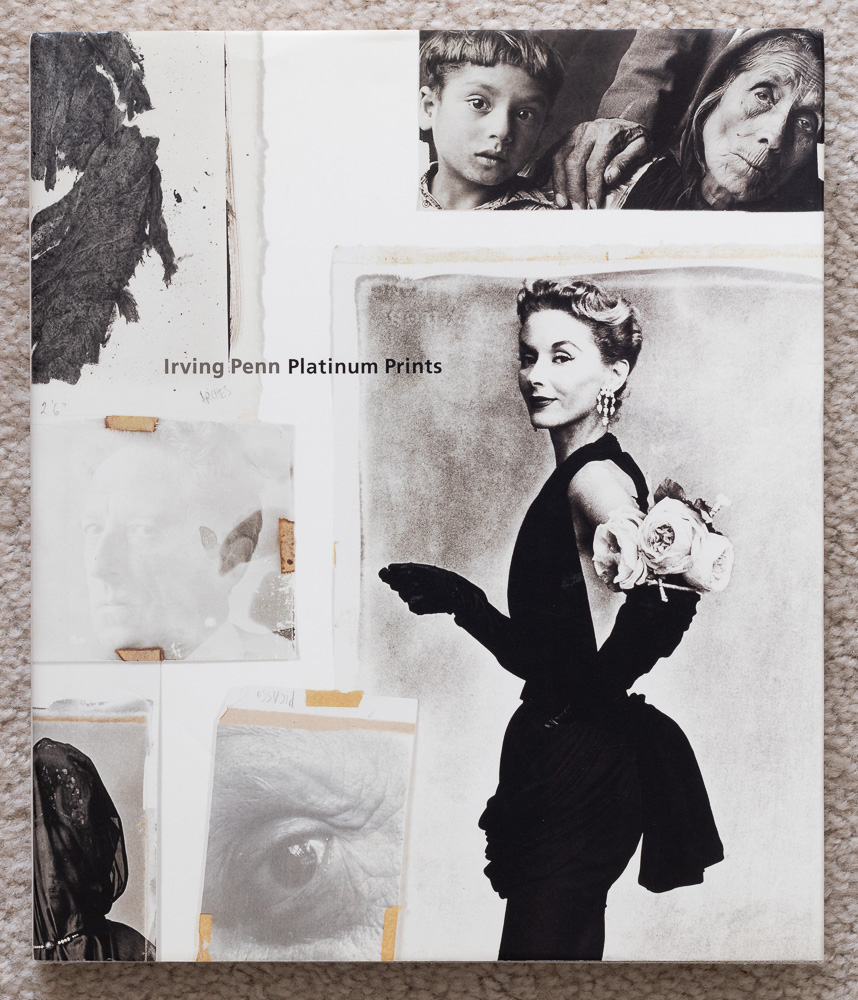
Cover of Irving Penn: Platinum Prints

Cover of Irving Penn: Platinum Prints

Irving Penn: Platinum Prints collects together in book form the material he donated to the National Gallery of Art in 2002 and 2003. The material included 85 platinum / palladium prints and 17 collages of test prints, all beautifully reproduced in this book.

I purchased this book because I knew the name Irving Penn. But I wasn’t very familiar with his actual work, just that he was a well known American photographer who had worked in the fashion industry. I’m very much a believer in improving ones own work by studying the work of others regardless of how much their subject matter differs from your own. So when I found a copy of the book at a local used book store I grabbed it.

I have always loved the look of platinum and palladium prints, with their fantastic tonal variations, though I haven’t been fortunate enough to view very many in person. As beautiful as the prints look in the book I can only imagine how much more impactful they might be in person.

Irvin Penn: Platinum Prints. Plate 6: New York Still Life, 1947

Irvin Penn: Platinum Prints. Plate 6: New York Still Life, 1947

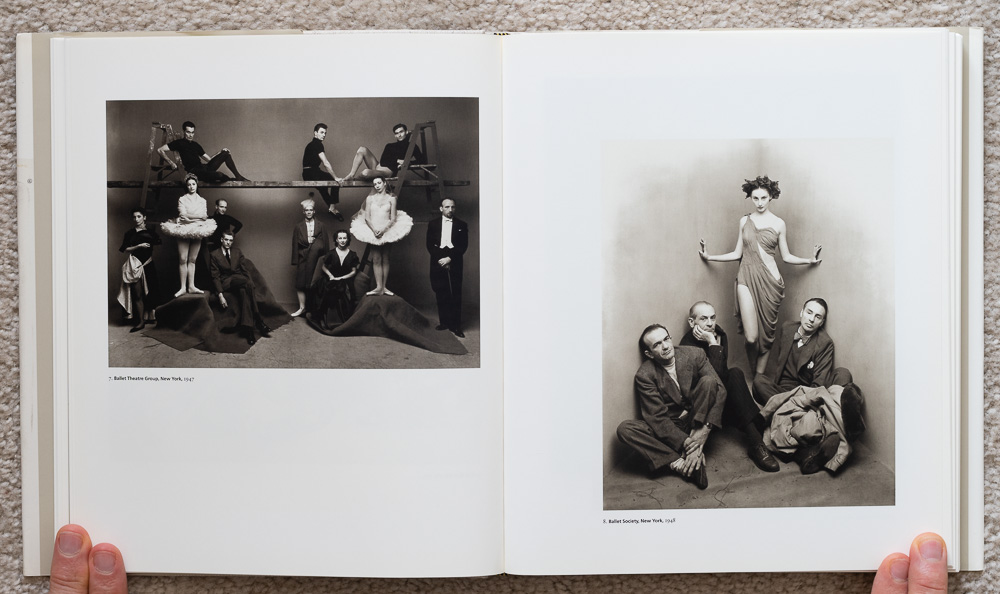
Irvin Penn: Platinum Prints. Plate 7: Ballet Theatre Group, New York, 1947. Plate 8: Ballet Society, New York, 1948

Irvin Penn: Platinum Prints. Plate 7: Ballet Theatre Group, New York, 1947. Plate 8: Ballet Society, New York, 1948

Irving Penn may be best know for his fashion work, having created many photographs for Vogue magazine. But the prints in this book show his interests went much further than fashion. He created still life images, portraits of well-known and influential people, and of common folk from various cultures around the world. And of course, he also produced photographs related to fashion.

Irvin Penn: Platinum Prints. Plate 12: Mother and Sleeping Child, Cuzco, 1948. Plate 13: Family with Mother Nursing Child, Cuzco, 1948

Irvin Penn: Platinum Prints. Plate 12: Mother and Sleeping Child, Cuzco, 1948. Plate 13: Family with Mother Nursing Child, Cuzco, 1948

Irvin Penn: Platinum Prints. Plate 37: Picasso at La Californie, Cannes, France, 1957

Irvin Penn: Platinum Prints. Plate 37: Picasso at La Californie, Cannes, France, 1957

I really like this book. The prints are beautiful with such rich tones. The lighting is gorgeous. The book is printed on a thick stock matte paper. Sarah Greenough provided an essay that describes Penn’s life and how he got into platinum / palladium printing. The book also includes a chronology of Penn’s life, a checklist from the exhibition with details about each print, and a lengthy bibliography of works by and about Irving Penn.

Irvin Penn: Platinum Prints. Plate 53: Four Unggai, New Guinea, 1970. Plate 54: Five Okapa Warriors, New Guinea, 1970

Irvin Penn: Platinum Prints. Plate 53: Four Unggai, New Guinea, 1970. Plate 54: Five Okapa Warriors, New Guinea, 1970

Irvin Penn: Platinum Prints. Plate 80: Composition with Skull and Pear, New York, 1979. Plate 81: The Poor Lovers, New York, 1979

Irvin Penn: Platinum Prints. Plate 80: Composition with Skull and Pear, New York, 1979. Plate 81: The Poor Lovers, New York, 1979

This book can be hard to find but if you manage to find a copy I would grab it, or at least take the time to look through it. I would very much enjoy one day seeing some of these prints in person.

Irvin Penn: Platinum Prints. Plate 98: Platinum Test Materials 10/17, 1989. Plate 99: Platinum Test Materials 15/17, 1989

Irvin Penn: Platinum Prints. Plate 98: Platinum Test Materials 10/17, 1989. Plate 99: Platinum Test Materials 15/17, 1989

Creating a platinum print is a very hands on process. The Met posted a short video on YouTube where Vasilios Zatse, an assistant of Irving Penn, describes how Penn created his platinum and palladium prints. Check it out if you're curious about the process.

In this animated video of Irving Penn's darkroom, Vasilios Zatse, who was an assistant to Penn from 1996 to 2009, explains the artist's innovative process for making platinum-palladium prints. Produced in conjunction with the exhibition Irving Penn: Centennial, on view at The Met Fifth Avenue from April 24 through July 30, 2017.

Have you ever seen any of Irving Penn’s prints in person? Are you familiar with his work? Let me know in the comments below.


The Ansel Adams Wilderness: Photographs by Peter Essick by Todd Henson

This post contains affiliate links and I will be compensated if you make a purchase after clicking on my links. This is at no extra cost to you.

Cover of The Ansel Adams Wilderness

Cover of The Ansel Adams Wilderness

Peter Essick, a National Geographic photographer for over 25 years, had always been inspired by Ansel Adams' work. After reading Adams’ book Sierra Nevada: The John Muir Trail, Essick felt the pull to start a project photographing some of the same locations as those from the book, which in 1984 were renamed The Ansel Adams Wilderness. Essick didn’t want to recreate Adams work, but instead he wanted to create his own photographs of this region while still paying homage to Adams' work. That project resulted in a new book, The Ansel Adams Wilderness: Photographs by Peter Essick.

The Ansel Adams Wilderness, pages 16-17

The Ansel Adams Wilderness, pages 16-17

The photographs are organized into 5 sections:

  • PEAKS and LAKES

  • PASSES and MEADOWS

  • HEADWATERS and RIVERS

  • TREES and PLANTS

  • SNOW and WIND

The Ansel Adams Wilderness, pages 24-25

The Ansel Adams Wilderness, pages 24-25

Each of these sections begins with a one page essay, followed by Peter Essick's photographs reflecting the subject, interspersed periodically by quotations from folks like Theodore Roosevelt, John Muir, Henry David Thoreau, and others.

The Ansel Adams Wilderness, pages 50-51

The Ansel Adams Wilderness, pages 50-51

The book also includes a Foreword, Introduction, Afterword, and at the end one of my favorite sections, Photographer’s Notes, where Essick provides some context for each of his photographs. I love when photographers include sections where they talk about their work, what they were thinking and how they approached the scene. In this case some of the notes are very short, but others have a nice amount of detail. Each also includes the equipment used and the exposure settings for those interested, as well as the date and time the photograph was created.

The Ansel Adams Wilderness, pages 80-81

The Ansel Adams Wilderness, pages 80-81

The Ansel Adams Wilderness is a really nice book. I like that Peter Essick chose not to recreate Ansel Adams photographs. Instead he used modern equipment to create his own photographs, processing them as black and whites reminiscent of what Ansel Adams might have done.

The Ansel Adams Wilderness, pages 86-87

The Ansel Adams Wilderness, pages 86-87

The book is about 112 pages in length with pages measuring 8 1/2 x 10 inches. The Photographer’s Notes section begins on page 88, with everything before being photographs, essays and quotes. The paper used in my edition is a reasonably thick, smooth stock suitable for showcasing black and white photographs.

I continue to look to nature for answers to the deeper questions, and I believe that nature offers an unlimited source of material for any artist or observer willing to look.
— Peter Essick

If you have an interest in photographs of the Sierra Nevada region and enjoy the work of Ansel Adams then you might also enjoy Peter Essick’s The Ansel Adams Wilderness.


Do you enjoy these posts?

Sign up to receive periodic emails with updates and thoughts. Don’t worry, I won’t spam you. And please consider purchasing artwork or products from my online store, and using my affiliate links in the sidebar to the right when shopping online.

I appreciate your support!