Reviews

A Camera, Two Kids and a Camel: My Journey in Photographs by Annie Griffiths Belt by Todd Henson

This post contains affiliate links and I will be compensated if you make a purchase after clicking on my links. This is at no extra cost to you.

A Camera, Two Kids and a Camel by Annie Griffiths Belt

A Camera, Two Kids and a Camel by Annie Griffiths Belt

Annie Griffiths Belt spent much of her life as a National Geographic photographer, traveling the world, telling stories about the peoples and places she visited. In A Camera, Two Kids and a Camel she tells her story. She tells of growing up in the Midwestern US in the 1950s and how early on she had no thoughts of being a photographer; she didn’t even own a camera until her junior year in college. She thought she’d be a novelist.

But the job that might have begun training Annie for her eventual career with National Geographic was that of a waitress in a small town. She felt that job taught her more than any classroom ever had. She learned how to relate to people, how to communicate and get along, the gift of gab and putting people at ease; great skills for a future journalist.

When she did finally buy a camera in college Annie was hooked. All she wanted to do was photograph assignments for the university paper. After college she worked for another paper, one where she was largely on her own to find and tell stories, with little oversight or direction. This was perfect training for National Geographic.

One day while working at the paper Annie answered the phone and found herself speaking to Bob Gilka, the Director of Photography at National Geographic. He was looking for hail damage photographs and knew her area had just experienced a large hail storm. And so began her relationship with National Geographic. Within a year she was working her own assignments for them.

It was also at National Geographic she would meet her future husband, Don Belt. He was a writer for the magazine, and they would eventually go on assignments together as much as possible. When they had kids they decided to take them along, as well. This proved a fantastic education, allowing the kids to see the world, learn about the cultures, people, and places firsthand.

National Geographic sent her all over the world. She visited many of the countries in the Middle East, learning about the different cultures and making friends with many people. This was an interesting time. There is so much tension between so many of the cultures in that part of the world, yet she was able to befriend people everywhere she went. She eventually travelled to other parts of the world: New Zealand, Australia, England, Morocco, Japan. She visited South America, Europe, Africa, every continent but Antarctica.

Each section of the book tells a part of her story and showcases photographs from that period of her life. Scattered throughout are also short pieces about specific stories, describing her experiences and displaying photographs from that story. Many of them are very personal or emotional, as is often the case with National Geographic stories, taking you into the lives of the people.

The book is full of photographs from all over the world. Most are her photographs made while working various assignments. Some are of her family while with her on these assignments. If you’ve read National Geographic then you will be familiar with this type of photography. These are story-telling photographs. Ones that draw us into the lives of others.
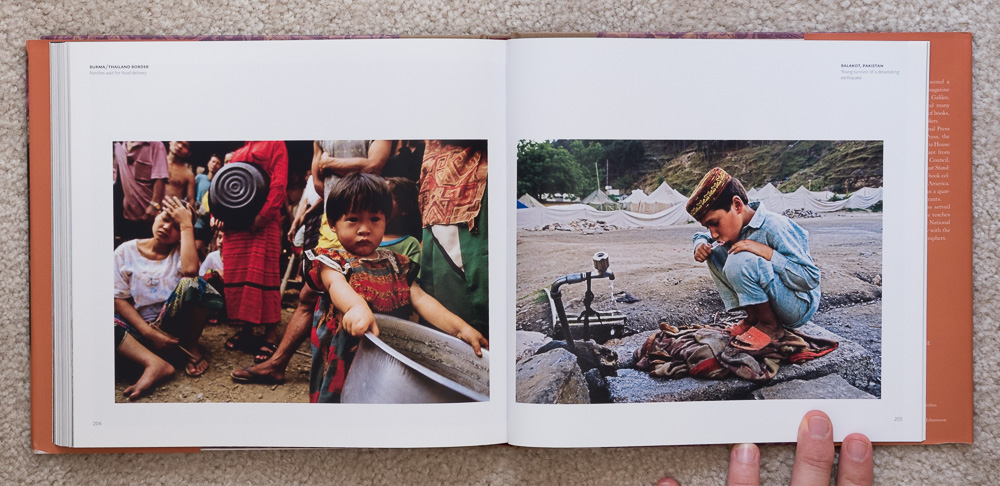
This is a book that not only tells the story of Annie Griffiths Belt, but also tells the story of the cultures of the world. It demonstrates it is possible for people of different cultures to get along, to even learn from one another if we stay open to it. The book seems especially relevant today, with so much hatred and violence in the world, so much misunderstanding, so many people judging an entire race or culture because of the actions of the few. This book is evidence it doesn’t have to be that way. It is possible to learn to respect and appreciate those who are different than ourselves.

As a photographer I have learned that women really do hold up half the sky; that language isn’t always necessary, but touch usually is; that all people are not alike, but they do mostly have the same hopes and fears; that judging others does great harm but listening to them enriches; that it is impossible to hate a group of people once you get to know one of them as an individual.
— Annie Griffiths Belt

I hope you will seek out a copy of this book and read through it. Maybe you’ll get something out of it, as I did.


Do you enjoy these posts?

Sign up to receive periodic emails with updates and thoughts. Don’t worry, I won’t spam you. And please consider purchasing artwork or products from my online store, and using my affiliate links in the sidebar to the right when shopping online.

I appreciate your support!

Earth Is My Witness: The Photography of Art Wolfe by Todd Henson

This post contains affiliate links and I will be compensated if you make a purchase after clicking on my links. This is at no extra cost to you.

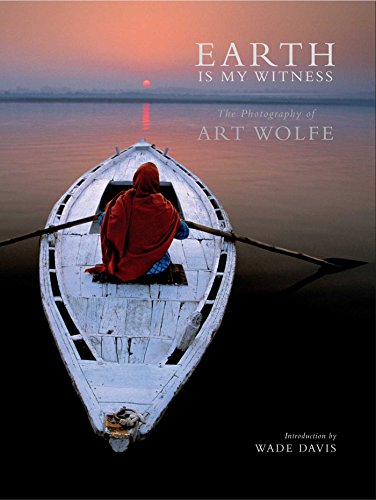
Earth Is My Witness: The Photography of Art Wolfe is one of the most stunning books of photography I own, and is by far the best collection of Art Wolfe’s photography I’ve ever seen. I love this book!

The book is 396 pages, most of which are full of photographs. There are full page photos, pages with two photos per page, full bleed photos that stretch across two pages, and pages that unfold with multiple photos per page.

The book is organized by types of environments, containing the following sections:

  • Introduction by Wade Davis

  • Mountain

  • Polar - Subpolar

  • Desert - Savanna

  • Ocean - Island

  • Tropical - Subtropical

  • Afterword

  • Photo Notes

  • Acknowledgements

Each photography section has an introduction where Art talks about those environments and his experiences photographing in them. It’s always great reading these kinds of intros, getting to learn more about Art, his history, his photography, and the peoples, places, and locations he has visited and photographed. But as great as these introductions are, the focus of this book is definitely on the photography, with page after page of large, bold, vivid photographs.

The particular edition I own is the original large fine art edition from 2014. It measures 11 x 14 inches and is 1.5 inches thick. There is also a smaller edition measuring 5.8 x 12.2 inches and also 1.5 inches thick. Both editions are 396 pages in length.

The large edition has some of the most saturated colors I’ve ever seen in a printed book. It’s almost like a book full of inkjet prints instead of the typical books of photography I’m used to. Don’t get me wrong, I love all my other books of photography, but this one just seems far more punchy, more vivid, more alive.

According to Art Wolfe’s website the large edition used a new color reproduction technique called Chroma Centric, which it says is eight times more precise than standard offset printing, and enhances the color gamut by more than 25 percent. And I certainly can see the difference in many of the photographs. I would love to see more books use this printing technique.

Earth Is My Witness would be a great book for anyone who loves nature, travel, wildlife, landscapes, and photography of indigenous peoples. And for any fan of Art Wolfe’s photography. It has become one of my favorite books of photography and one I’m very happy to have in my collection.


Large Format Edition:

Regular Format Edition:


Do you enjoy these posts?

Sign up to receive periodic emails with updates and thoughts. Don’t worry, I won’t spam you. And please consider purchasing artwork or products from my online store, and using my affiliate links in the sidebar to the right when shopping online.

I appreciate your support!


Review - Why Photographs Work by George Barr by Todd Henson

This post contains affiliate links and I will be compensated if you make a purchase after clicking on my links. This is at no extra cost to you.

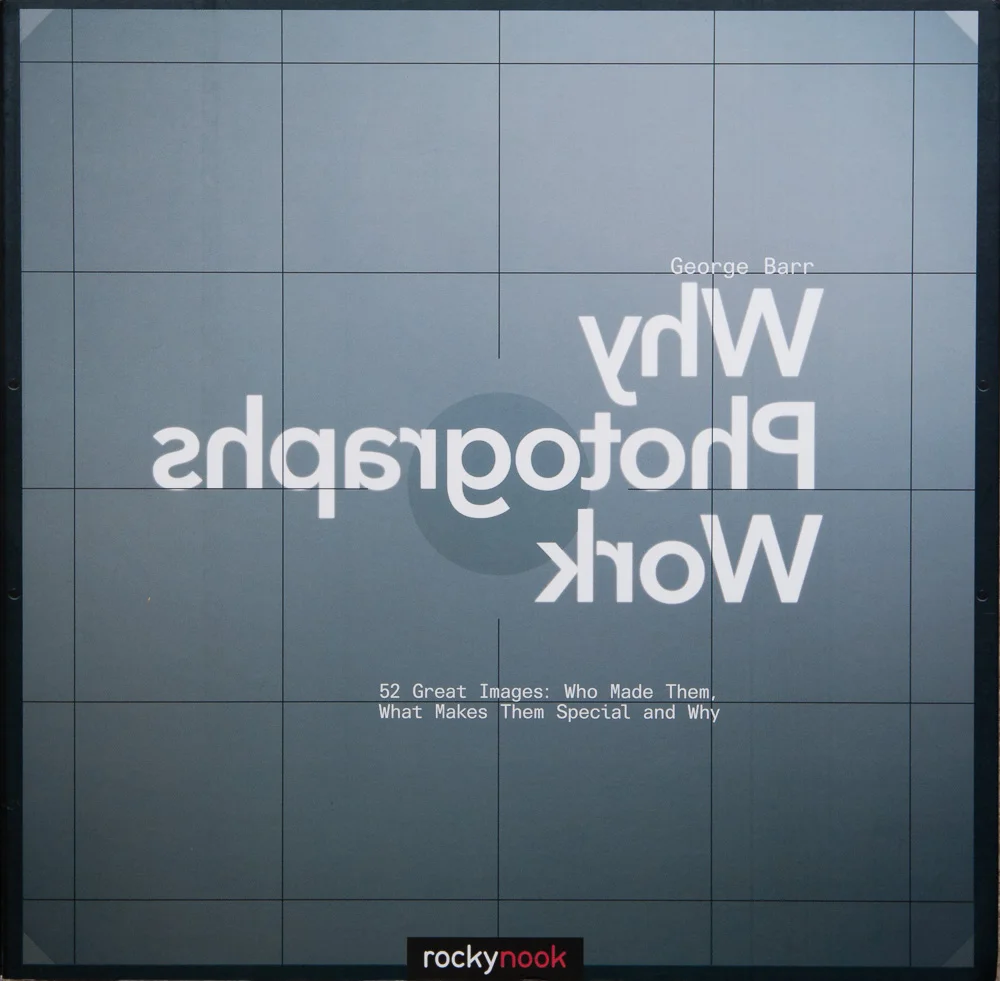
Cover of Why Photographs Work by George Barr

Cover of Why Photographs Work by George Barr

What makes a photograph work? How do we know if a photograph is good? What are the qualities that define a good photograph?

These are difficult questions to answer, and to some extent they will differ from person to person. Sometimes we see a photograph and are immediately drawn to it. There is something about it that draws us in, captures our attention or evokes an emotion. Other times we see a photo and move on, only later to realize we keep going back to this photo over and over again. It didn’t immediately catch our attention but still somehow managed to hook us.

Why Photographs Work: Photograph 12: Moore Hall Interior #1 by Sandra C. Davis

Why Photographs Work: Photograph 12: Moore Hall Interior #1 by Sandra C. Davis

Why Photographs Work: Photograph 22: Huangshan Mountains, Study #19 by Michael Kenna

Why Photographs Work: Photograph 22: Huangshan Mountains, Study #19 by Michael Kenna

But why do these things happen? How can you identify the photos that will do these things? There’s not an easy answer. Perhaps that’s why George Barr chooses not to specifically define it in words but instead created an entire book full of examples, full of photographs he feels work. Why Photographs Work is that book. The subtitle is 52 Great Images: Who Made Them, What Makes Them Special and Why.

This book is for any photographer who wants to make beautiful photographs. And it is for anyone — photographer or viewer — who wants to understand why some photographs stand out from all the others.
— George Barr
Why Photographs Work: Photograph 32: Two People / Two Doors - Carlow, Ireland by Harald Mante

Why Photographs Work: Photograph 32: Two People / Two Doors - Carlow, Ireland by Harald Mante

Why Photographs Work: Photograph 39: Melange Un by Freeman Patterson

Why Photographs Work: Photograph 39: Melange Un by Freeman Patterson

Why Photographs Work, by George Barr, is a collection of 52 photographs by 52 different photographers. The photographs cover a huge range of subject matter, some vastly different from others, but all representative of photography as art. It’s such a range of photography there’s very likely to be something that catches your eye. In this post I’ve attempted to include an example of the range of photographs in the book.

Why Photographs Work: Photograph 43: Black Oaks, Morning Mist, Yosemite Valley, California by John Sexton

Why Photographs Work: Photograph 43: Black Oaks, Morning Mist, Yosemite Valley, California by John Sexton

Why Photographs Work: Photograph 49: Birch and Window, Colmar, France by Charlie Waite

Why Photographs Work: Photograph 49: Birch and Window, Colmar, France by Charlie Waite

Each photograph is accompanied by four sections of text:

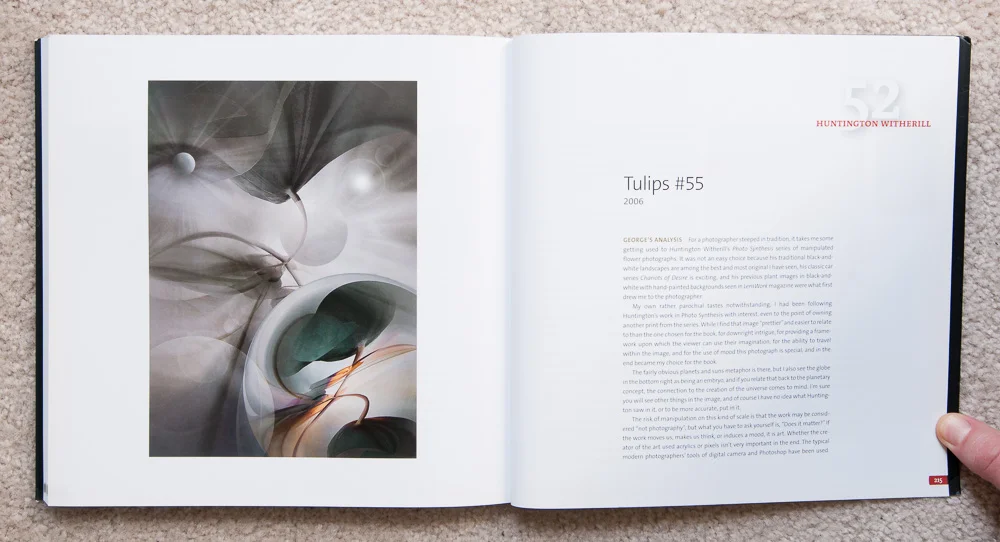
  • George’s Analysis: Here he analyses the photograph, describing what it is that drew him to the photograph and why he thinks the photograph works. I agree with him on most of the photographs, but there are some that don’t appeal to me as much, likely just a result of personal preferences. I can, however, see where he is coming from when he speaks of the qualities of the photos. This section is worth going back to, rereading from time to time.

  • The Photographer’s Perspective: In this section we hear from the photographer. What caused them to create this photograph? What does it mean to them? How do they approach photography?

  • Biography: This section provides a biography of the photographer, listing where they’ve been published, how they make their living, who their influences are, and where you can view more of their work.

  • Technical: This is typically the shortest section. It provides technical details about the photograph, such as what camera or lens were used, what film or whether it was digital, and what techniques the photographer used both in camera and in post-processing or printing.

Why Photographs Work: Photograph 51: Descending Angel by John Wimberley

Why Photographs Work: Photograph 51: Descending Angel by John Wimberley

Why Photographs Work: Photograph 52: Tulips #55 by Huntington Witherill

Why Photographs Work: Photograph 52: Tulips #55 by Huntington Witherill

The lessons in this book are not explicitly taught. The lessons are more subtle. It will take time to absorb them. Study the photographs first, see if they appeal to you. If so, why? See if you can express what you see as their strengths. Then read George’s analysis, see what he felt made the photograph work, what drew him to it. Then read what the photographer has to say. I found myself flipping back an forth between the text and the photograph as George or the photographer mentioned some aspect of it I’d not noticed.

Why Photographs Work can also be used as a list of photographers to learn more about, whose work is worth seeking out and studying. First off there are the 52 photographers whose work is included in the book. Many of the photographers also recommended other photographers, and George Barr has compiled a list of these at the end of the book. I plan to spend some time looking for works by these photographers.

He says in his intro he wrote this book for himself. That this was the sort of book he wished were available when he was learning photography. It’s a book I’m glad is available as I learn photography. I strongly suspect I will return to this book often, as I do with so many of my favorite photography books. Highly recommended!


Do you enjoy these posts?

Sign up to receive periodic emails with updates and thoughts. Don’t worry, I won’t spam you. And please consider purchasing artwork or products from my online store, and using my affiliate links in the sidebar to the right when shopping online.

I appreciate your support!