Reviews

Ansel Adams: 400 Photographs - Review by Todd Henson

This post contains affiliate links and I will be compensated if you make a purchase after clicking on my links. This is at no extra cost to you.

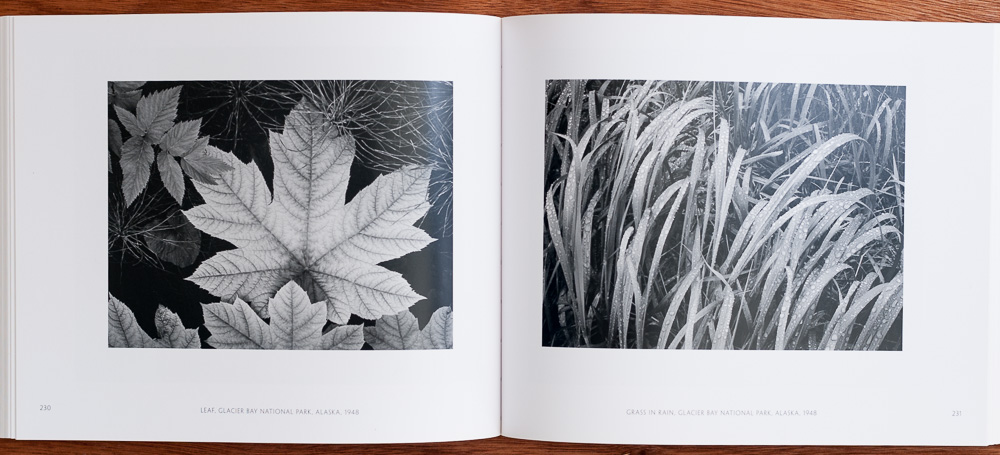
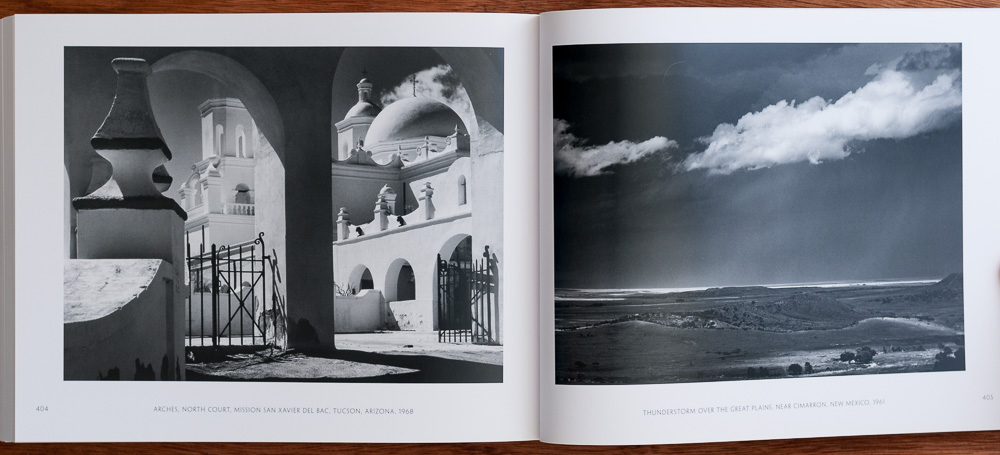
Ansel Adams: 400 Photographs is a beautiful collection of Adams’ work. The book was created through The Ansel Adams Trust, in collaboration with Little, Brown and Company. The photographs were chosen by Andrea G. Stillman, Adams’ longtime assistant, and represent those she feels constitute his most significant work. The book is organized roughly by decade, with the following major sections:

  • 1916-1930 Yosemite and the High Sierra

  • 1931-1939 Group f/64 and Alfred Stieglitz

  • 1940-1949 National Parks and Monuments

  • 1950-1959 Conservation, Publications, and Commissions

  • 1960-1968 Carmel

  • Notes on Selected Photographs

I really like this book. I’ve always admired Ansel Adams’ work, how he captured such amazing scenes in such great light, and how he would finish realizing his vision for each photograph in the darkroom. But I didn’t really have any books of his photographs. I thought this would be the perfect first step at solving that problem.

The book contains a great variety of Ansel Adams’ work. We get to see some of his very first photographs, and how he began just recording what he saw, creating a “visual diary” of his travels. But as you flip through the pages of photographs you can see how they change over time, how Adams begins to develop a better sense of composition, and how the photographs change from simple records of his travels to art work worthy of display.

Ansel Adams first visited Yosemite National Park in 1916. He would later say, “I knew my destiny when I first experienced Yosemite!” And by 1930 he began down the road to realizing his destiny, choosing to become a full time photographer instead of pursuing a career as a pianist. I found it fascinating that Adams was skilled not just in the visual arts, but also in music. Somehow, it seems appropriate.

As much as I love the photographs in this book, one of my favorite sections are the notes at the end of the book. There are notes associated with many of the photographs, sometimes using Adams’ own words to describe the photo or the experience. It is here we read quotes such as the following, in a letter from 1937 to Alfred Stieglitz: “I think I am getting some very good things — quite different, I believe. I like to think of my present stuff as more subtle, more lifting-up-the-lid, if you know what I mean . . . . Perhaps I am on the edge of making a really good photograph.

I highly recommend the book, Ansel Adams: 400 Photographs. I think there is much that can be learned from studying these photographs, seeing how Adams grew and developed as a photographer over the years. I also think this is a beautiful book for those who simply want a collection of Adams’ work to admire. There are many times I pull out the book and just flip through the pages. No matter what mood I’m in I’ll always be in a better one after spending a little time appreciating Adams’ work.

At one with the power of the American landscape, and renowned for the patient skill and timeless beauty of his work, photographer Ansel Adams has been visionary in his efforts to preserve the country’s wild and scenic areas, both on film and on Earth. Drawn to the beauty of nature’s monuments, he is regarded by environmentalists as a monument himself, and by photographers as a national institution. It is through his foresight and fortitude that so much of America has been saved for future Americans.
— President Jimmy Carter, who conferred upon Adams the Presidential Medal of Freedom in 1980

Do you enjoy these posts?

Sign up to receive periodic emails with updates and thoughts. Don’t worry, I won’t spam you. And please consider purchasing artwork or products from my online store, and using my affiliate links in the sidebar to the right when shopping online.

I appreciate your support!

CreativeLive's Create Art Through Photography with Art Wolfe by Todd Henson

Create Art Through Photography with Art Wolfe. Image credit: CreativeLive

Create Art Through Photography with Art Wolfe. Image credit: CreativeLive

Do you ever find yourself looking for inspiration? Do you find yourself falling into the same ruts, creating the same photographs over and over? Would you like someone with passion and creativity to help guide you out of the ruts and help you see the world in different ways, help you seek out and create something new, something abstract and artistic? Art Wolfe may be just the person to help, and his CreativeLive class, Create Art Through Photography, may be just the class to start you down a new path.

Create Art Through Photography is all about seeing the world in new ways. It’s about studying art in all its many forms, visiting museums or surfing the web, viewing paintings and drawings by the masters. Study what has come before, learn to see the different patterns, textures, and lines that draw you into the artwork. And then go out into the world, into nature, and look for these same things. You will find them. The world is full of compelling abstract compositions just waiting for a photographer with the right eye to find it and create a beautiful photograph to share with the rest of the world.

Art starts out the class stepping you through his history, what led him to where he is today. He began as a painter, but eventually embraced photography. He has always loved the outdoors, and would spend much of his time hiking and climbing through woods and mountains. Through photography he found opportunities to travel, to see different cultures. He was drawn to different cultures and became passionate about documenting them before they disappeared. He loves wildlife and has spent much of his career traveling the world and photographing animals of all sorts. If you’ve already watched his previous class, The Art of Nature Photography, then some of this section may already be familiar to you. In the beginning of both classes he goes over his history for those who are not familiar with it.

Through his life, Art has continued to stretch himself artistically. He is always looking for something new to photograph, and for new ways to photograph. New technology has opened up new possibilities, giving him the opportunity to explore photographs that never would have been possible in the past. Art embraces these possibilities.

But he has also explored different subjects, or the same subjects in different ways. Over the years, Art has spent more time looking for the smaller, more intimate landscapes. He has created the large sweeping iconic shots, but he also strives to find the more subtle, less photographed shots.

This class explores the world of the abstract, images where we may not recognize the subject of the photograph. These are abstract expressionist photographs, more akin to the artwork of the great painters. Think Mark Rothko, Piet Mondrian, Jasper Johns, Kazimir Malevich, M.C. Escher.

Art discusses the concept of Wabi Sabi, a Japanese term referencing the randomness and impermanence of nature. It’s about balance, and filling the frame with content so your eyes can navigate through it. He says there is so much potential out there, that we should try to see in ways we don’t normally see. It can take time, but we can train ourselves to do this, to see patterns, textures, and lines, and to capture these in abstract compositions.

Visit museums to help maintain inspiration. Art mines the work of abstract expressionist painters, finding new ways to photograph landscapes. It helps him see subjects he might not have considered years ago. Study artists work, then go out into the world and see what you can find that reminds you of their work. It’s not about copying the work of others, but drawing inspiration from it.

Over time this will become natural and will shape the way you see the world around you. You’ll walk around town visiting locations most photographers never visit. You’ll find compositions most other people would overlook. You can do this in town or out in nature. There are subjects everywhere. Look for line, color, distortion, ambiguity. Art says this is creating metaphors through photography.

In the final section of the class, Art looks through photographs submitted by students. He critiques their composition and brings them into Lightroom to show how he might approach editing the work. I really enjoyed seeing how Art approaches this process, taking the raw file and turning it into something more. You can’t make a bad photograph great this way, but you can bring out the detail and wonder you visualized when snapping the shutter. I think there’s always something of value to be taken from these types of critique sessions.

I was pleased with my purchase of this class, even though I was familiar with some of the content both through a previous class I purchased (The Art of Nature Photography) and through a live presentation I was fortunate to attend. Art considers this class an appetizer for the Photography As Art seminar he teaches in various locations. If you have the opportunity try to attend one of his live seminars. If you’re unable to attend a live seminar, or if you just want to own the videos to watch again and again, then consider this class.

Create Art Through Photography consists of 16 videos totaling about 5 hours of content. It also includes a 150 page ebook, titled On Puget Sound, that is absolutely full of beautiful images by Art Wolfe. When you purchase the course you’re given the ability to download all the videos to your computer or mobile device to watch offline anytime. You can also stream the content from CreativeLive’s website.


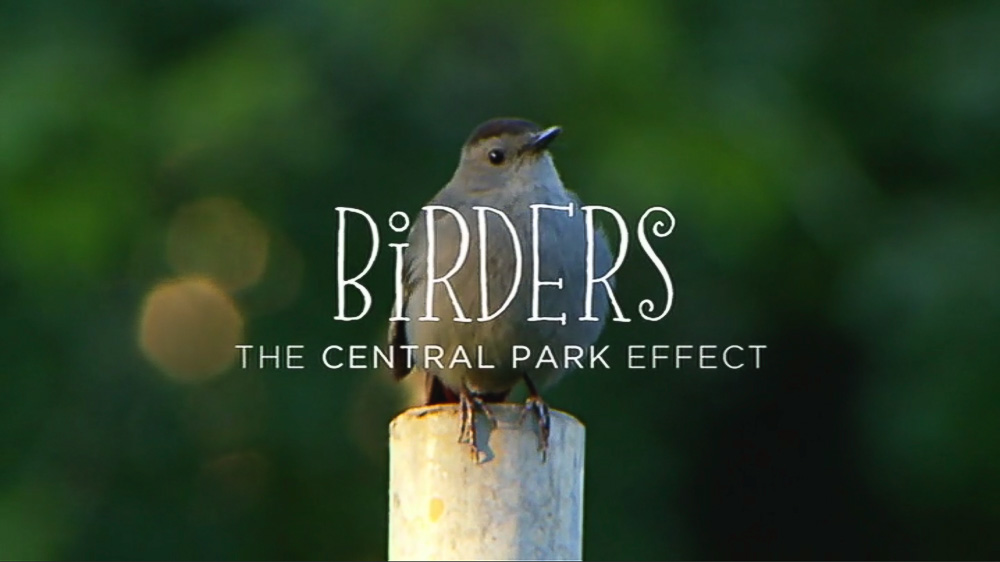
Birders: The Central Park Effect - Review by Todd Henson

This post contains affiliate links and I will be compensated if you make a purchase after clicking on my links. This is at no extra cost to you.

Birders: The Central Park Effect is a beautiful documentary from 2012 by Jeffrey Kimball. It follows a group of people through the seasons as they go out birding in Manhattan's Central Park. The film is split into sections by season, beginning with spring, moving on to summer, autumn, winter, and back again to spring. The people birding are as varied as the birds and their numbers throughout the year also vary as do those of the birds. Some people only bird during the spring migration, when the song birds are moving north. Others bird the entire year, enjoying the variety of different species inhabiting the park during different seasons.

There are a number of birds who inhabit the park the entire year, making it their home during every season. These are the common birds, such as Northern Cardinals. When asked if he ever gets tired of looking at a cardinal, Lloyd Spitalnik replied: “If you get tired of looking at the common birds you might as well just pack it in. I mean, these birds are gorgeous.”

The birds who don’t stay in Central Park year round are called migrants. They migrate north in the spring, moving from tropical locales to the Canadian provinces where they can find an abundant food supply. They go there to breed and raise young. Dr. John Fitzpatrick, the Director of the Cornell Lab of Ornithology describes how millions of migrants move north during the night. At dawn thousands of them will stop over in Central Park, a perfect wooded location with plenty of food, allowing them to eat and rest during the day.

Central Park is not just a perfect location to stop, in many ways it’s one of the few available to them given the sprawling cities. The birds need a location with trees and greenery. They fly over the cities and notice Central Park, so they land and spend the day. Scientists call this the Central Park Effect.

Interestingly, Central Park is an entirely artificially created park. It is made to look natural, with small wooded areas and streams flowing through the park. But the streams can be turned on and off as needed. The park was created not just as a refuge for birds and other wildlife, but also as a location for people to congregate, to enjoy the benefits of these types of parks. There is a balance between nature and people.

During the summer the number of species seen in Central Park drops as the migrants have moved further north leaving the species that live in the park year round. As the number of bird species drop so, too, does the number of birders. But there are those who come to Central Park all year. There is still plenty to see, plenty of birds to watch and study.

It’s a joy to watch the light go on in somebody’s eyes when they see a bird and know what they’re looking at. And they kinda get it.
— Starr Saphir, who led bird walks in Central Park until her death from cancer in 2013

But when autumn arrives so, too, do migrants, this time heading south to their wintering grounds. And, as always, there are birders to watch and study them. During winter some species from colder northern climates travel to Central Park to spend the winter in the slightly warmer environment.

Winter is also a time when birders demonstrate themselves to be citizen scientists. Each December large numbers of birders get together for the annual Christmas Bird Count, where they attempt to count all the birds in a given area during a specific time period. They gather all their counts together and collate their findings. Over time they begin to see patterns emerge, how some species continue to do well, but many others do not. Over time they are seeing the overall number of birds dropping, a potentially troubling sign for the future.

I really enjoyed this film. I didn’t consider myself a birder, but I found myself smiling throughout the documentary, and I found the names of birds popping into my head as they appeared on screen.  I thought: I’m not a birder, I don’t keep lists. Then I realized I do actually keep lists right here on this website in my Field Notes sections, where I have lists of some of the species I’ve photographed along with the photos and notes about the species. I guess I am a birder after all.

This documentary will likely appeal to you if you are a birder or just a bird lover. I enjoyed it not just for the talk and videos of birds in the park, but also the little snippets from the lives of several of the birders who frequent the park. Birders come from all walks of life, and vary as much as the birds do. But they all share the passion, the addiction, of getting out and watching for these remarkable little creatures.

See below for a preview of Birders: The Central Park Effect:

Birders: The Central Park Effect reveals the extraordinary array of wild birds who grace Manhattan's celebrated patch of green, and the equally colorful New Yorkers who schedule their lives around the rhythms of migration.

If you enjoy Birders: The Central Park Effect you may also enjoy the movie, A Birder’s Guide to Everything, staring Ben Kingsley and several young actors. It was a touching coming-of-age film about a young birder who thinks he’s made an amazing discovery and sets out with some good friends to find proof, while also dealing with a changing family situation as his father remarries.


Do you enjoy these posts?

Sign up to receive periodic emails with updates and thoughts. Don’t worry, I won’t spam you. And please consider purchasing artwork or products from my online store, and using my affiliate links in the sidebar to the right when shopping online.

I appreciate your support!