Reviews

CreativeLive's The Art of Nature Photography with Art Wolfe by Todd Henson

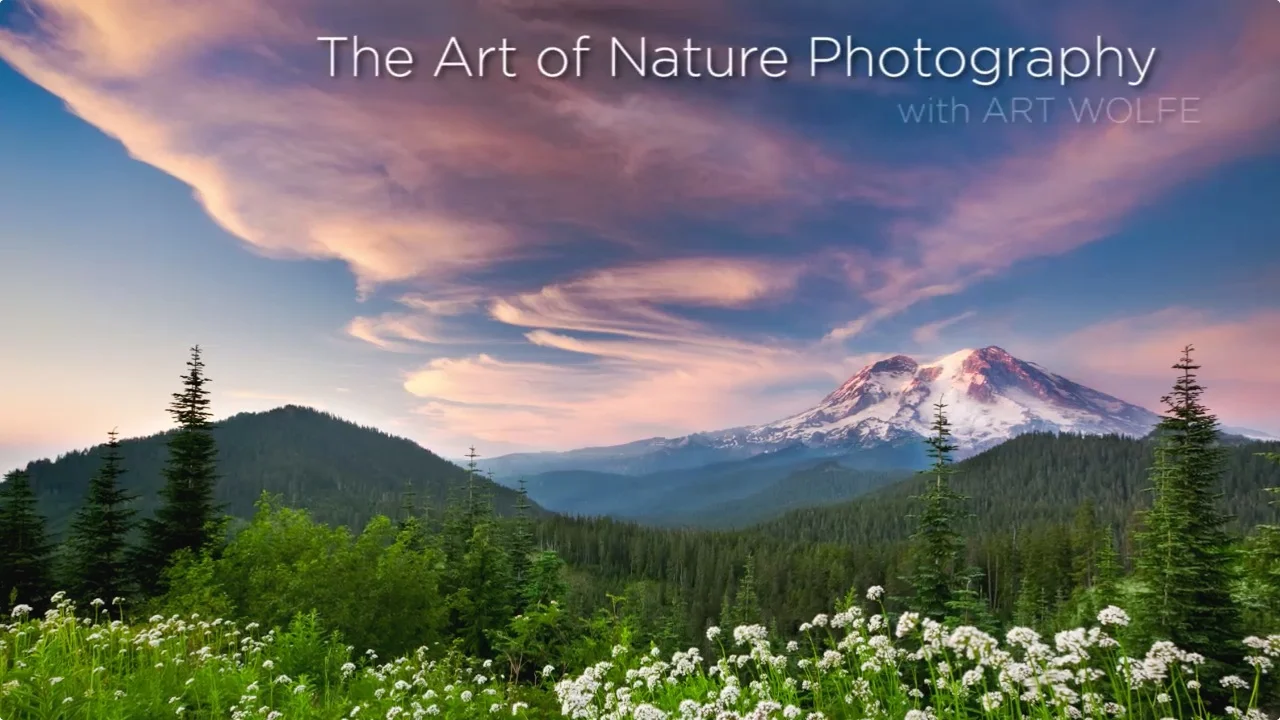
The Art of Nature Photography with Art Wolfe. Image credit: CreativeLive

The Art of Nature Photography with Art Wolfe. Image credit: CreativeLive

Art Wolfe is one of the photographers I most look up to. Not only is he an amazingly skilled photographer and artist, but he loves teaching and sharing his work and has a great personality and skill at conveying his passion. I have been fortunate to attend one of his seminars in the past, and highly recommend you try to attend one. But if you’re not able to, the next best thing are his presentations on CreativeLive. And as an added bonus, if you purchase the CreativeLive classes you can rewatch the presentations anytime you want. I often go back to these videos when I’m looking for some inspiration.

Art’s CreativeLive class, The Art of Nature Photography, consists of 12 videos totaling almost 5 and a half hours of content. The first section is about 90 minutes and consists of 3 videos. It is a lecture Art calls An Integrated Life. He talks about his life and career and how he got to where he is now. He shares those things he finds inspirational and what has influenced his work over the years. He studied art in school, learning about the great painters throughout history, and this has greatly affected how he sees the world and creates his photographs and artwork.

He also talks about a fascinating project of his called The Human Canvas. In this project he hand paints and arranges nude figures into various poses on a hand painted background, then photographs the entire scene. It’s an interesting process and a beautiful result. This project came about as a natural progression throughout his career, from studying the great painters, to creating photographs of natural subjects, to looking for abstract and creative scenes, to now creating an entire scene where human figures blend into an abstract background forming shapes and patterns.

The next section is also about 90 minutes and consists of 3 videos. Art discusses topics centered on helping you improve your own work. He talks about the types of lenses he likes to use and why. Art quite often uses wide angle lenses, getting in really close to a subject to place it in the context of the wider landscape. He really likes his 70-200mm lens, a nice mid to telephoto range, to zoom into the more intimate details of a scene. This is a very versatile lens, also useful for some wildlife photography when you’re able to get in close or want to show the animal in its environment. And he will sometimes use other lenses and accessories when the situation warrants it.

Art discusses how to find your subject and how to work a scene. Sometimes it takes time and several photographs before you narrow in on the actual subject of the image. Keep working the scene, and be open to surprises, especially to anything that might evoke emotion in the viewer.

In the last video of this section, Art presents what he calls the Ten Deadly Sins of Composition, which is a playful way of sharing things that should often be avoided to help create stronger compositions. As with all photography rules, these are not hard and fast and can be intentionally ignored to great effect.

The next 90 minute section of The Art of Nature Photography is a critique session, where Art is presented with photographs submitted by an online audience for review. He discusses strengths of the photos and points out areas where the photographer could improve the image. In some cases he thinks the image is great as it is and presents what he thinks might be the next image to try, and other ways to look at the scene. These critiques are a great way to learn. We get to see how Art thinks, what he sees in a scene, how his eyes walk through it.

To end the class Art shares 3 episodes from his great television series, Travels to the Edge. I have the entire series (both seasons) on DVD, so these were not new to me. But if you have not seen any of the series then this class gives you 3 good episodes to see what it’s all about. In each episode Art travels to a different part of the world, learning about local cultures, customs, and wildlife, and photographing it all. It is part travelogue, part nature documentary, and part photography lesson. I love this series.

The 3 included episodes from Travels to the Edge are:

  • Japan (season 2 volume 1): Art travels to Honshu and Hokkaido islands where he sees amazing snowy scenery, with a mix of culture and nature. He visits several shrines and temples, photographing monks and festivals. He photographs some of the winter wildlife of this part of Japan, including whooper swans, red-crowned cranes, and macaques. And he photographs landscapes such as Mount Fuji at sunrise.

  • Bhutan (season 2 volume 4): Art learns about the country and buddhist culture of Bhutan and gets the opportunity to photograph architecture, people, festivals, wildlife and scenery. He visits monasteries and photographs monks in several settings. He travels to a location where he can photograph black-necked cranes. In another location he photographs a traditional archery competition, and also a dance festival with several performances.

  • South Georgia Island (season 1 volume 4): This is one of Art’s favorite locations. To get there he had to travel by boat over a wild stormy sea. Once there he was able to photograph landscapes of amazing scenery and wildlife. And South George Island is full of lots of wildlife, such as king penguins, elephant seals, nesting albatross, fur seals, and macaroni penguins. He was able to get so close to these animals he often used wide angle lenses to emphasize the animal in its environment.

Check out Art Wolfe if you’re not familiar with him. I own several of his books, the Travels to the Edge series on DVD, and several of his classes from CreativeLive (including this one). I think he has a lot to offer, especially related to seeing the artistry in nature and the world and capturing it in compelling and emotionally impactful photographs.


Review: The New Art of Photographing Nature by Art Wolfe and Martha Hill with Tim Grey by Todd Henson

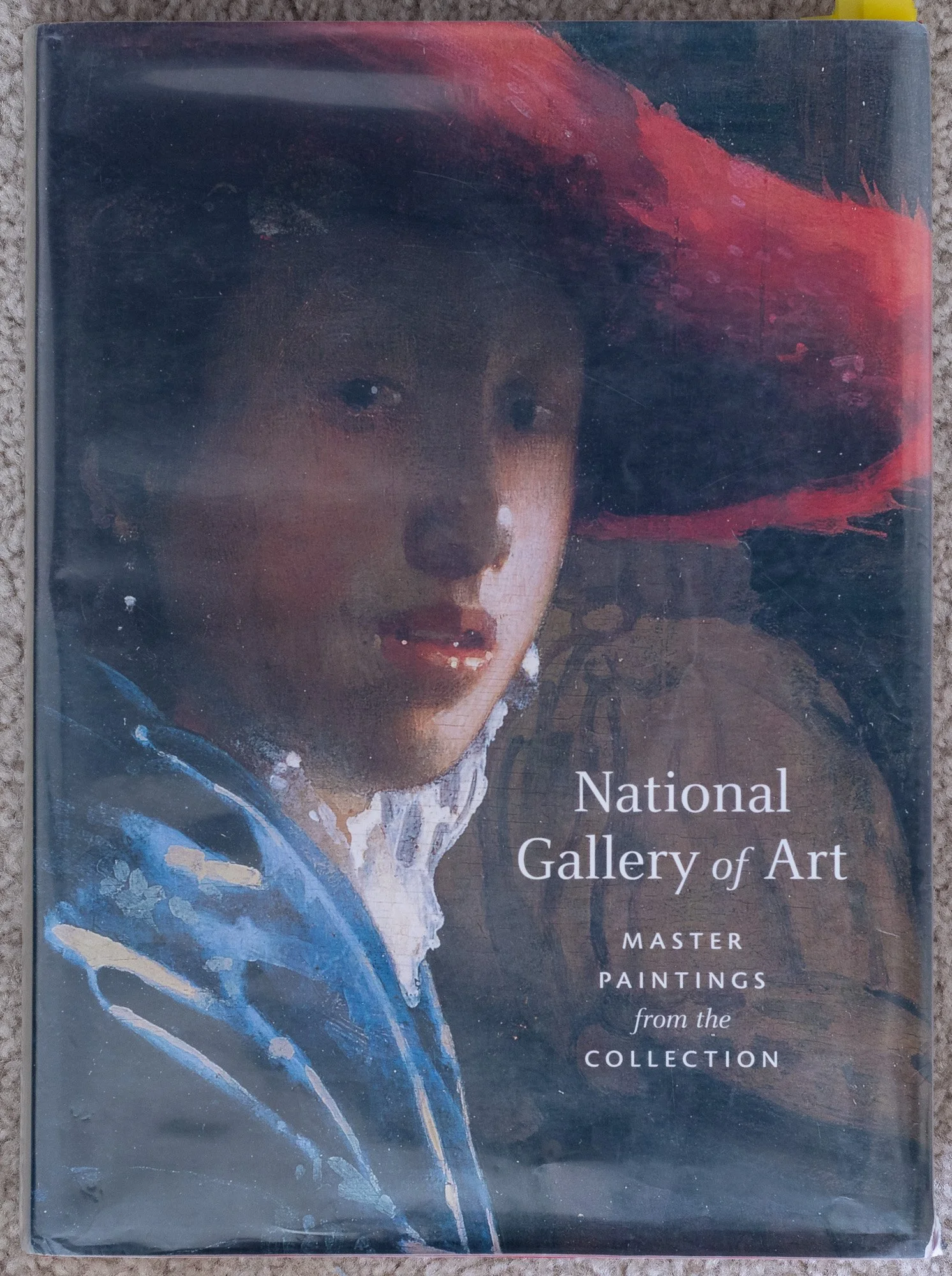
Front and back cover of The New Art of Photographing Nature by Art Wolfe

Front and back cover of The New Art of Photographing Nature by Art Wolfe

This post contains affiliate links and I will be compensated if you make a purchase after clicking on my links. This is at no extra cost to you.

Art Wolfe's book, The New Art of Photographing Nature, is a great addition to any nature photographer’s library. The subtitle of the book is An Updated Guide to Composing Stunning Images of Animals, Nature, and Landscapes. This is an updated and expanded version of the classic, The Art of Photographing Nature. The book contains photographs created by Art Wolfe and text written by Art Wolfe, Martha Hill, and Tim Grey.

All the strengths I mentioned in my review of The Art of Photographing Nature still apply to this edition. It is still a book about seeing, learning how to see, learning ways to interpret a scene and to capture that scene as a photograph. The book provides examples, using Art’s photos, of the various elements that lead to strong compositions and powerful, meaningful photographs.

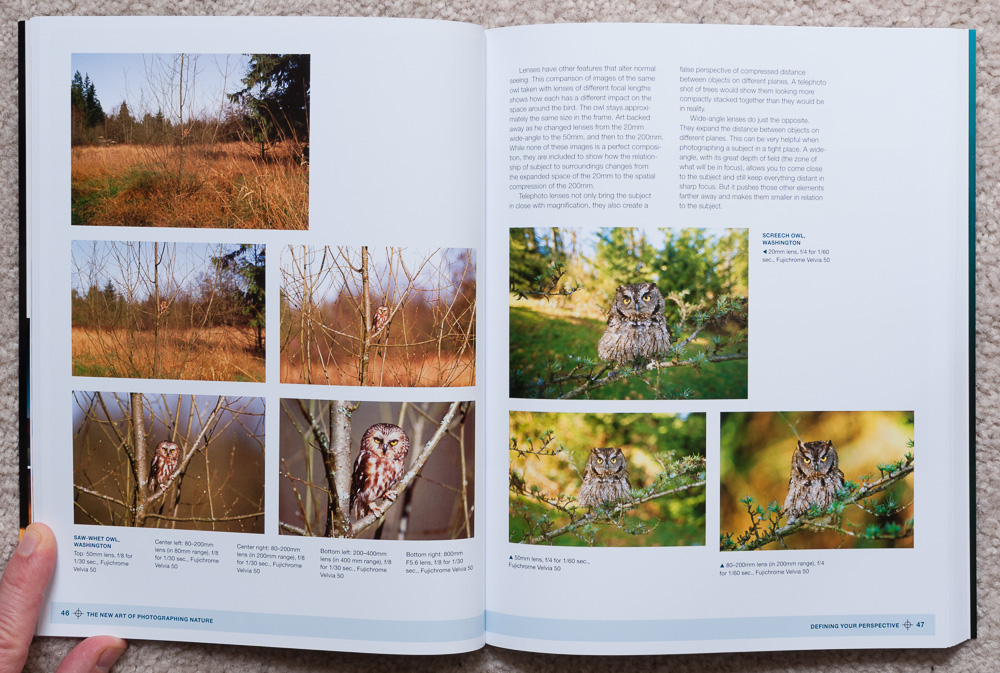
Defining Your Perspective: Showing how different focal lengths can transform a scene.

Defining Your Perspective: Showing how different focal lengths can transform a scene.

As with the previous edition, the book is broken into topics, each of which uses several of Art’s photos to demonstrate the topic. Art talks about the photos from his perspective, in some cases explaining why he feels one image is stronger than another, in other cases just talking about the differences.

Martha Hill then talks about the images from a photo editors perspective. She worked as the picture editor of Audubon magazine for 14 years, and shares her experience on what is publishable and why. Art and Martha’s different perspectives can sometimes lead to different opinions about a photo, which can be very insightful.

The Elements of Design: Examples of moving the position of the horizon within the photo.

The Elements of Design: Examples of moving the position of the horizon within the photo.

With this edition we also have sections written by Tim Grey, covering various topics specific to digital photography. These short sections are spread throughout the book. They are useful for making the reader aware of important topics they can get more details on elsewhere.

The New Art of Photographing Nature consists of the same nine chapters as the previous edition, with an extra 10th chapter written by Tim Grey:

  1. Isolating the Subject

  2. Composing the Picture

  3. Defining Your Perspective

  4. The Power of Color

  5. The Elements of Design

  6. Reading the Light

  7. Creative Options

  8. In the Field with Art Wolfe

  9. An Editor’s View

  10. Tim’s Top Tips for Digital Photographers

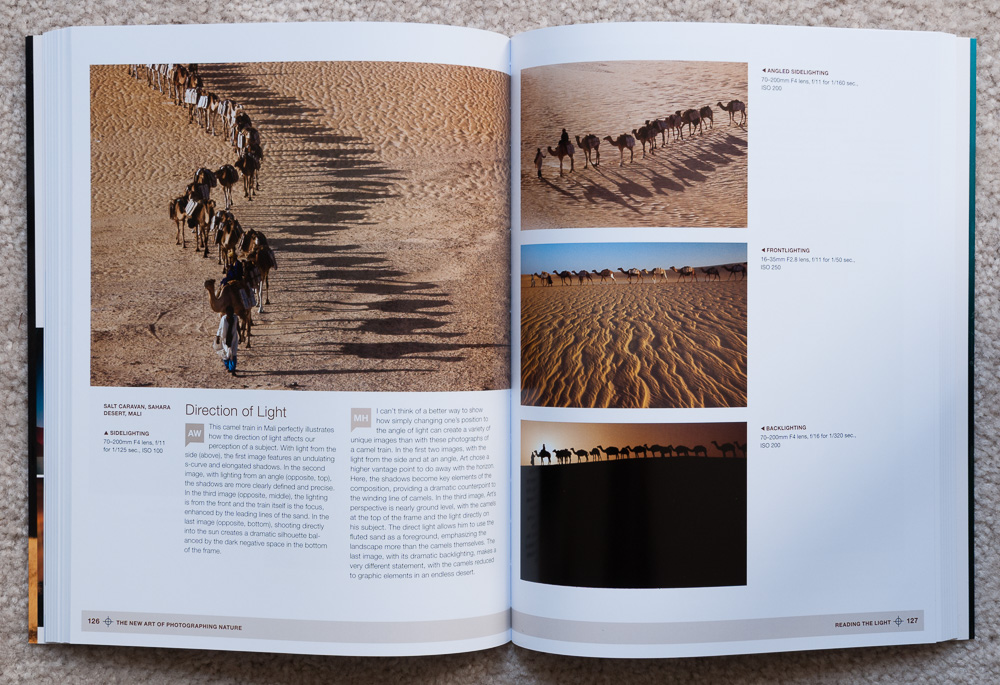
Reading the Light: Examples of how the direction of light can affect the look of a photograph.

Reading the Light: Examples of how the direction of light can affect the look of a photograph.

Each of the chapters covers multiple sections related to the topic of the chapter. For example, in chapter 6, Reading the Light, the sections include:

  • Quality of Light: Time of Day

  • Understanding Color Temperature

  • Direct Sun vs. Overcast Light

  • Overcast Light

  • Direction of Light

  • Frontlighting

  • Sidelighting

  • Backlighting

  • Reflected Light

  • Spotlighting

  • Low-Contrast vs. High-Contrast Lighting

  • Finding the 18 Percent Gray

  • Expose to the Right

In the Field with Art Wolfe: Demonstrating how atmospheric conditions can create some amazing images.

In the Field with Art Wolfe: Demonstrating how atmospheric conditions can create some amazing images.

Each section usually has from one to several photographs to illustrate the topic, along with a writeup from both Art and Martha talking about the topic. The biggest strength of this book is not just the great examples, but the dual perspectives of both Art and Martha.

The only drawback to this edition versus the previous edition is the print quality of some of the older photographs. Some of them seem darker and less sharp than the previous edition. If you don’t have both versions you may never notice, but having both side by side it did stand out.

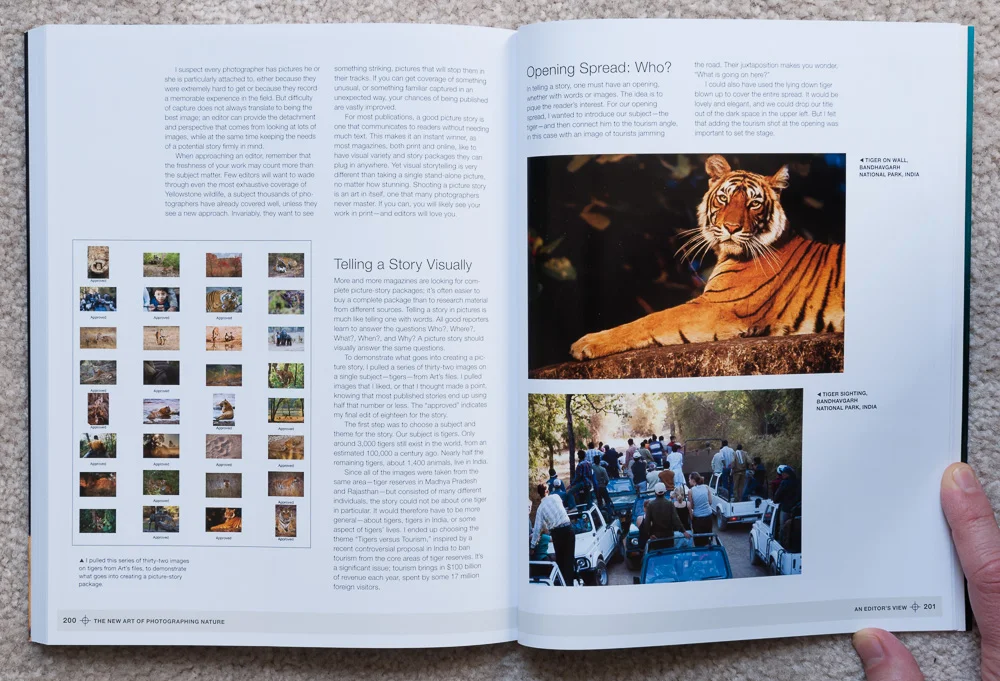
An Editor's View: Talking about how to tell a story visually.

An Editor's View: Talking about how to tell a story visually.

Overall, though, I’m very pleased with this book. And I strongly suspect I will go back to it repeatedly over time, as I did with the previous edition. I like to revisit these types of books, reading over sections again, refreshing my memory, relearning topics, and just appreciating the beautiful photography of Art Wolfe.

If you don’t already have a copy of the previous edition then I can strongly recommend The New Art of Photographing Nature. It is a fantastic book for learning some of the skills that can help improve your nature and wildlife photography.

If you do already have the previous edition it’s a more difficult decision. There is new content, but not a huge amount. Some of the example photographs have been changed, and the layout has been updated, so the book does feel fresh. If you read carefully you can find updates that may reflect changes in how Art approaches photography now compared to how he approached it back when the previous edition came out. But this may not be enough to warrant purchasing this new edition in addition to the previous one. I did purchase them both. But whether you should is a decision I’ll have to leave to you.

Check out my Resources page for additional books and classes I own or have read or watched.


Do you enjoy these posts?

Sign up to receive periodic emails with updates and thoughts. Don’t worry, I won’t spam you. And please consider purchasing artwork or products from my online store, and using my affiliate links in the sidebar to the right when shopping online.

I appreciate your support!


Bill Cunningham New York by Todd Henson

BILL CUNNINGHAM NEW YORK poster. A film by Richard Press. A Zeitgeist Films release. Photo credit: First Thought Films / Zeitgeist Films

BILL CUNNINGHAM NEW YORK poster. A film by Richard Press. A Zeitgeist Films release. Photo credit: First Thought Films / Zeitgeist Films

I recently watched the documentary, Bill Cunningham New York, a film by Richard Press. At the time of the documentary (2011) Bill was a photographer for The New York Times. He had 2 columns:

  • In Evening Hours he photographed and reported on charities and charity events, touching on the social, philanthropic, and political world in New York.

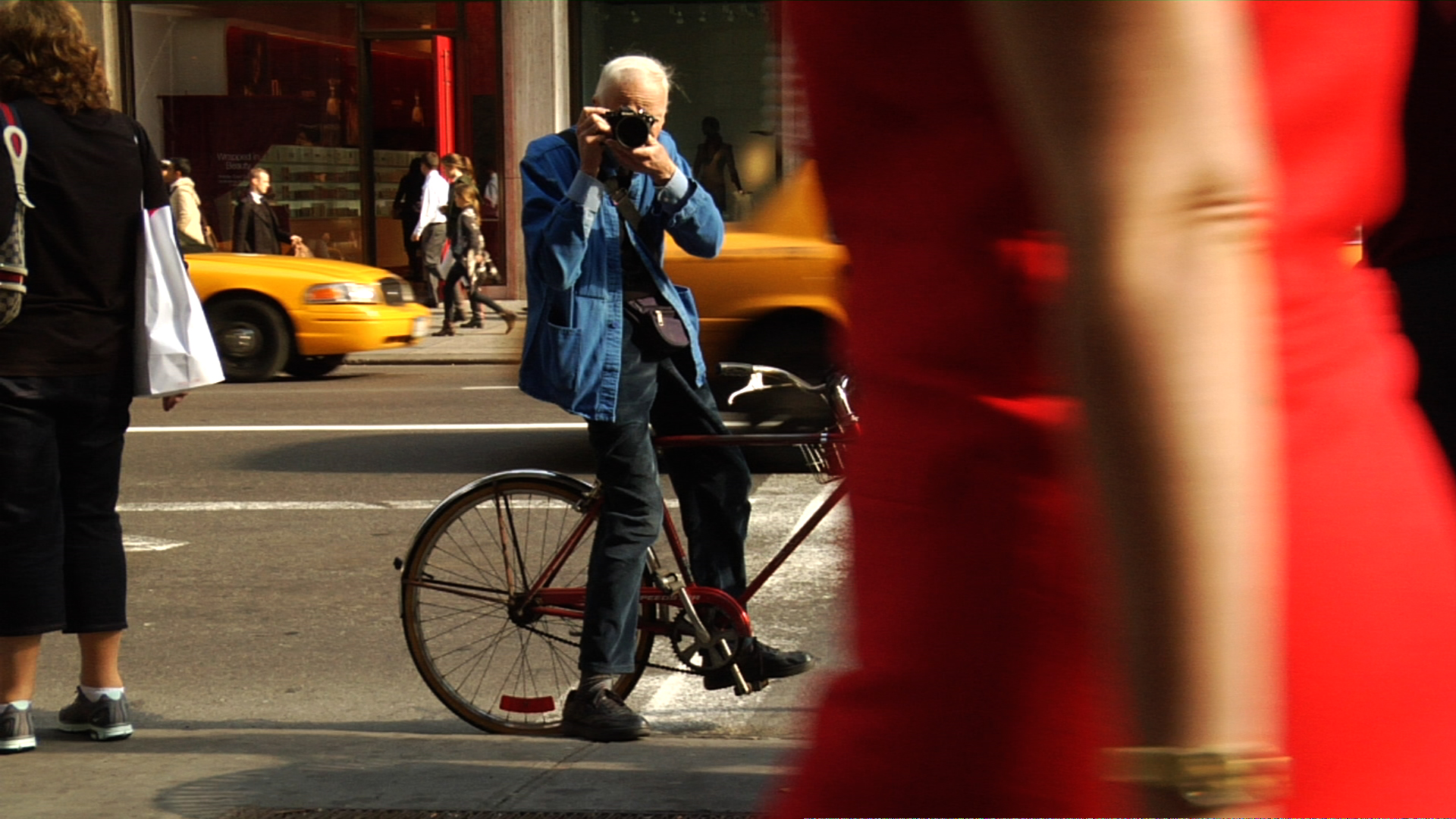
  • In On the Street he documented trends in street fashion, showing how people dressed in New York. He would ride his bicycle around the streets of New York all day looking for any clothing that caught his eye.

I know this has little if anything to do with outdoor, landscape, or wildlife photography. But I think it’s valuable to learn about other forms of photography, or other forms of art, and about the artists who practice them. So I read books and watch documentaries about other artists and photographers. And I think this documentary is worth watching, even if you have no interest in New York or street fashion. Bill Cunningham was a fascinating person, a very kind, and good natured person, who seemed able to smile through almost anything. I loved watching his work ethic. Photographing street style in New York was his life, it’s all he did, all he wanted to do.

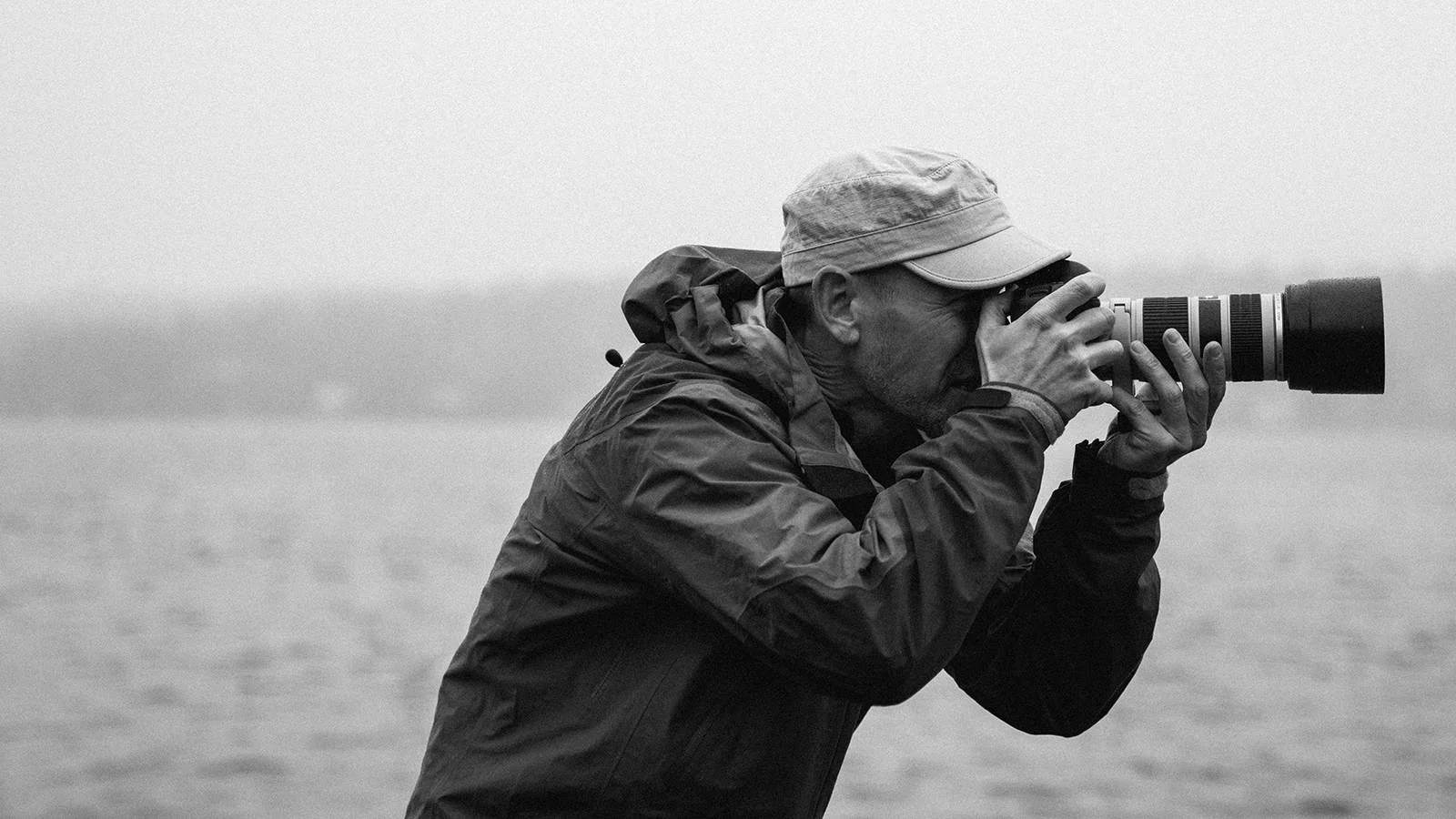
Bill Cunningham photographing in the street, in BILL CUNNINGHAM NEW YORK. A film by Richard Press. A Zeitgeist Films release. Photo credit: First Thought Films / Zeitgeist Films

Bill Cunningham photographing in the street, in BILL CUNNINGHAM NEW YORK. A film by Richard Press. A Zeitgeist Films release. Photo credit: First Thought Films / Zeitgeist Films

Bill was so humble he didn’t consider what he did photography. Referring to himself, he said, “It’s not photography. I mean any real photographer would say he’s a fraud. Well they’re right. I’m just about capturing what I see and documenting what I see.” He was over 80 years old and still working for The New York Times, riding his bicycle, photographing fashion. He was a perfect example of the saying, “if you do what you love, you’ll never work a day in your life.” And Bill Cunningham considered what he did fun. He was playing, not working.

He was a very down to earth person, both in personality and in what he photographed. He preferred street style, clothing people actually wore on the street. If he was at a fashion show and saw a model wearing something only a model could wear, he would put down his camera and not photograph that outfit.

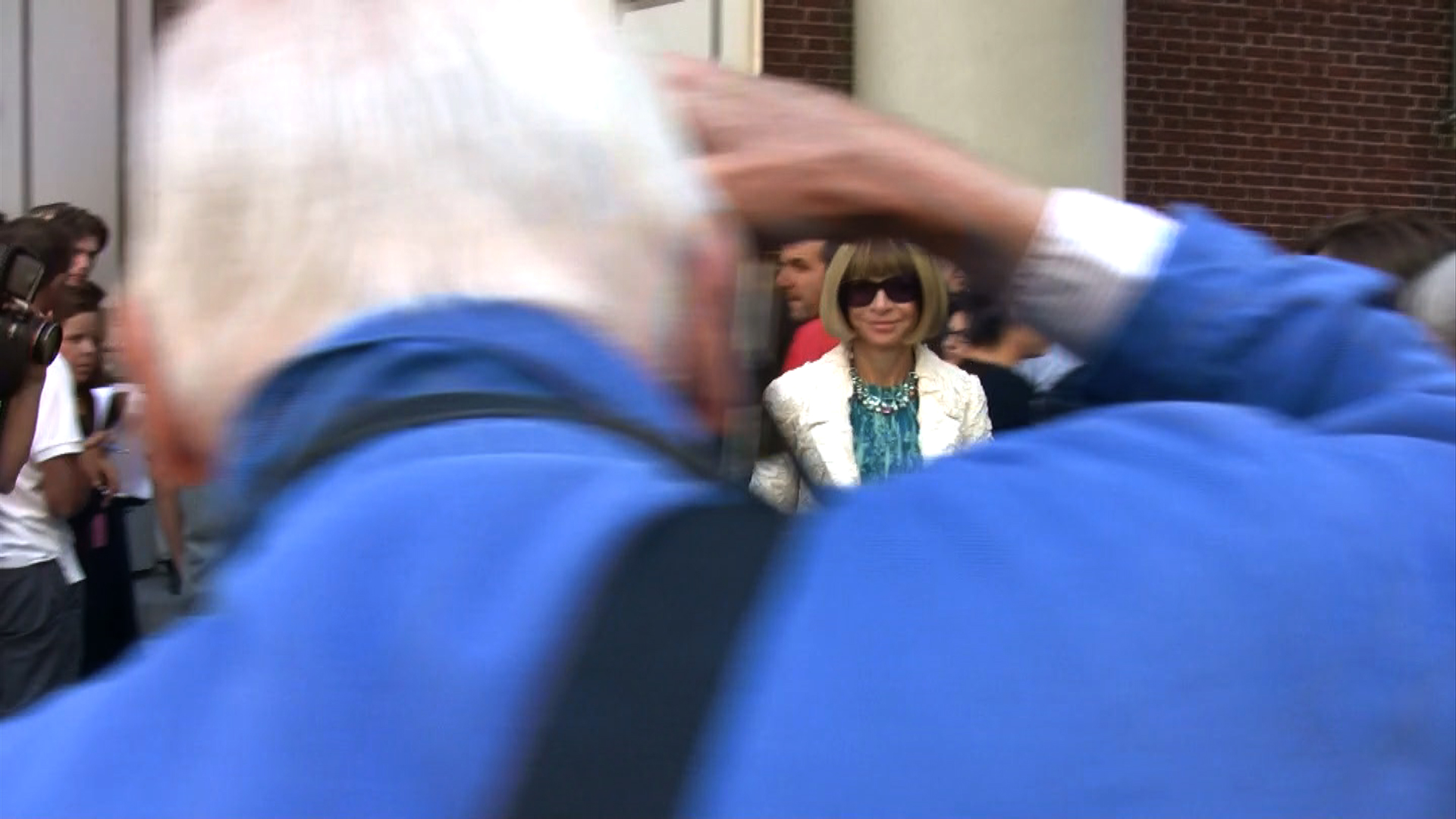
Bill Cunningham photographing Vogue editor Anna Wintour, in BILL CUNNINGHAM NEW YORK. A film by Richard Press. A Zeitgeist Films release. Photo credit: First Thought Films / Zeitgeist Films

Bill Cunningham photographing Vogue editor Anna Wintour, in BILL CUNNINGHAM NEW YORK. A film by Richard Press. A Zeitgeist Films release. Photo credit: First Thought Films / Zeitgeist Films

Bill was also more interested in photographing the clothing than the person wearing the clothing. Most of those he photographed were just normal people he found on the street. And yet, he did photograph and get to know some very well known people, some of whom appear in the documentary:

  • Anna Wintour, editor-in-chief of Vogue magazine

  • Annette de la Renta, philanthropist and socialite, widow of fashion designer Oscar de la Renta

  • Iris Apfel, New York style icon

  • Annie Flanders, founding editor of Details magazine

  • Anna Piaggi, fashion columnist for Italian Vogue

Bill Cunningham photographing in the street, in BILL CUNNINGHAM NEW YORK. A film by Richard Press. A Zeitgeist Films release. Photo credit: First Thought Films / Zeitgeist Films

Bill Cunningham photographing in the street, in BILL CUNNINGHAM NEW YORK. A film by Richard Press. A Zeitgeist Films release. Photo credit: First Thought Films / Zeitgeist Films

Fashion was Bill’s life, and yet you would never know it by looking at what he wore, what he “drove”, what or where he ate, or where he lived. Bill liked very utilitarian clothing, almost always wearing a blue worker’s jacket because it was cheap, had plenty of useful pockets, and was easy to replace. He didn’t own a car, but got around town on his bicycle, which had been given to him when his previous bicycle was stolen. He loved inexpensive meals in down to earth eateries. He lived cheaply in a very small studio above Carnegie Hall. His room was filled with filing cabinets containing all his old negatives. He hung his clothes from the handles on the filing cabinets, and slept on a small cot in front of a row of filing cabinets. His studio was his home, and it didn’t even have its own bathroom; he had to share the bathroom in the hallway.

During the documentary he visits some of the other artists who were still residing in the Carnegie Hall Studios. Editta Sherman, 96 years old at the time of filming, had lived there for over 60 years and was good friends with Bill. But they all had to contemplate finding new places to live when the landlords decided it would be best to convert the old artist studios to more modern business offices. Even during this time Bill seemed to keep his smile and good nature.

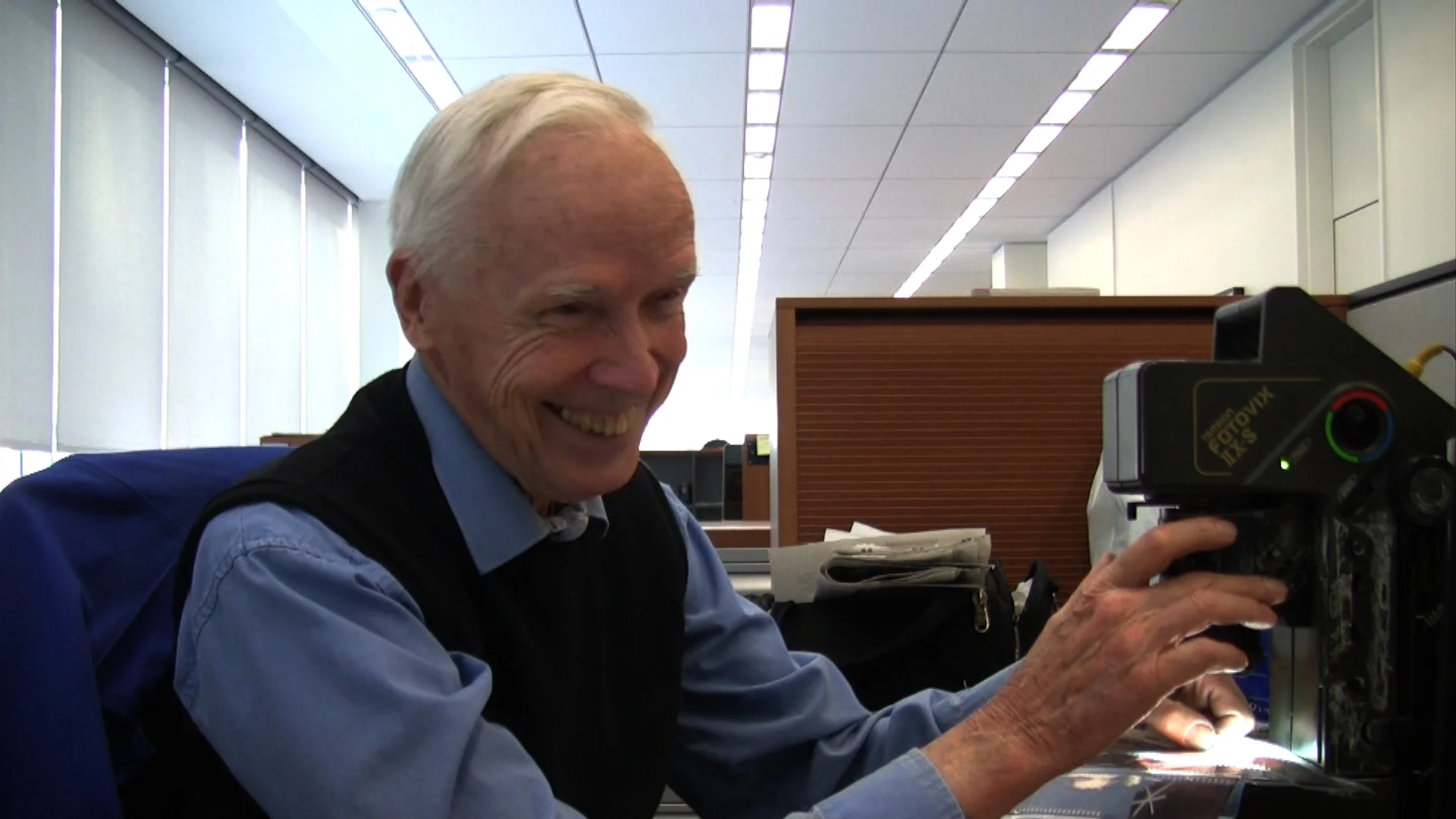
Bill Cunningham at his desk at The New York Times, in BILL CUNNINGHAM NEW YORK. A film by Richard Press. A Zeitgeist Films release. Photo credit: First Thought Films / Zeitgeist Films

Bill Cunningham at his desk at The New York Times, in BILL CUNNINGHAM NEW YORK. A film by Richard Press. A Zeitgeist Films release. Photo credit: First Thought Films / Zeitgeist Films

Bill liked to periodically go back to Paris, France. He felt it was a center of world fashion and a great place to re-educate the eye. He felt Fashion Week in Paris was exceptional. And it would appear Paris thought the same of him. Didier Grumbach, the President of the French Federation of Couture, on behalf of the Minister of Culture, decorated Bill an Officer in the Order of Arts and Letters, an honor meant to recognize contributors to the arts and literature. Examples of other Officers of the Order include Elton John, Shahrukh Khan, Tim Burton, Faye Dunaway, and Michael Keaton, among others.

Grumbach said of Bill, “He doesn’t want to be honored. He doesn’t want anything. And I’m amazed he accepted tonight. […] Very deeply I think he doesn’t believe he deserves it. That’s why he deserves it.”

There are so many potential takeaways from this documentary:

  • Find a way to do what you enjoy, or find a way to enjoy what you do. Life is too short, we should all be able to find a little joy in it.

  • Stay humble. If you manage to find success don’t let it go to your head. Stay grounded.

  • Continue to practice. It doesn’t matter how good you become at what you do there’s always more to learn and room for growth. Be a life-long learner.

  • Treat people well. There’s no need to put people down or ridicule their sense of style, personality, art or vision. Accept people for who they are and treat them as equals.

  • Have integrity. Don’t cave in to things that go against your sense of ethics or morality.

What else did you get from watching the film?


Watch the trailer for Bill Cunningham New York:


After watching the documentary I learned Bill Cunningham died in Manhattan on June 25, 2016. He was 87 years old. In an article about Bill Cunningham in The New York Times I learned the city thought well enough of him that in 2009 he was designated a living landmark.

If you have the opportunity, go pick up a copy, or see if it’s available on any of the services you belong to. Watch Bill Cunningham New York and let me know what you think of it.


Do you enjoy these posts?

Sign up to receive periodic emails with updates and thoughts. Don’t worry, I won’t spam you. And please consider purchasing artwork or products from my online store, and using my affiliate links in the sidebar to the right when shopping online.

I appreciate your support!