Field Notes Update

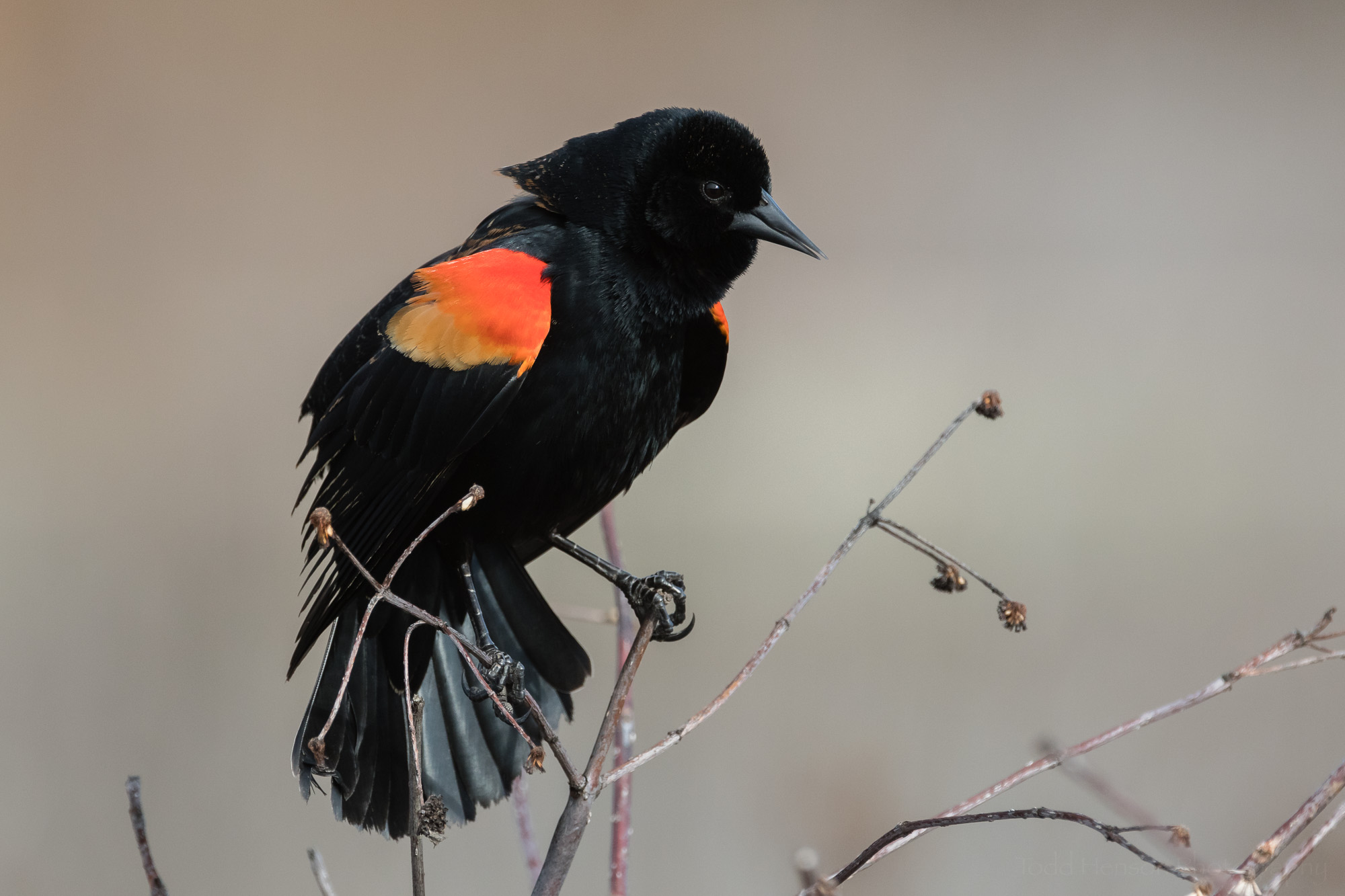
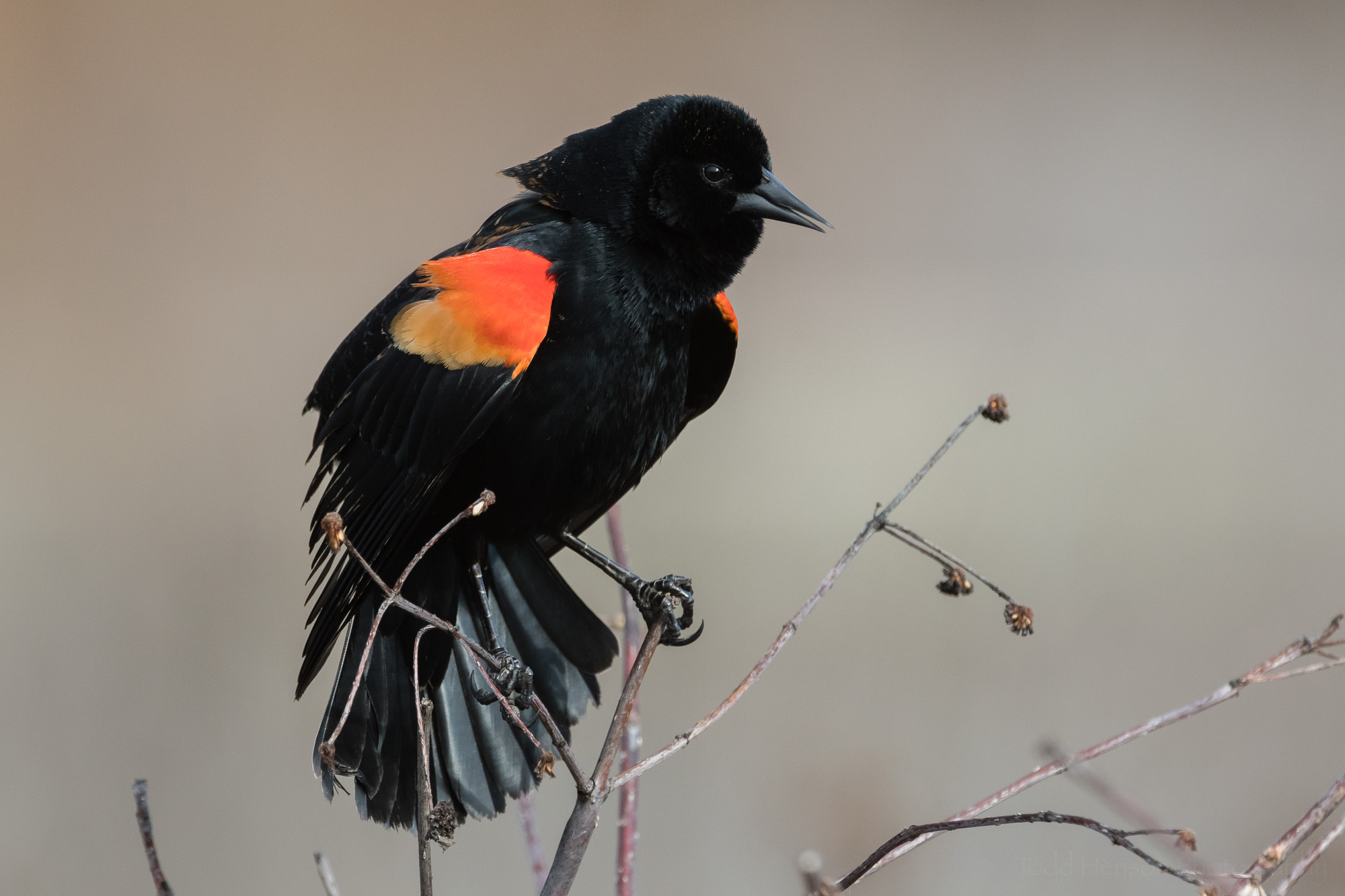
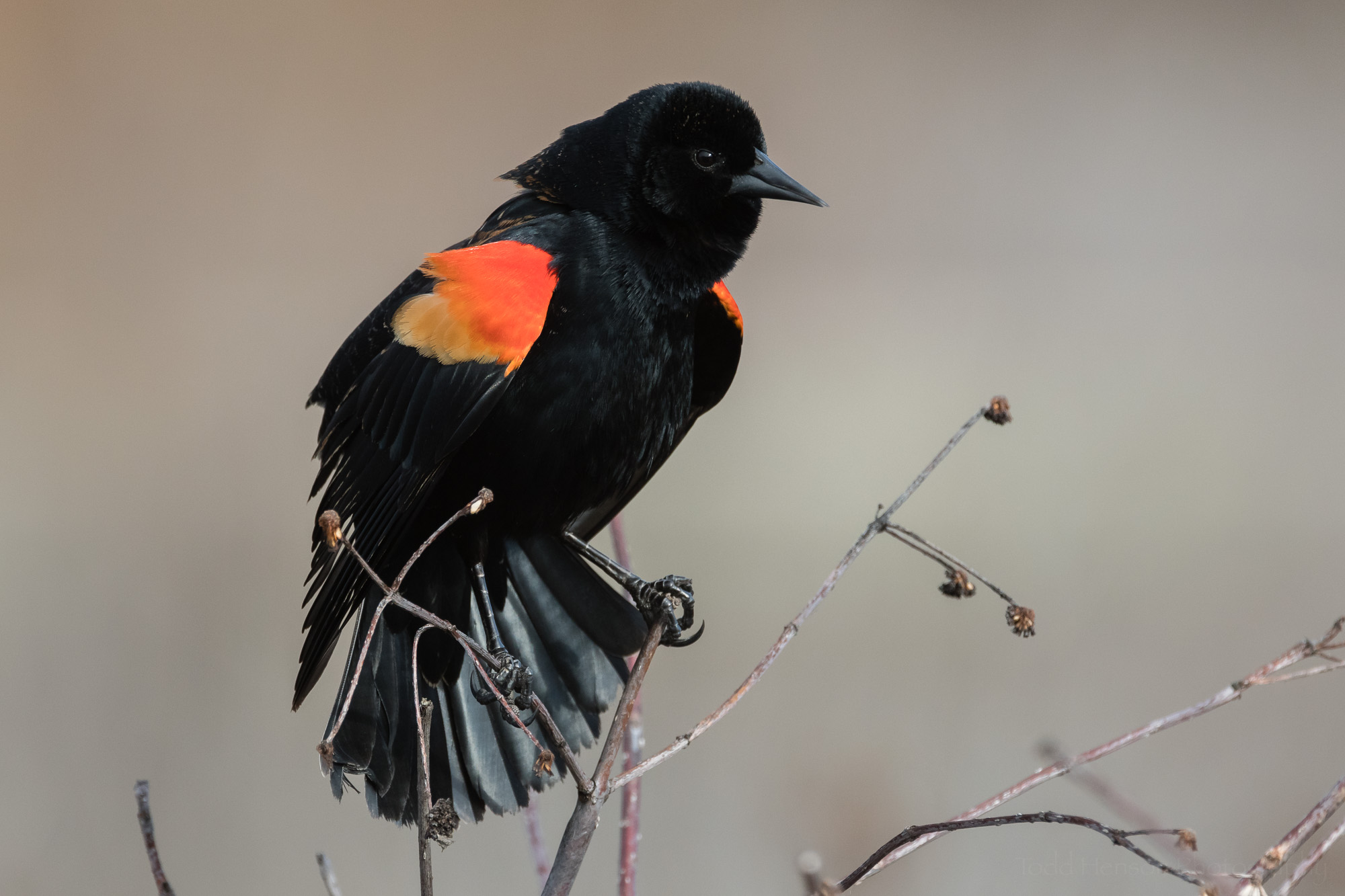
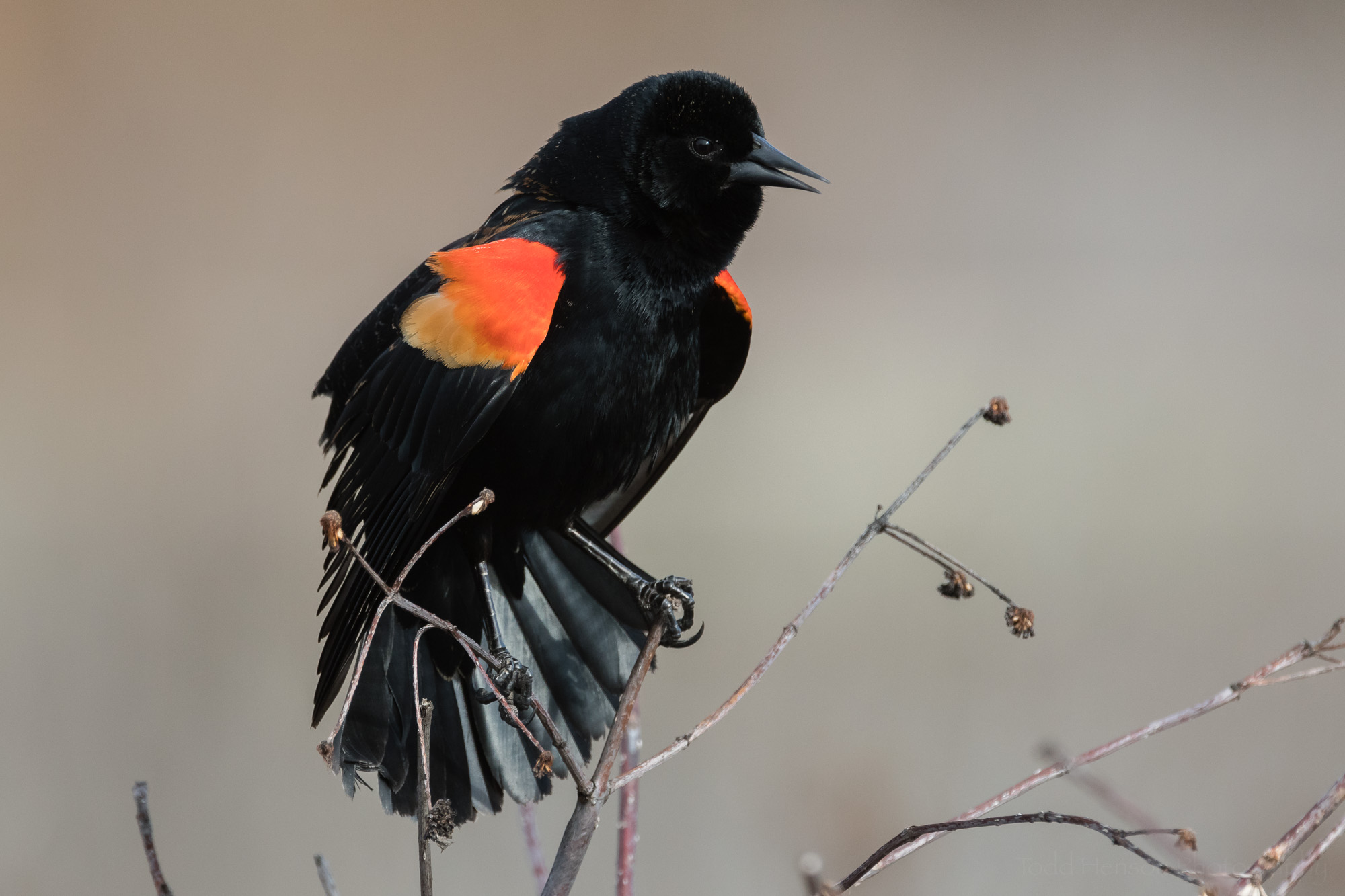
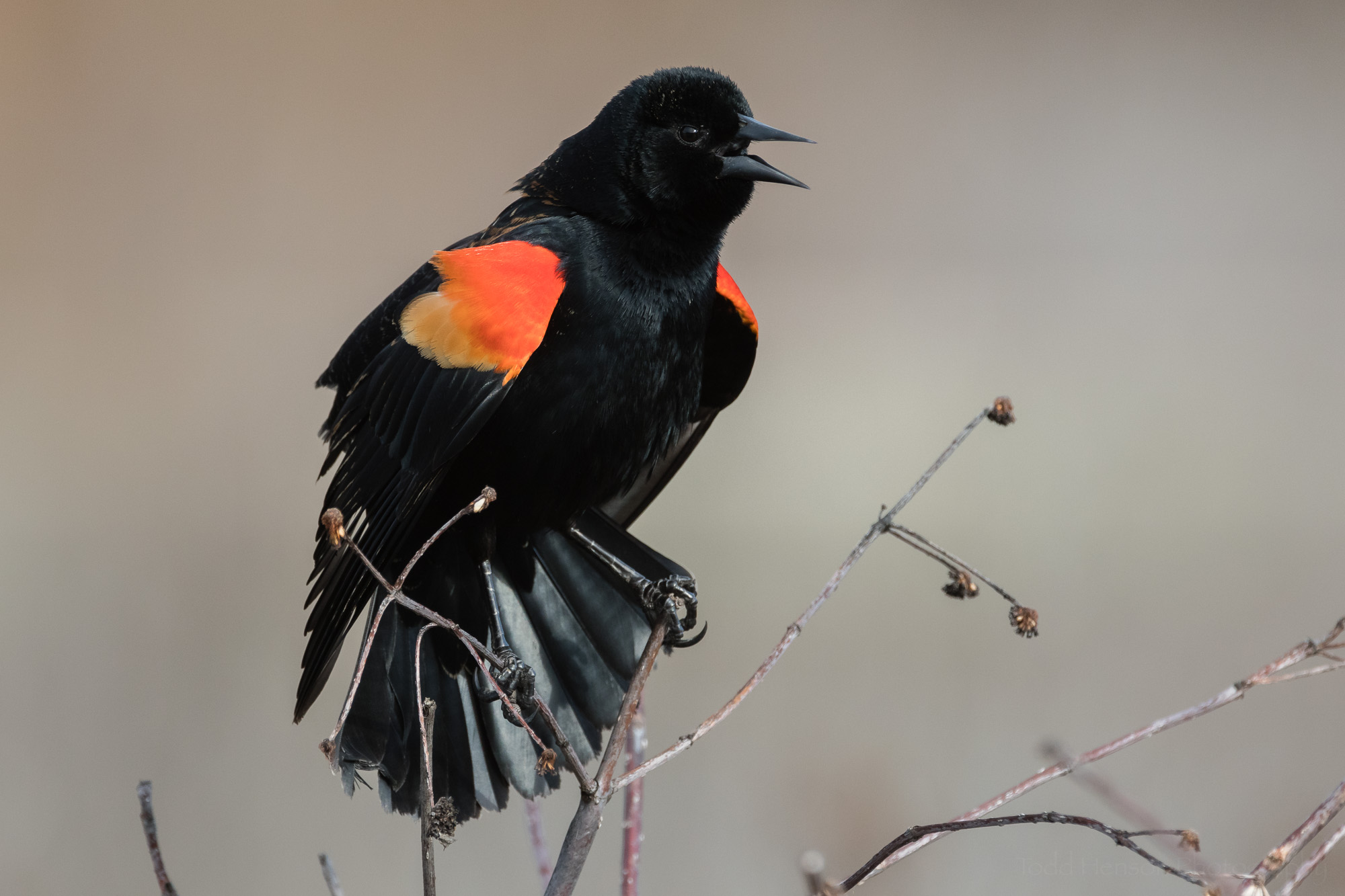
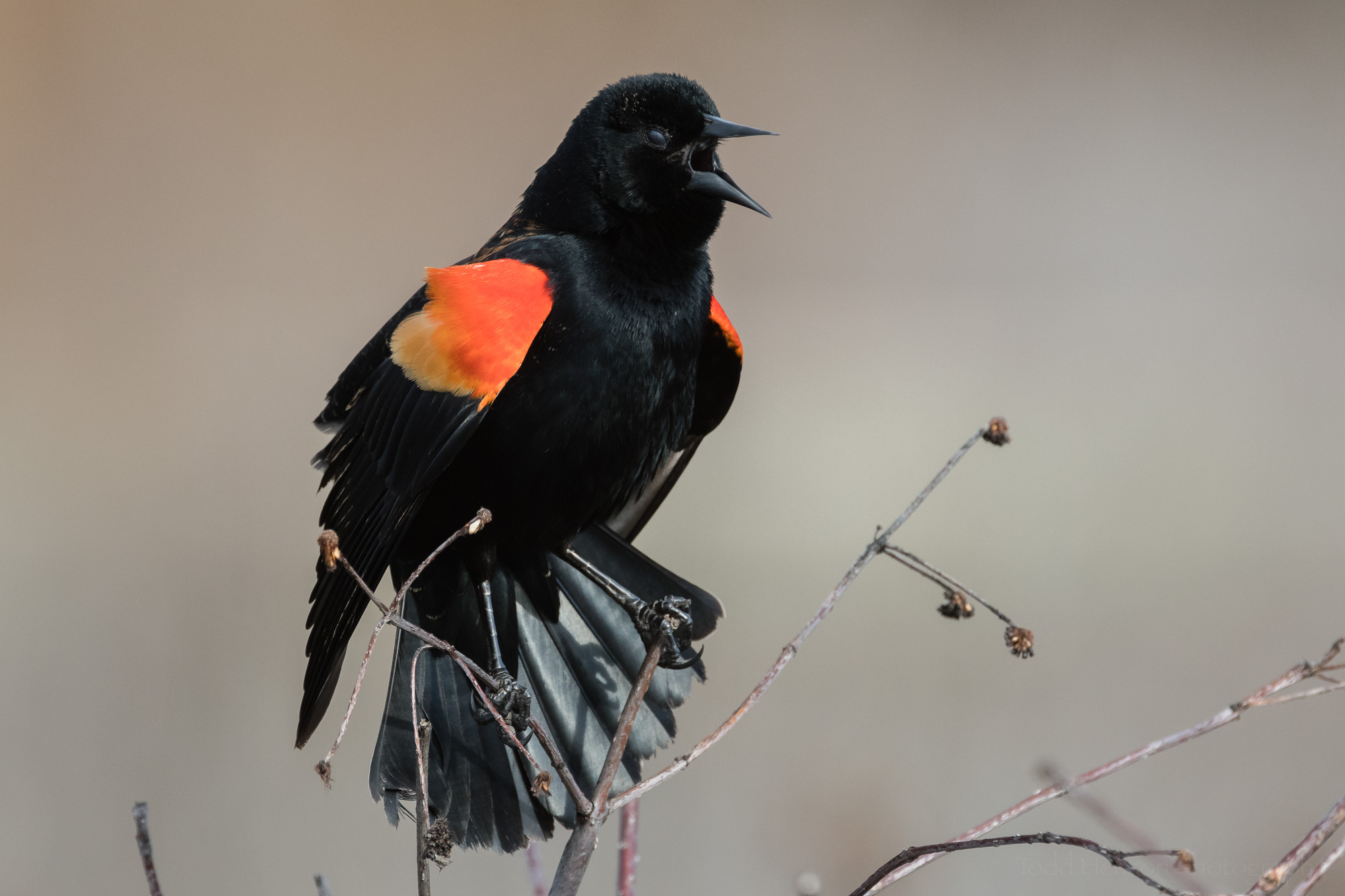
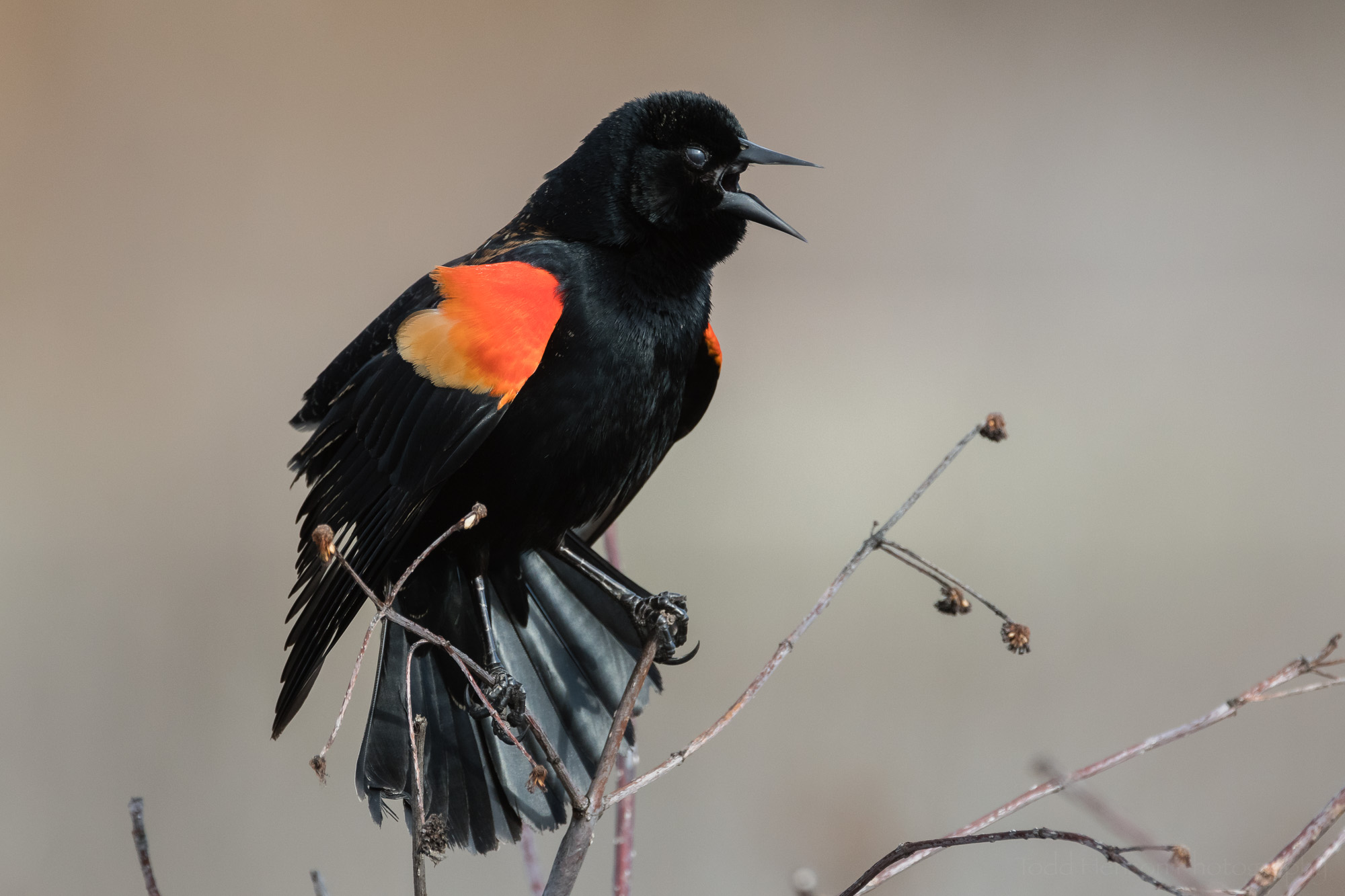
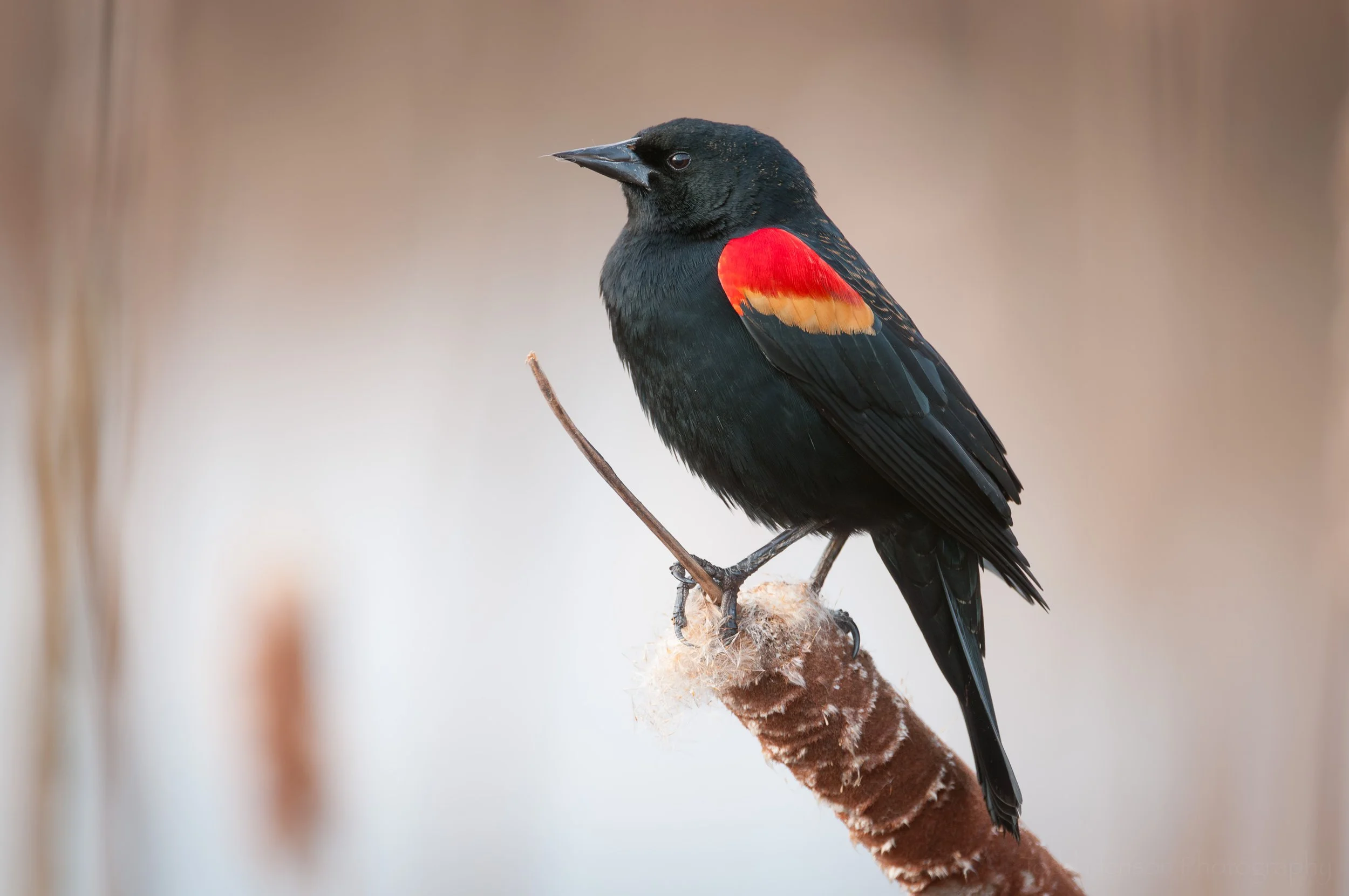
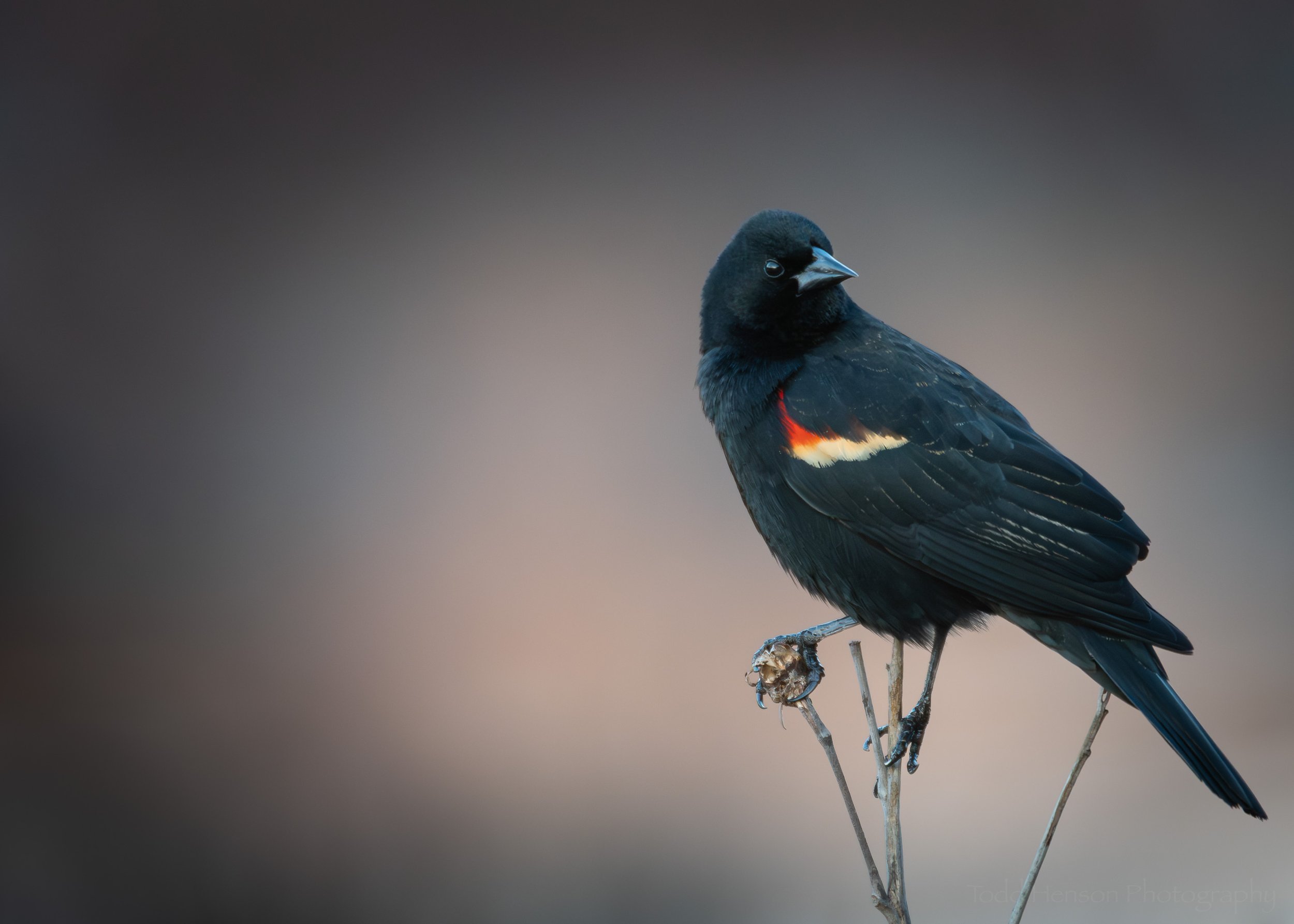
Singing Red-winged Blackbird by Todd Henson

Image of a singing Red-winged Blackbird in a wetlands environment. Click to see a larger view.

Early Spring is a wonderful time to observe Red-winged Blackbirds in wetlands environments. The males hop atop any tall perch, puff up their chests, and sing, looking to attract a mate.

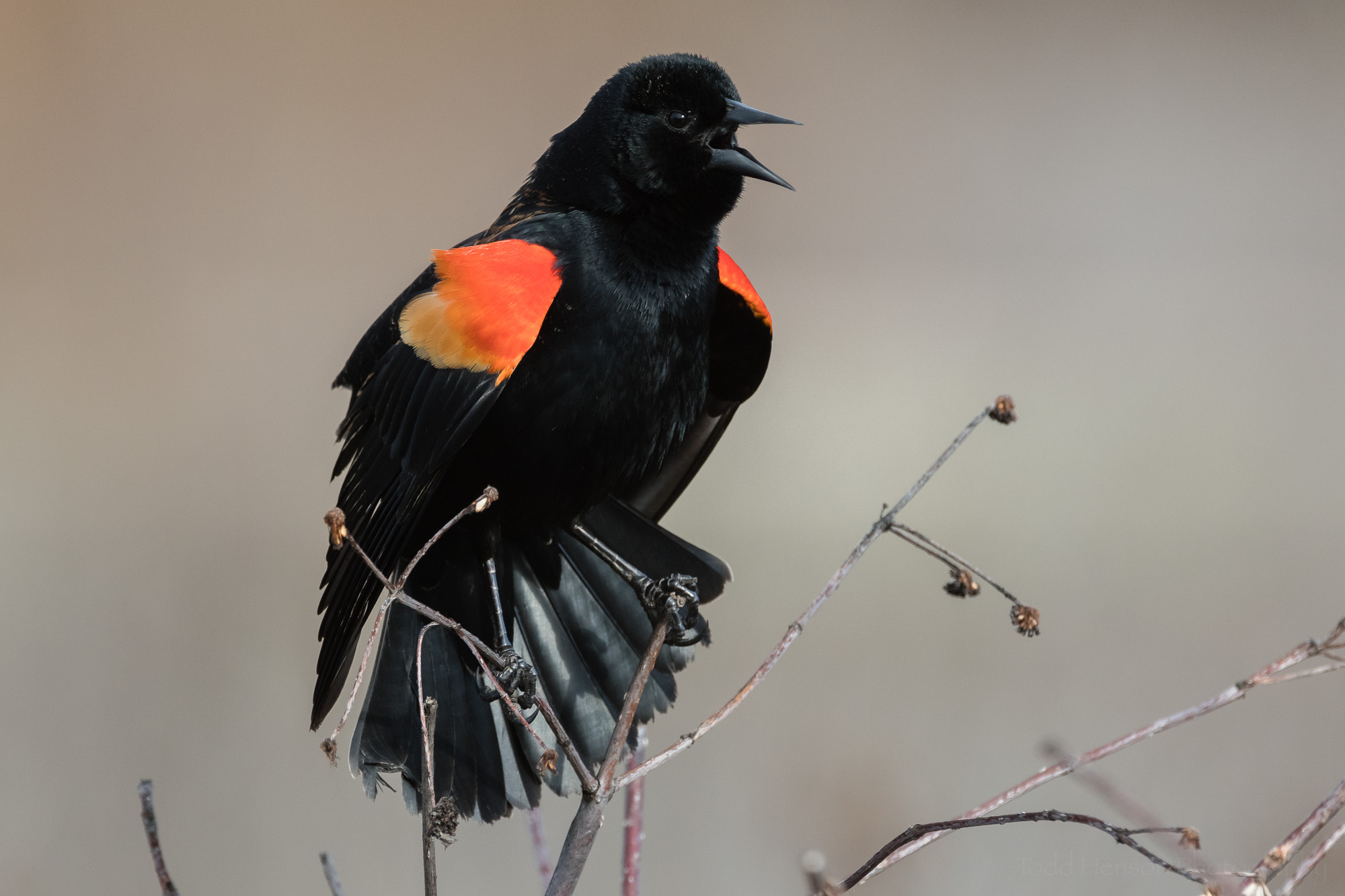
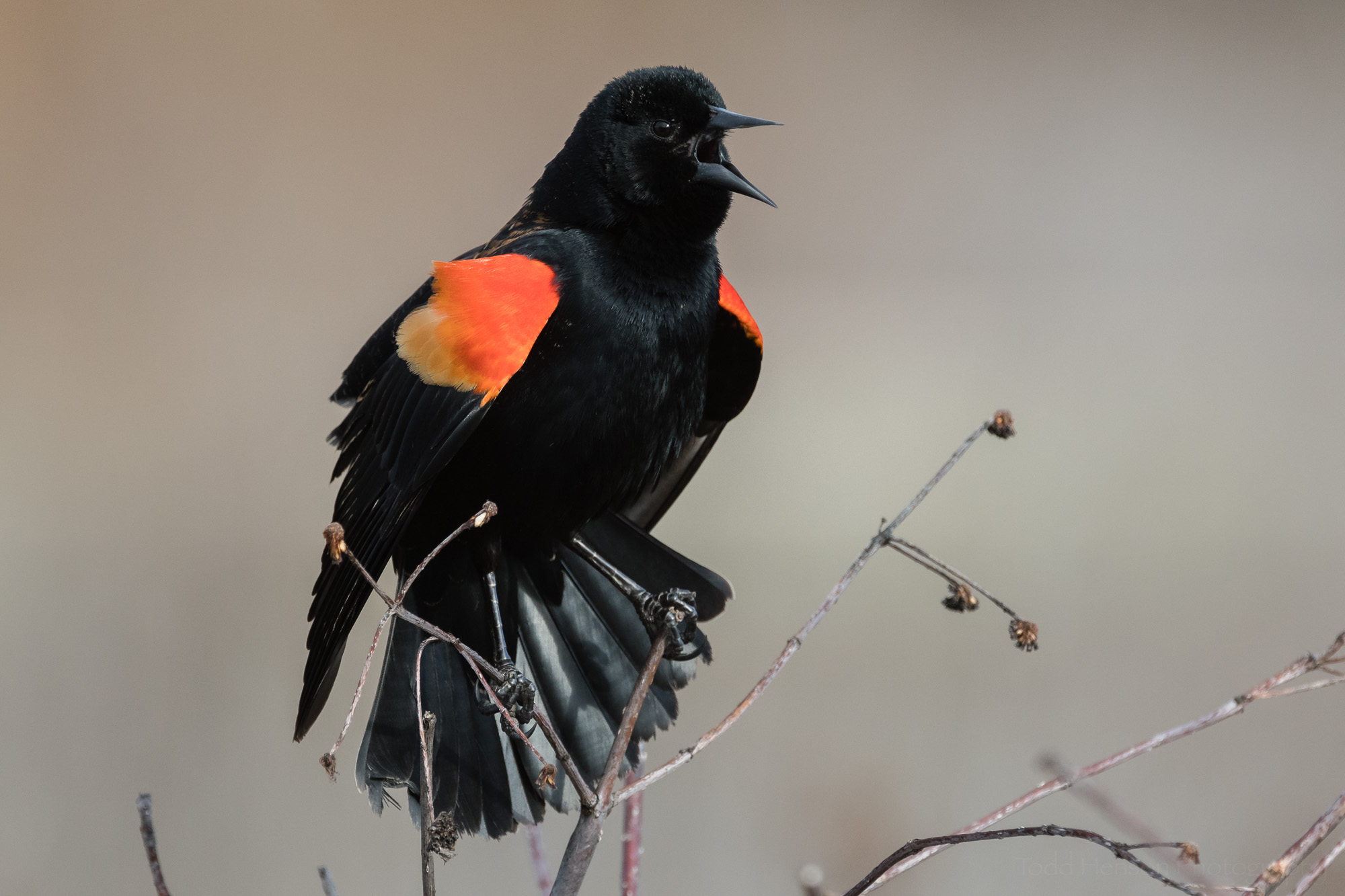
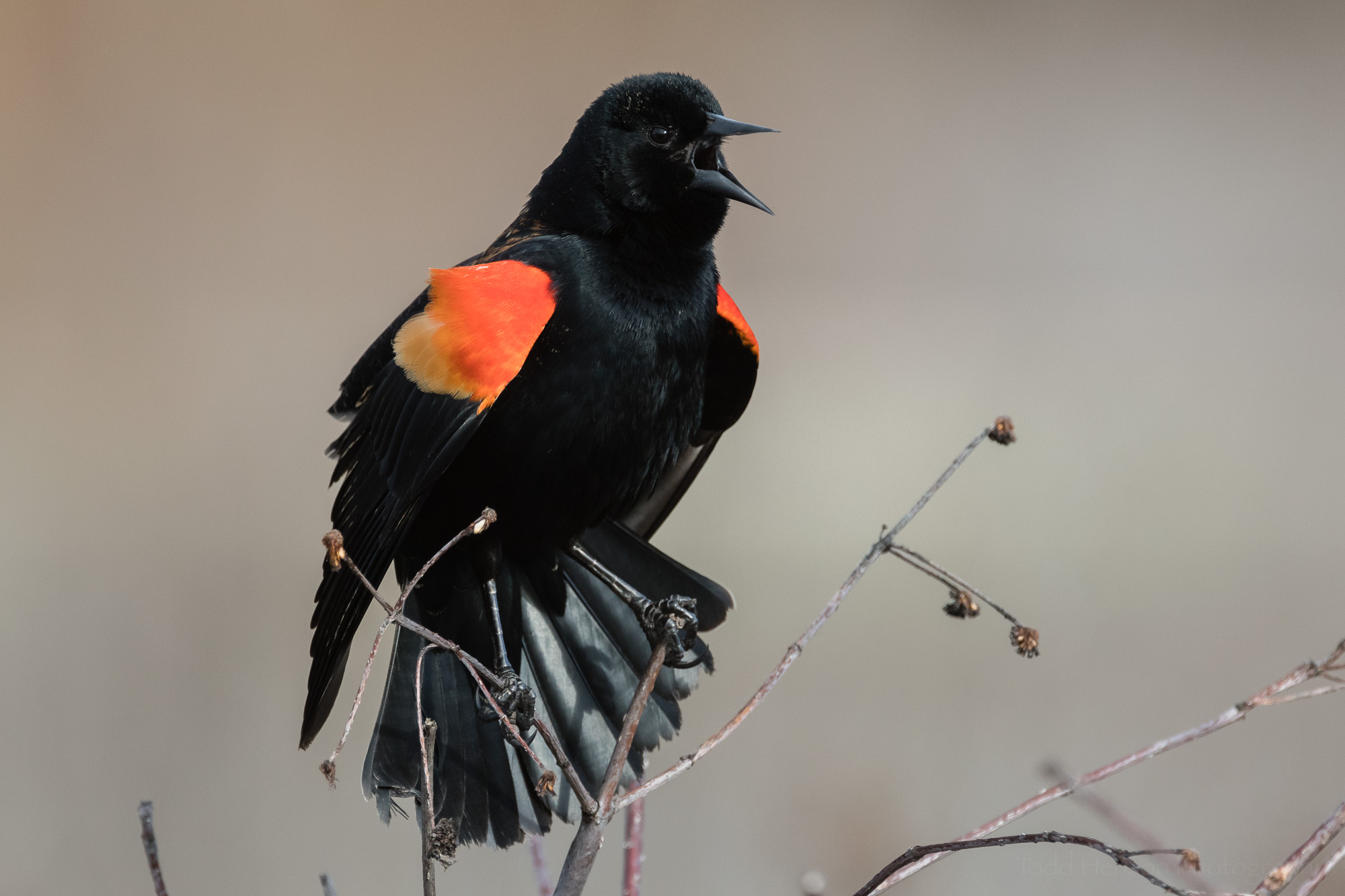
This post includes a sequence of 12 images of a male Red-winged Blackbird as it sings atop its perch. The entire sequence took place in less than 2 seconds. In it you can see the bird puffing itself up, then lifting its head and singing. Click on the image below to cycle through the sequence.
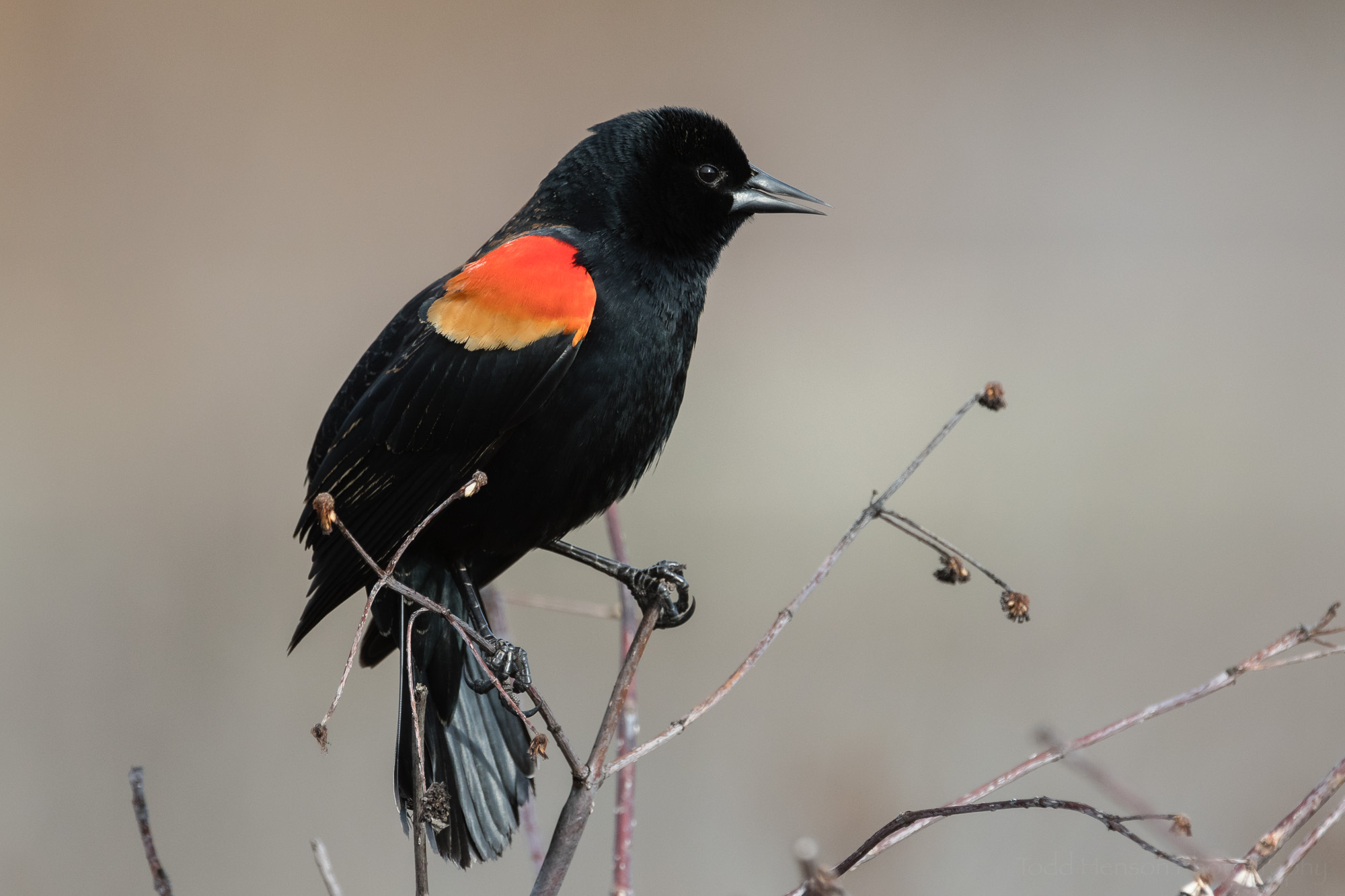
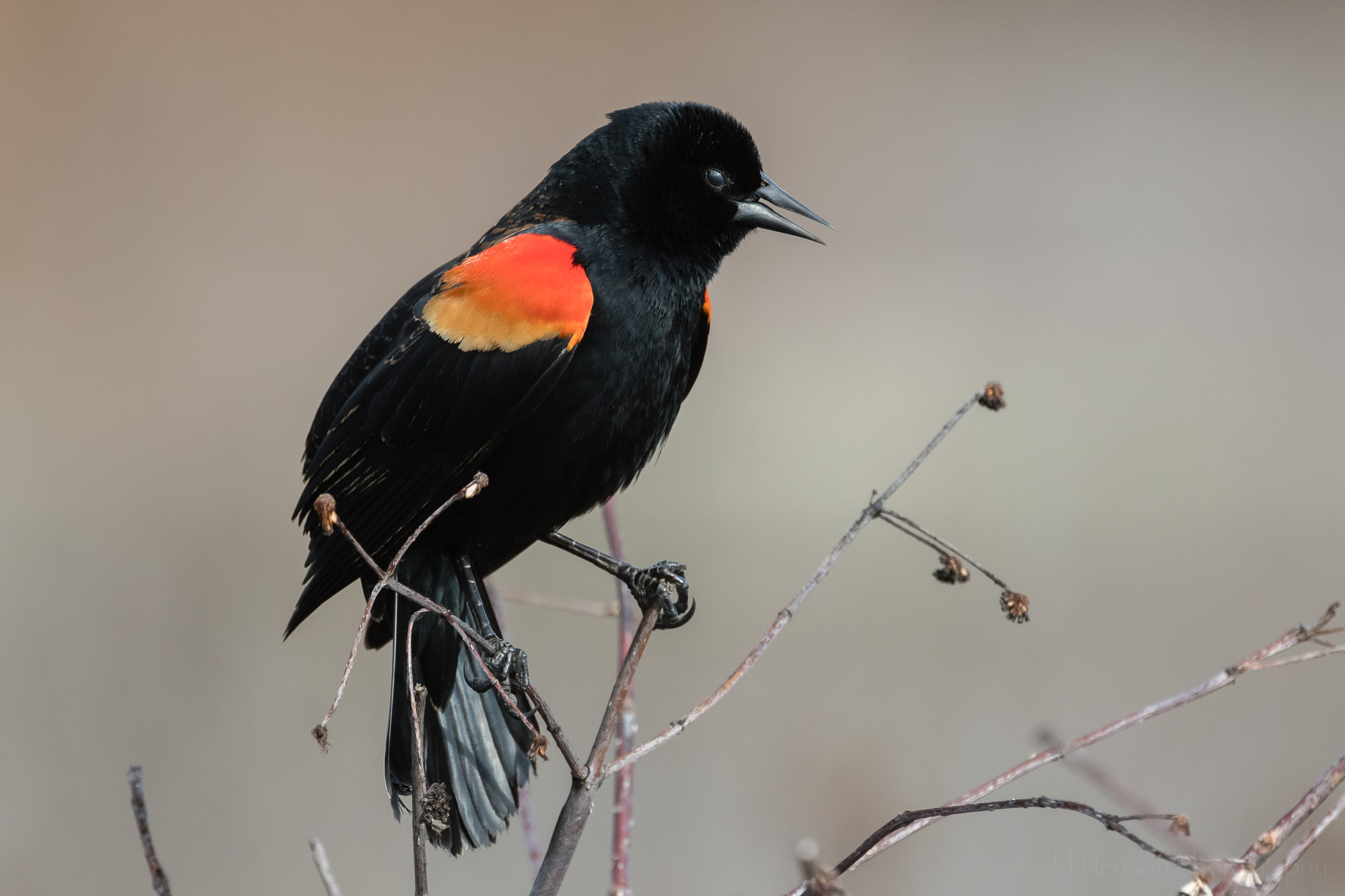
Look closely and you will also see the bird’s nictitating membrane in several of the frames. This is an extra eye lid that closes over the eye while their main eye lid is still open. It can help keep the eye clean and offers some extra protection. See my post about nictitating membranes for more examples.

Red-winged Blackbird with eye fully open. Click the image for a larger view.

Red-winged Blackbird with nictitating membrane covering its eye. Click the image for a larger view.

Next time you’re out and about in a wetlands environment keep your eyes open for red-winged blackbirds (if they happen to pass through your area). And watch their eyes very closely. Perhaps you’ll see their nictitating membrane.

Camera Geekery

This sequence is an example of one of the benefits of some of today’s cameras: a high frame rate. This sequence was shot with a Nikon D500, which can shoot up to 10 frames per second. Some cameras support even higher frame rates.

This is a great benefit when photographing wildlife, sports, or any other fast moving action. It helps capture extra moments during peak action. Just be prepared to sort through a LOT of photographs after you’ve transferred them to your computer.

Below are some cameras with high frame rates (measured in frames per second, or fps), at different price points. The only one I’ve used is the Nikon D500.

The links below are affiliate links and I will be compensated if you make a purchase after clicking on my links. This is at no extra cost to you

Nikon D5 - 14 fps

Canon EOS-1D X Mark II - 16 fps

Nikon D500 - 10 fps

Canon 7D Mark II - 10 fps

Nikon D7500 - 8 fps

Canon EOS 70D - 7 fps


Do you enjoy these posts?

Sign up to receive periodic emails with updates and thoughts. Don’t worry, I won’t spam you. And please consider purchasing artwork or products from my online store, and using my affiliate links in the sidebar to the right when shopping online.

I appreciate your support!

What's That Out There In The Water? by Todd Henson

Northern Watersnake swimming in the water.

It’s a Northern Watersnake! Up till now every Northern Watersnake I’ve photographed has been on land, though most were near water. But I’ve finally photographed a water snake swimming through the water. I watched this one as it dove under the water, resurfacing some distance away. These snakes can move fairly quickly through the water and can be difficult to follow.

Northern Watersnake approaching shore.

I don’t consider either of these photographs particularly great, and neither is in any way artistic. But I’m pleased to have created them for the behavior they document.

There can be many reasons for creating a photograph. In most cases I’m trying to show some aspect of landscape, nature, or wildlife in an artistic, pleasing way. But other times, as in this case, I’m just trying to document a species, to capture any behaviors, or to capture different features of the creatures.

Next time I observe this behavior I hope to create a more pleasing set of photographs. First, capture the moment, document the behavior. Then work to create a better version of the photograph. There is always room for improvement. So keep trying!

Do you have any pleasant memories of when you captured an animal’s behavior? Let me know in the comments below.


Do you enjoy these posts?

Sign up to receive periodic emails with updates and thoughts. Don’t worry, I won’t spam you. And please consider purchasing artwork or products from my online store, and using my affiliate links in the sidebar to the right when shopping online.

I appreciate your support!


Osprey Building a Nest on a Windy Day by Todd Henson

Osprey facing the camera on a windy day, with head feathers sticking straight up.

Osprey don’t have it easy. They build nests close to water with no protection from the elements. I’ve seen osprey nests blown over during strong storms. But these amazing birds just keep rebuilding and moving on.

Today’s photos are of an osprey in Colonial Beach, Virginia, building a nest atop some poles just offshore. It’s a very windy day, as you can see in the photo with the osprey facing the camera. The feathers on the back of its head stand straight up with the wind blowing towards me. This really gives the osprey a wild, aggressive look.

Osprey building a nest on a windy day.

I’ve created cropped versions of both photos giving you closer views of the osprey. Click on any of the images for larger views.

Closeup of osprey facing camera, head feathers upright.

Side view of osprey on its nest on a windy day.

Thinking Through the Shots

I wanted to focus as much as possible on the osprey, meaning I wanted the background to disappear in a blur. The distant shore was quite a distance away, which helped. I was shooting at 400mm focal length, which also helped. My maximum aperture was f/5.6 with the setup I was using but I chose to use f/8 to give a little extra depth of field to capture the osprey in focus. Given the focal length and the distance to the shore, it was enough.

Note, I usually shoot in Aperture Priority mode when background blur is important. This lets me choose the aperture most appropriate for the look I want and lets the shutter speed fall where it will. If I need a faster shutter speed I can then open the aperture further (unless it’s already open all the way) or boost the ISO.

It was a very windy day, so things like the osprey’s feathers were moving. And I wanted to be able to capture the osprey if it flew from the nest. This meant I needed a fast shutter speed. I was shooting with a wide open aperture, which would help give me a faster shutter speed. To increase the shutter speed further I boosted my ISO to 500 (200 is the base ISO for the camera I was using). This let me shoot at a shutter speed of 1/1250 sec.

To sum it all up, I shot at 1/1250 sec, f/8, at ISO 500.

Equipment

I didn’t have my longer lens with me for this shoot, but I did carry along my 70-200mm f/2.8 and a 2x teleconverter. This is how I reached 400mm. The 2x does slow things down, causing slower focusing, and giving me a maximum aperture of f/5.6 instead of the f/2.8 of the lens (2 stops slower). But this combo is smaller and lighter than a larger lens and does give me some versatility allowing both the 70-200mm and 140-400mm ranges. I was happy with the compromise for this trip.

Note, the 2x teleconverter only works with some lenses, so be sure it works with yours before you purchase it.


Do you enjoy these posts?

Sign up to receive periodic emails with updates and thoughts. Don’t worry, I won’t spam you. And please consider purchasing artwork or products from my online store, and using my affiliate links in the sidebar to the right when shopping online.

I appreciate your support!